
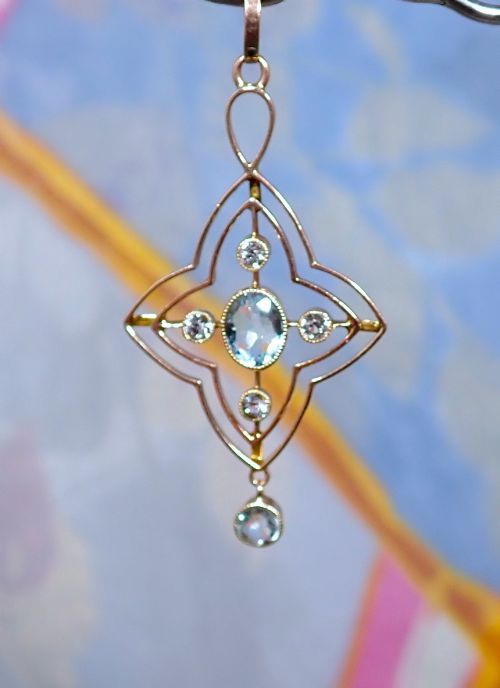


Blue Sapphire Necklace
A blue sapphire necklace brings together rich blue stones and precious metals across periods from the Victorian era to the mid-century.
Blue Sapphire Necklace
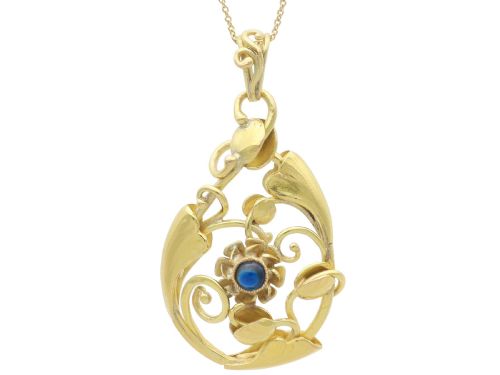
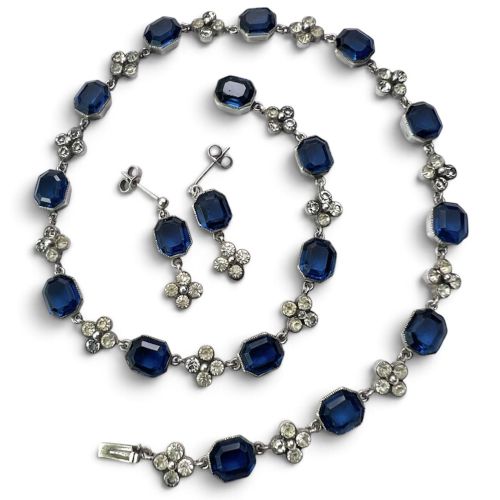
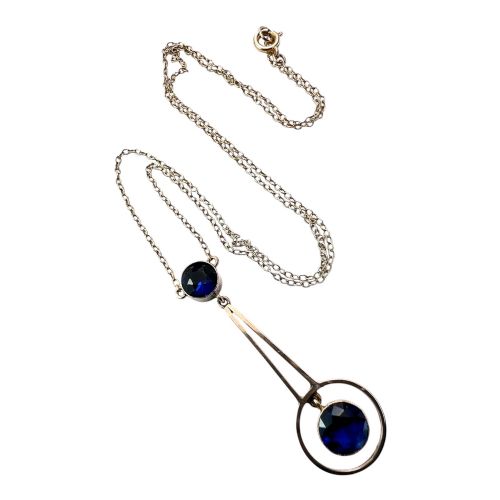
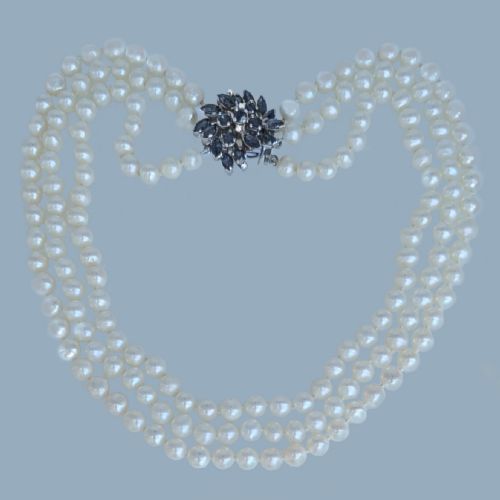
A blue sapphire necklace encompasses various forms, including drop pendants, cluster pendants, cross designs, and multi-strand pearl pieces fastened with gem-set clasps. These items span Victorian, Edwardian, Art Deco, and mid-century periods, showing how jewellers set deep blue sapphires alongside diamonds, pearls, and paste glass.
The version most commonly met on this page is the pendant necklace or drop pendant set in gold or platinum, often paired with accompanying diamonds or seed pearls. Pieces range from delicate Edwardian negligee and witches heart designs to substantial Art Deco platinum clusters and twentieth-century gold crosses.
How they were made
Goldsmiths and platinumsmiths constructed these necklaces using yellow gold, white gold, 9ct gold, 15ct gold, 18ct gold, silver, and platinum. Precious metals provide the structural support and secure settings for natural sapphires, Montana sapphires, basaltic sapphires, and Ceylon sapphires.
Craftsmen enhanced the central blue stones with surrounding diamonds, white zircons, seed pearls, cultured pearls, and paste glass. Metalwork techniques include detailed cluster settings, fine drop mounts, and articulated cross and negligee formations.
Blue Sapphire Necklace Retail Price Guide 2026
Typical asking prices for blue sapphire necklace among the pieces listed under this phrase on Sellingantiques today, from the lower quarter to the upper quarter. They describe what is for sale here now, not the wider market.
A delicate witches heart pendant holds centuries of romantic symbolism within its twisted gold tail.
What varies in quality
Quality rests on the depth and origin of the sapphire itself, alongside the accompanying gem material such as certified diamonds or natural pearls. Superior examples combine well-matched stone weights with refined precious metal mountings in platinum or high-carat gold.
Design complexity and period execution distinguish different tiers of pieces. Articulated Edwardian drop work and intricate Art Deco platinum clusters demonstrate greater structural ambition than simpler 9ct gold and paste glass variations.
The Blue Sapphire Necklace Glossary
- Basaltic sapphire
- A sapphire originating from alkali basalt terrains, often noted for deep saturation and distinct inclusion characteristics. These stones appear in mid-century and earlier twentieth-century platinum and gold settings.
- Negligee pendant
- A necklace style featuring two unequal drops suspended from a central motif, popular during the Edwardian period. This design allows the stones to move independently and catch the light.
- Paste glass
- Highly refractive lead glass cut and polished to imitate gemstones like sapphire and diamond. It appears in period costume and decorative settings alongside silver and gold.
- Seed pearl
- Very small natural or cultured pearls used in historic jewellery to create delicate floral, crescent, or geometric borders. They provide a soft contrast to the deep blue of set sapphires.
- Witches heart
- An amuletic heart shape with a twisted tail at the base, frequently utilised in antique and Edwardian pendants. Jewellers set these forms with sapphires and pearls.
Blue Sapphire Necklace: Frequently Asked Questions
What periods do these necklaces come from?
The pieces span from the Victorian and Edwardian eras through the Art Deco period and into the mid-twentieth century.
Each period brings distinct metal choices and mounting styles, from early yellow gold and seed pearls to later platinum and white gold clusters.
What metals are used in these settings?
Makers utilised silver, platinum, 9ct gold, 14ct gold, 15ct gold, and 18ct gold across these designs.
Platinum and white gold frequently appear in Art Deco and mid-century pieces, while yellow gold is common in Victorian, Edwardian, and later twentieth-century examples.
Are pearls natural or cultured?
The listings feature both natural pearls and cultured pearls depending on the specific necklace and period.
Pearl strands often serve as the main body of the necklace, secured by decorative gold clasps set with sapphires and diamonds.
What is a cluster pendant?
A cluster pendant arranges smaller accent stones around a central sapphire to maximise visual impact.
Diamonds and white zircons are frequently grouped around oval or cut sapphires in platinum and white gold settings.