
Blue Sapphire Diamond Halo
Blue sapphire diamond halo pieces combine rich blue corundum with sparkling diamond borders, spanning Victorian, Edwardian, Art Deco, and Mid-Century periods.
Blue Sapphire Diamond Halo
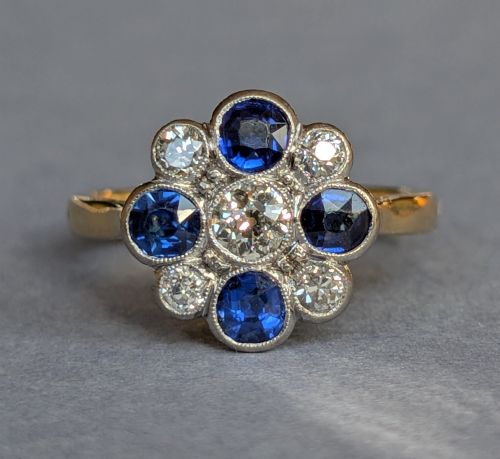
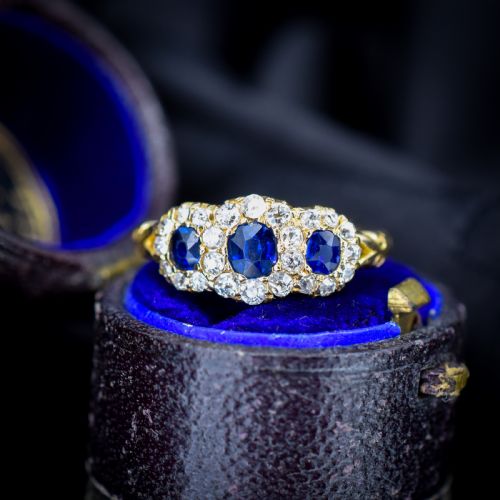
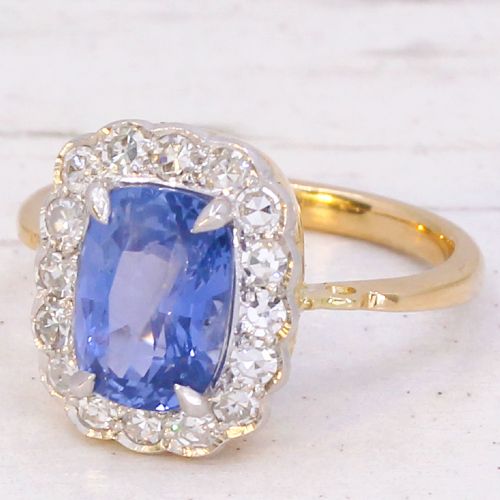
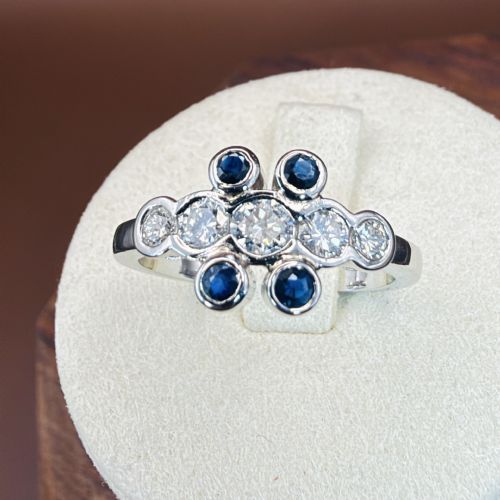
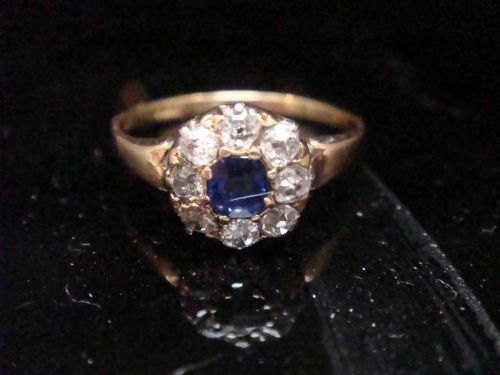
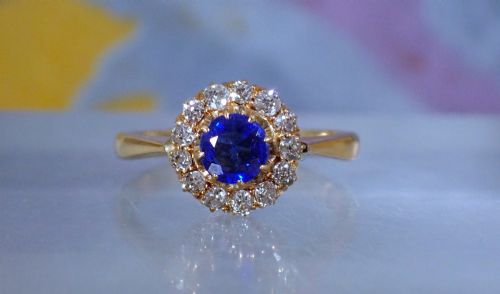
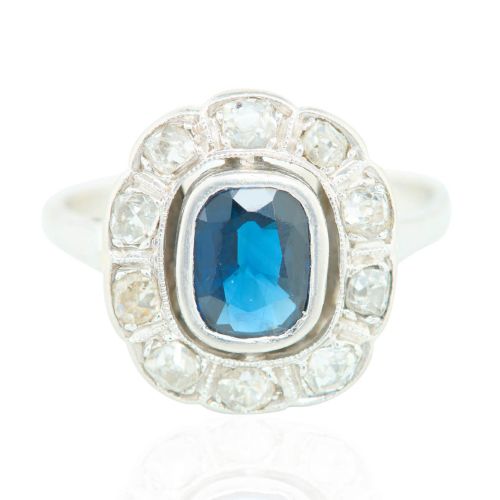
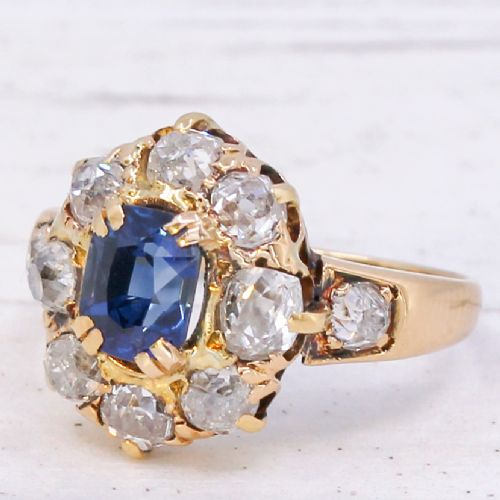
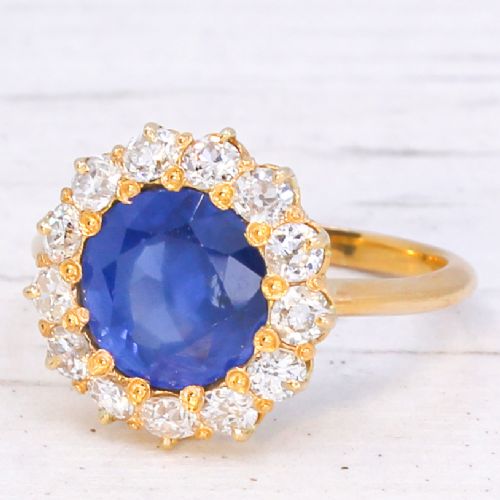
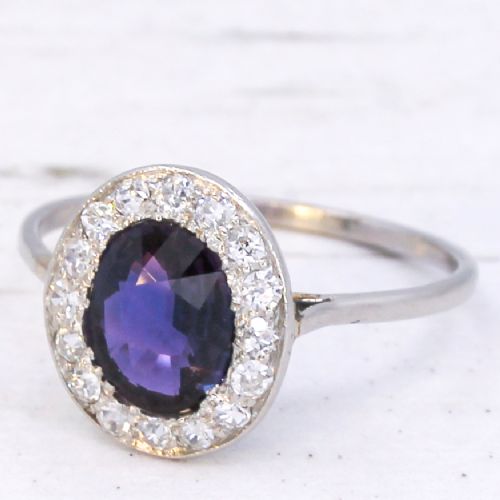
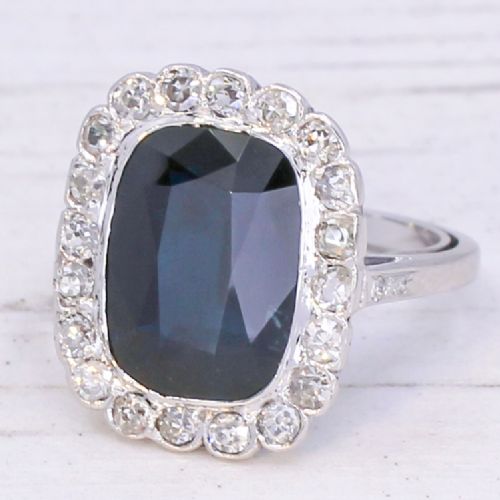
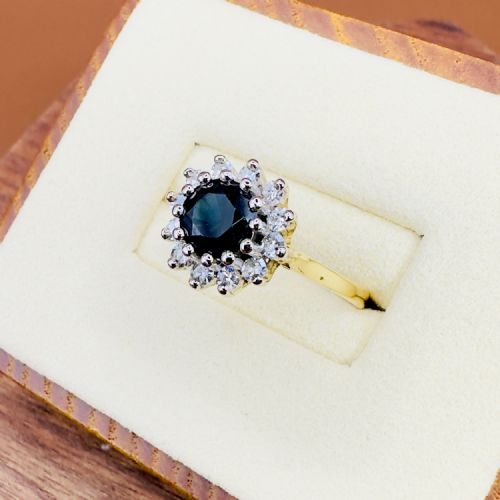
A blue sapphire diamond halo arrangement centres on a vibrant blue sapphire surrounded by a tight border of sparkling diamonds. This design configuration appears most frequently as rings, alongside occasional earrings, pendants, and dress rings.
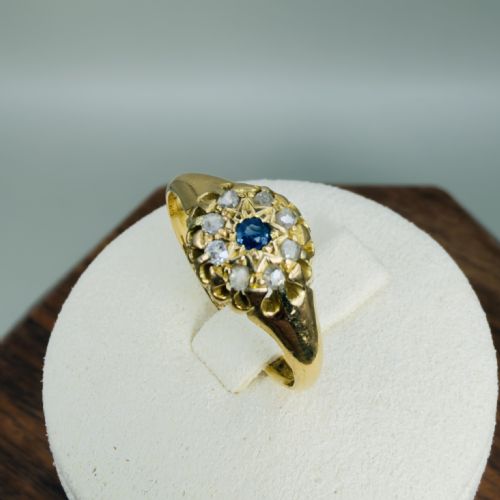
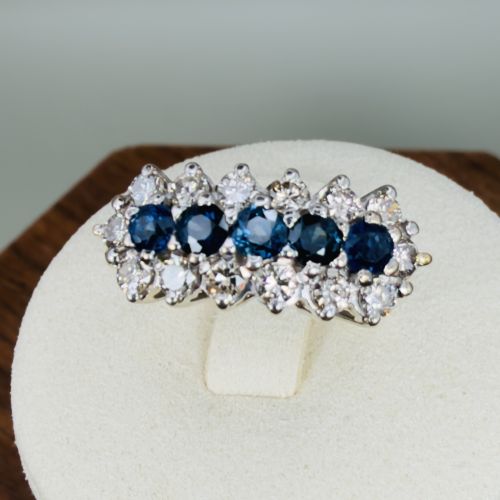
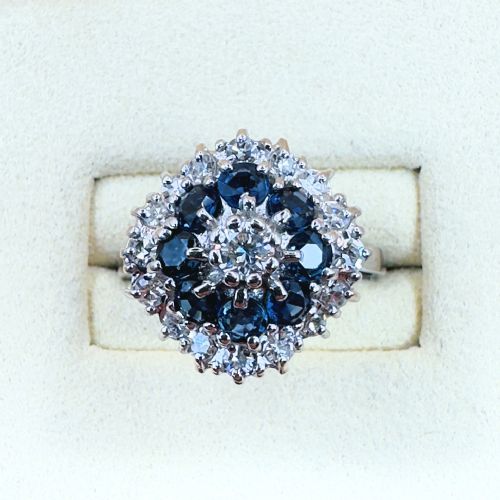
Pieces originating from the Victorian and Edwardian eras demonstrate early cluster and daisy formations in yellow gold. Later Art Deco and Mid-Century examples favour geometric target settings, platinum frameworks, and white gold mountings.
The selection ranges from delicate lower carat weight clusters to substantial unheated Burmese and Ceylon stones exceeding several carats. Traditional cluster configurations and boat-shaped mountings recur across multiple decades of production.
Materials and construction methods
Craftsmen built these settings using platinum, 18ct white gold, 18ct yellow gold, and occasional 9ct gold. Early workshops frequently combined yellow gold shanks with platinum settings to enhance the brightness of the surrounding diamonds.
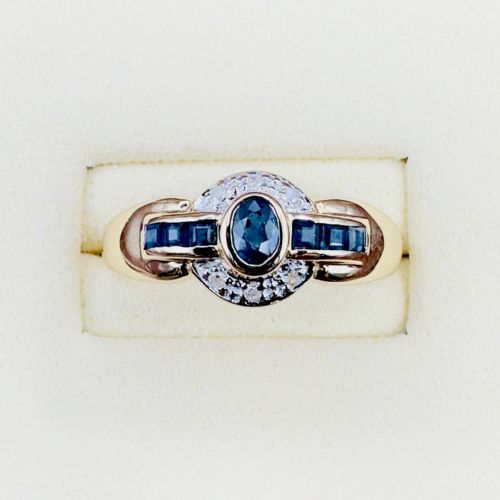
Gemstones feature historical cuts including old mined cuts, old cut diamonds, and calibre cut sapphires shaped specifically to fit geometric borders. Stones are secured using traditional claw, prong, and flush settings appropriate to each period.
Listings span from the late Victorian era through Edwardian, Art Deco, and Mid-Century periods, utilising platinum and various gold purities.
Distinguishing quality across the range
Quality rests upon the natural origin, thermal treatment status, and clarity of the central sapphire. Unheated stones originating from regions such as Burma or Ceylon command greater interest than standard treated alternatives.
The precision of the surrounding diamond work and the integrity of the metal setting define execution. Fine examples exhibit perfectly matched calibre or old cut diamonds set closely with minimal visible metal.
Le Vian
The Blue Sapphire Diamond Halo Glossary
- Halo
- A concentric border of smaller diamonds encircling a central gemstone. This framing technique increases the apparent visual impact of the primary stone.
- Calibre cut
- Gemstones specifically shaped, often square or rectangular, to fit tightly together within a geometric channel or border. This technique defines many Art Deco cluster designs.
- Old cut
- A precursor to the modern brilliant cut featuring a smaller table, higher crown, and open culet. These diamonds display distinct hand-cut facets characteristic of antique pieces.
- Unheated
- A sapphire that has undergone no thermal enhancement to improve its natural colour or clarity. Unheated stones documented with geological certificates remain particularly desirable to collectors.
- Cluster
- An arrangement where multiple smaller stones cluster around a larger central focal point. This setting style maximises overall brilliance and colour contrast.
Blue Sapphire Diamond Halo: Frequently Asked Questions
How do I care for antique sapphire rings?
Antique sapphire and diamond rings require gentle cleaning with warm soapy water and a soft brush. Avoid harsh chemical cleaners and ultrasonic devices, particularly with older or unheated stones.
Store these pieces separately in lined boxes to prevent the diamonds from scratching softer metals or adjacent gemstones.
Are unheated sapphires more valuable?
Unheated sapphires that retain their natural colour without thermal enhancement are scarcer than treated stones. Natural geological origin combined with the absence of heat treatment contributes to collector interest.
Such stones often possess certification from independent gemological laboratories detailing their geographic provenance and lack of treatment.
How can I tell Art Deco from Victorian pieces?
Victorian designs often utilise yellow gold, organic motifs like floral daisy patterns, and substantial old mined cut diamonds. They present a warmer, more traditional aesthetic.
Art Deco pieces favour platinum or white gold, sharp geometric lines, target motifs, and precise calibre cut sapphires reflecting an industrial modernist influence.