






Blue Sapphire Claw Ring
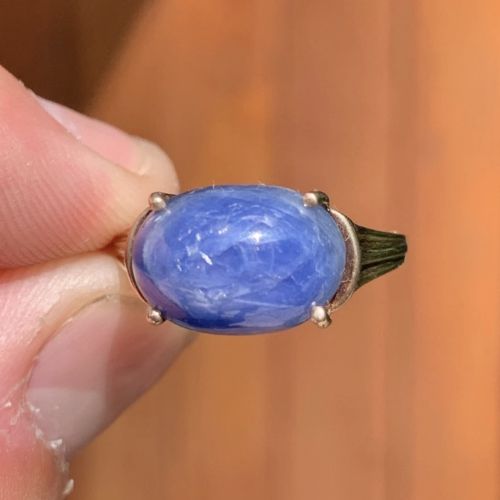
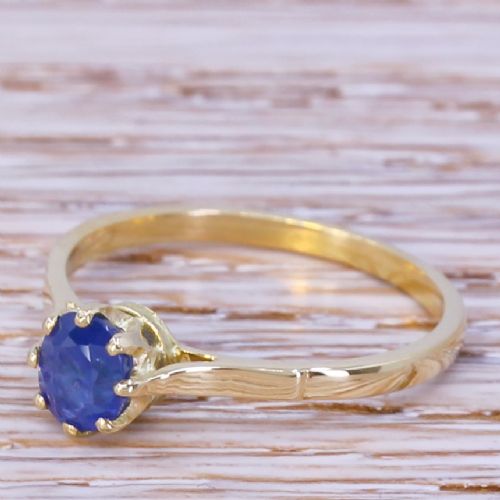
A blue sapphire claw ring holds deep blue stones secured in metal prongs, offering a timeless piece of jewellery for daily wear.
Blue Sapphire Claw Ring
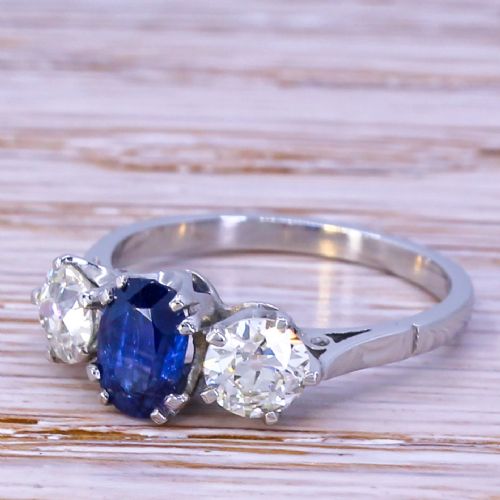
A blue sapphire claw ring combines vibrant blue corundum with precious metals, appearing most frequently in solitaire, trilogy, and cluster forms across this selection. Buyers seeking this design encounter pieces originating from the Victorian and Edwardian eras through to the mid-century period.
The assortment spans traditional claw settings holding single stones alongside complex arrangements featuring old cut diamonds set in platinum or 18ct yellow gold. Individual pieces showcase specific origins such as Ceylon or Burma, adding geographic distinction to the central blue gems.
Materials and construction methods
Goldsmiths utilised durable platinum and various purities of gold, notably 18ct yellow gold and 9ct gold, to fashion the secure mountings for these precious stones. Traditional claw settings were hand-formed to grip the girdle of each sapphire securely while allowing maximum light entry.
Gemstone selection paired natural blue sapphires with old cut diamonds and occasional natural pearls, integrating distinct cutting styles like the old European cut. Hallmarks stamped into the metal bands provide official records of assay offices and precious metal standards.
Blue Sapphire Claw Ring Retail Price Guide 2026
Typical asking prices for blue sapphire claw ring among the pieces listed under this phrase on Sellingantiques today, from the lower quarter to the upper quarter. They describe what is for sale here now, not the wider market.
Several rings conceal tiny hand-carved galleries beneath their stones, designed solely to let secret shafts of light reach the sapphire.
Distinctions in quality
The standard of a blue sapphire claw ring rests upon the saturation and natural clarity of the central gem, alongside the integrity of the metal claws holding it. Stones originating from Ceylon or Burma possessing unheated characteristics command particular attention from collectors.
Craftsmanship in the claw setting itself distinguishes superior examples, where prongs are neatly proportioned and firmly integrated into the gallery without excess metal obscuring the gemstone. The matching quality of accompanying diamonds, when present, further defines the overall standard of the piece.
The Blue Sapphire Claw Ring Glossary
- Claw setting
- A mounting style utilising metal prongs or claws to secure a gemstone in place while exposing its facets to light. This method is standard for solitaire and cluster rings.
- Solitaire
- A ring featuring a single prominent gemstone, most frequently a sapphire in this category. It places visual emphasis entirely on the central stone.
- Trilogy
- A ring design set with three principal stones, often representing past, present, and future. In these listings, sapphires are flanked by diamonds.
- Old cut
- A diamond cutting style prevalent in antique and vintage jewellery, characterised by a high crown, small table, and open culet. These cuts scatter candlelight differently from modern brilliant cuts.
- Half eternity
- A band set with a single continuous line of gemstones extending halfway around the circumference. They are frequently paired with claw or channel settings.
Blue Sapphire Claw Ring: Frequently Asked Questions
How do I wear a claw set ring daily?
Claw settings elevate the gemstone above the band to catch the light, which means the prongs can occasionally catch on delicate fabrics. Regular gentle cleaning helps maintain the security of the stones.
Checking the claws periodically under magnification ensures the metal remains tight against the sapphire girdle. Removing the ring during heavy manual tasks prevents unnecessary wear to the setting.
What is the difference between Ceylon and Burmese sapphires?
Sapphires originating from Ceylon typically display a bright, vivid blue coloration with high internal clarity. Burmese stones often exhibit a deep, velvety royal blue tone that collectors prize.
Both geographic origins appear across twentieth-century and antique designs. Laboratory certificates often accompany these specific stones to verify their provenance.
How do I identify an Edwardian sapphire ring?
Edwardian rings frequently utilise platinum for its strength and delicate appearance, allowing for intricate openwork galleries. They often pair sapphires with old cut diamonds in lacy, refined arrangements.
Hallmarks stamped inside the band provide definitive proof of the assay year. Stylistic details reflect the elegance of the early twentieth century.
Can I resize a vintage claw ring?
Most gold and platinum bands can be adjusted by a skilled jeweller without disturbing the sapphire or the claw setting. The thickness of the shank dictates how much adjustment is possible.
Consulting a specialist ensures the structural integrity of the shoulders and hallmarks is preserved during any alteration work.