

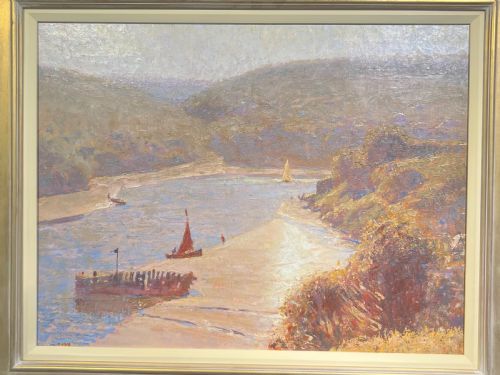
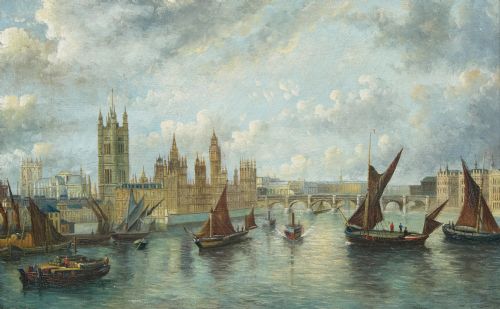


Blue River Landscape Oil
Blue river landscape oil paintings capture flowing waters across British and continental scenes, offering buyers atmospheric views painted on canvas or wood.
Blue River Landscape Oil
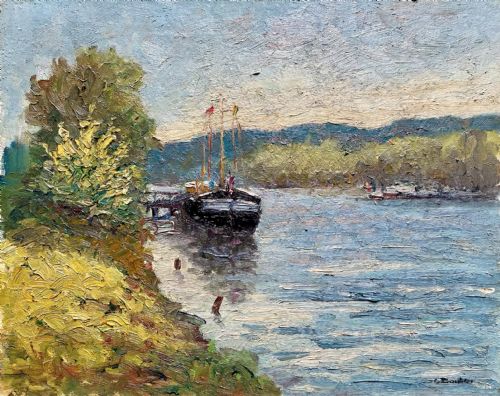
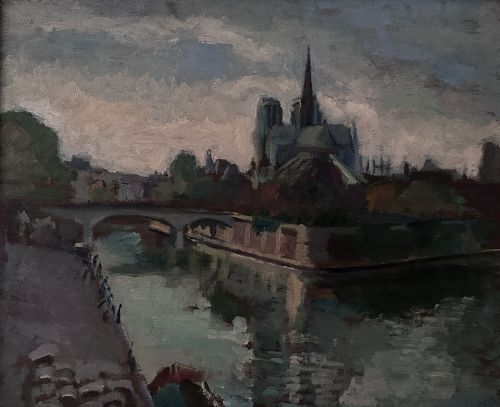
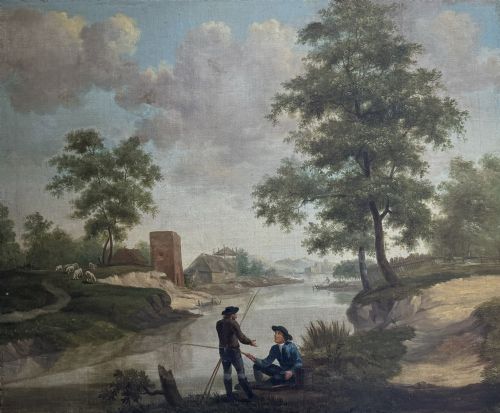
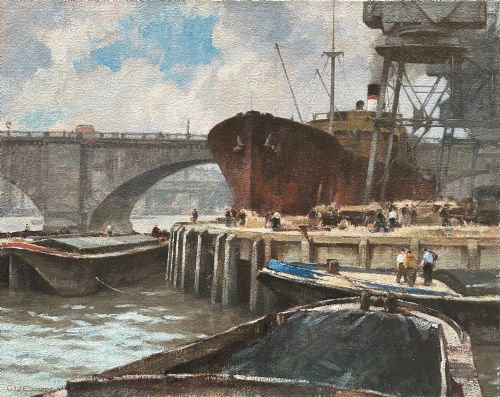
A blue river landscape oil brings together painted waterways and atmospheric riverbanks, spanning periods from the eighteenth century through to the mid twentieth century. These works frequently depict recognizable rivers, such as the Thames or the Seine, rendered through Impressionist and traditional British or French schools.
Buyers will encounter various supports on this page, most commonly oil paint applied to canvas or wood panel. The compositions range from expansive nineteenth century panoramic river views to textured mid-century impressionist river scenes.
Materials and construction
Artists painted these works using oil paint applied to prepared surfaces including canvas, wood panel, and board. Supports were frequently housed within gilt wood frames that complemented the painted composition.
Techniques varied from traditional studio layering to plein air painting, where artists worked directly beside the river to capture immediate atmospheric lighting effects.
Several canvases capture cows pausing by the Yorkshire wharfe, reminding us that artists needed waterproof boots just as much as paints.
Assessing quality and execution
The distinction between works rests upon the confidence of the brushwork and the artist's handling of light upon water. Stronger examples demonstrate deliberate impasto or fluid plein air observation that conveys the movement of the river.
Provenance and attribution also influence distinction, with signed canvases by recorded regional or continental painters commanding greater recognition than anonymous academic studies.
Albert Bierstadt·Cyril Walduck Edwards·Cecil Allan Mould·Florence Adelina Hess·Hubert Wellington·Archibald Kay·George Vicat Cole·William Grant Murray·John Wright Oakes·Armand Guillaumin·Edmond Defonte·Herbert Royle·Antoine Bouvard·Benjamin Callow·Adolphe Gumery·Henri Therme·Owen Bowen·Edward Seago·Jacob Knyff·Edmund John Niemann
The Blue River Landscape Oil Glossary
- Plein air
- Painting outdoors to capture direct natural light and atmospheric conditions. This method was widely utilised by impressionist artists working beside rivers.
- Impasto
- Paint applied thickly to a canvas or panel so that the brush or palette knife marks remain clearly visible. It adds physical texture to the water surface in a river landscape.
- Wood panel
- A rigid wooden support used by artists instead of woven fabric. Panels were favoured for their stability and smooth painting surface.
- Gilt wood
- Wood coated with a thin layer of gold leaf or gold-coloured pigment. Antique oil paintings are frequently housed in these ornate decorative frames.
Blue River Landscape Oil: Frequently Asked Questions
What periods do these river paintings cover?
The works span multiple centuries, ranging from seventeenth and eighteenth century British school compositions up to mid-twentieth century impressionist views.
Most items date from the nineteenth century and the early decades of the twentieth century.
How should I hang an oil painting?
Select a wall away from direct sunlight and steady moisture sources to protect the canvas or wood panel and the surrounding gilt wood frame.
Ensure proper picture hooks are secured firmly into wall studs to support the weight of the framed artwork.
Are these paintings signed by the artists?
Many of the listed works feature signatures or attributions to named painters, while others represent period British or French school pieces.
Signatures or inscriptions are typically located near the lower corners of the canvas or on the reverse panel.
What is the difference between canvas and panel?
Canvas consists of woven fabric stretched across a wooden frame, offering a slightly flexible painting surface with visible textile texture.
Wood panel provides a rigid, solid base that artists often selected for smaller, highly detailed landscape studies.