
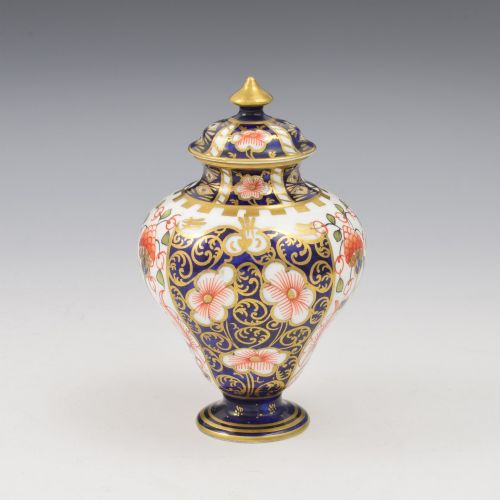
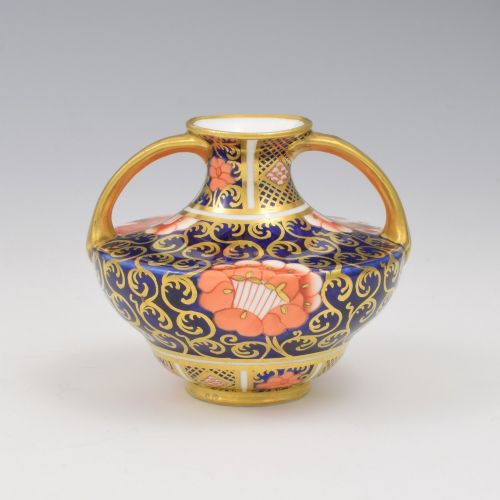


Blue Porcelain Miniature Vase
These small blue porcelain miniature vase examples offer remarkable detail in diminutive forms, spanning Victorian and Edwardian British works alongside Japanese export pieces.
Blue Porcelain Miniature Vase
A blue porcelain miniature vase encompasses compact vessels and cabinet pieces produced across the nineteenth and early twentieth centuries. The selection here ranges from British bone china and porcelain factories to Japanese export workshops.
Buyers encounter twin-handled shapes, covered vessels, scent bottles, and cabinet vases rather than large decorative centrepieces. These smaller vessels reflect the period taste for intricate cabinet ceramics and decorative novelties.
The objects stem from identifiable British potteries such as Royal Crown Derby and Crown Staffordshire, alongside Japanese Imari and Satsuma traditions. Each piece represents the prevailing stylistic preferences of its respective production era.
Materials and manufacture
Potters shaped these miniature forms using fine porcelain and bone china, applying cobalt oxide underglazes to achieve deep blue tones. Artisans then refined the vessels by hand before secondary firing stages.
Many examples incorporate hand-applied enamel decoration alongside gold leaf and gilt highlights over the glaze. British and Japanese workshops utilised distinct pattern painting techniques to finish each small surface.
Cabinet collectors once utilised these tiny vessels to test the steady hand of visiting porcelain painters.
Assessing quality and execution
Quality rests in the precision of the hand-painted cobalt detail and the crispness of the porcelain moulding. Superior examples display controlled brushwork and well-defined gilding that remains sharp across tiny surfaces.
The distinction between standard production items and finer cabinet pieces lies in the complexity of the pattern and the finesse of the enamel application. Tighter registration of colours and richer gilding elevate individual items.
Royal Crown Derby·Crown Staffordshire·Stevenson and Hancock·Doulton
The Blue Porcelain Miniature Vase Glossary
- Porcelain
- A hard, vitreous ceramic material fired at high temperatures, prized for its smooth white body and resonance. It forms the base body for nearly all pieces on this page.
- Imari
- A Japanese ceramic style featuring deep blue underglaze and iron red overglaze, heavily adopted by European potteries. British factories frequently reinterpreted these distinctive patterns on small vessels.
- Gilt
- A thin layer of gold or gold leaf applied to the surface of porcelain for decorative accent. It highlights handles, rims, and specific pattern motifs.
- Cobalt Oxide
- A metallic compound used to create deep blue coloration beneath the ceramic glaze. This pigment maintains stability under high kiln temperatures.
Blue Porcelain Miniature Vase: Frequently Asked Questions
How were these miniature vases displayed originally?
Victorians and Edwardians placed these tiny vessels on bracket shelves, mantelpieces, and inside glass-fronted cabinets alongside other ceramic novelties. Their compact scale allowed collectors to assemble varied groupings within limited domestic space.
Today, they suit similar placement on bookshelves or desk tops where their intricate patterns can be appreciated at close range.
How do I distinguish British from Japanese pieces?
British pieces often bear printed factory backstamps underneath the glaze, alongside specific pattern numbers painted by hand. The paste and potting style also align with established Staffordshire and Derby traditions.
Japanese export items from the Meiji period typically rely on character marks or distinct decorative palettes like Satsuma and Imari without standard British factory ciphers.
What periods do these pieces represent?
The selection spans from the late nineteenth century through the Edwardian era up to the 1920s. This includes Victorian productions and pieces bearing Qing Dynasty influences.
Each period imparts distinct stylistic traits, from dense Imari patterning to refined floral motifs characteristic of early twentieth-century British makers.
Can these vases hold water safely?
While manufactured as ceramic vessels, their primary function was decorative cabinet display rather than horticulture. The presence of narrow necks and delicate gilding makes them better suited to dry presentation.
Using them for fresh flowers is generally discouraged to protect fragile overglaze enamels and historic gilt surfaces from moisture damage.