


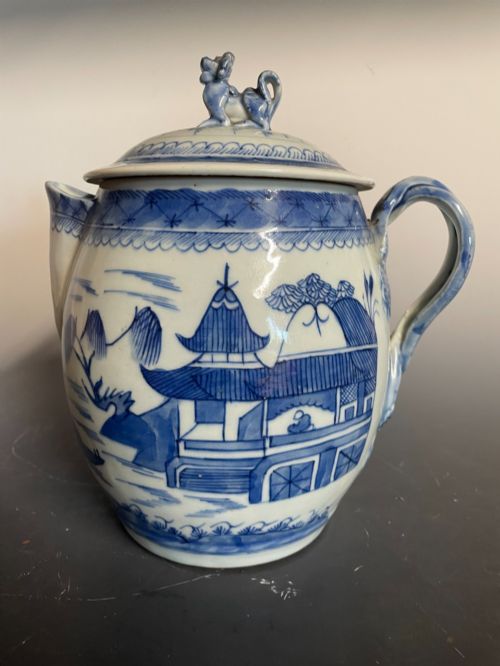


Blue Porcelain Jug
A blue porcelain jug brings centuries of refined kiln work to the table, offering a striking display of cobalt decoration.
Blue Porcelain Jug
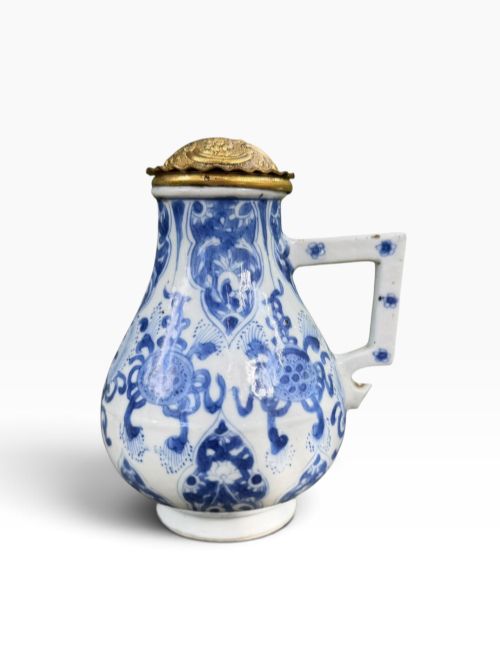
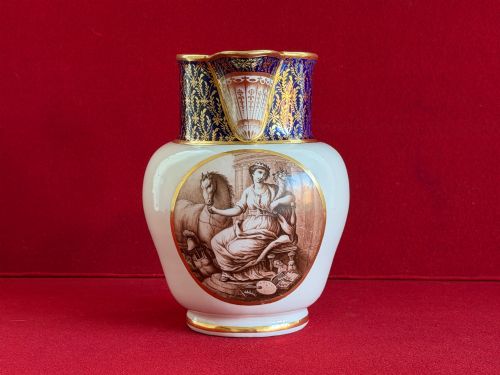
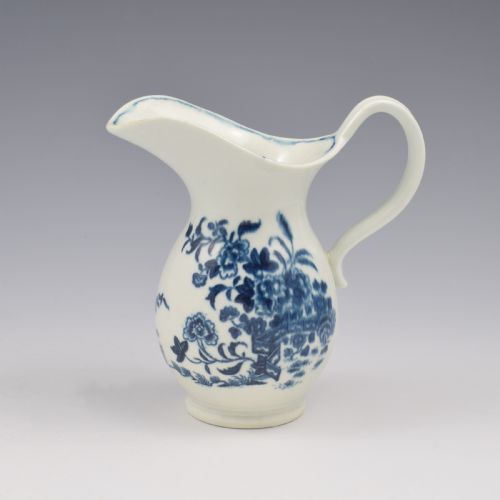
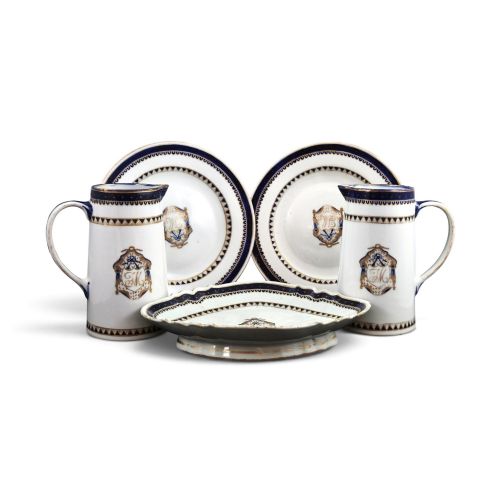
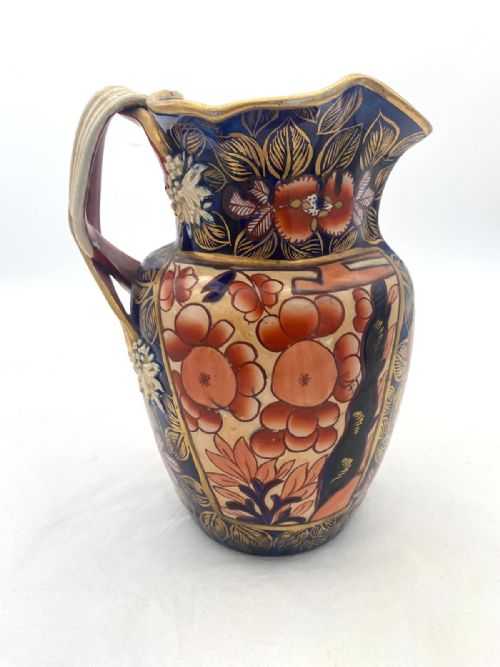
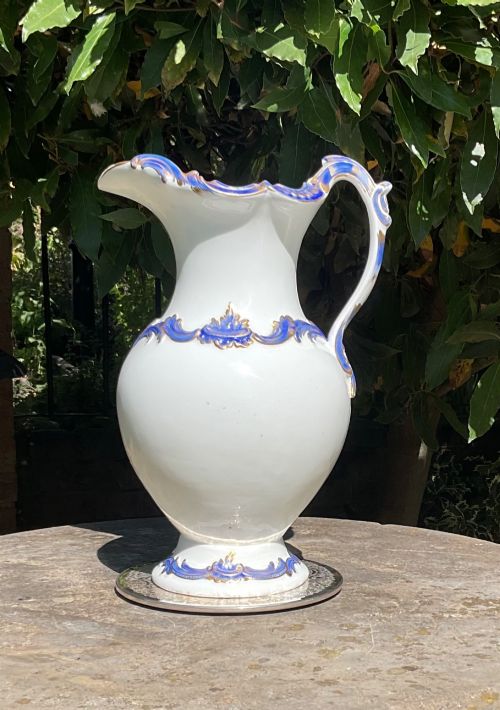
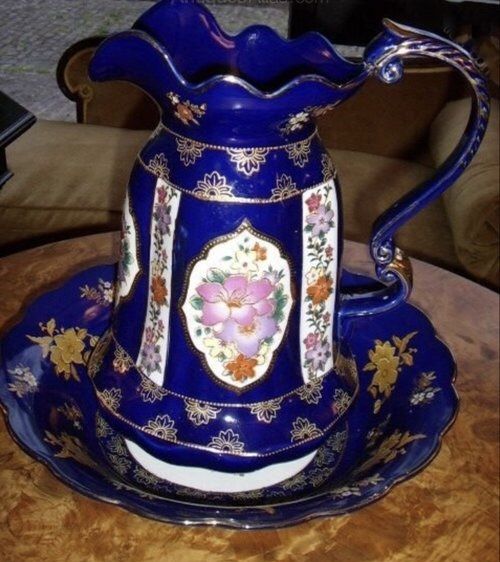
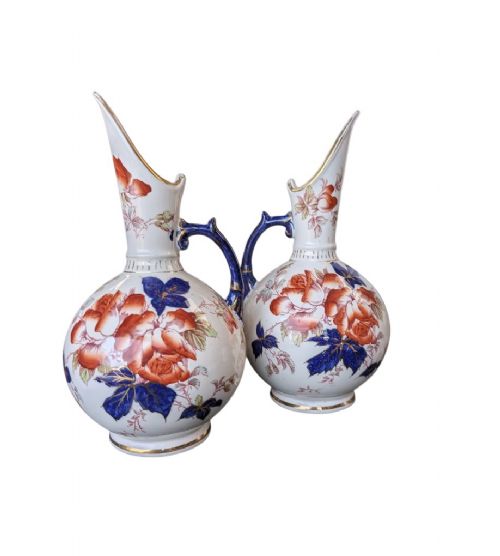
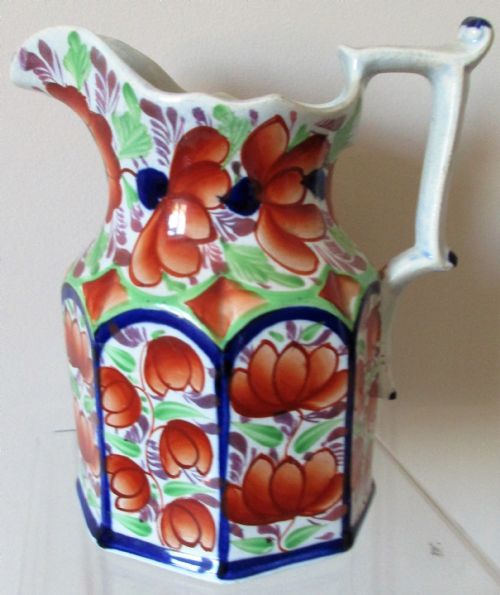
A blue porcelain jug encompasses everything from 17th-century Chinese export pieces and Persian kendis to Georgian Worcester milk jugs and large Victorian washstand sets. You will most frequently encounter 18th-century English porcelain cream jugs alongside 19th-century ironstone and earthenware pitchers.
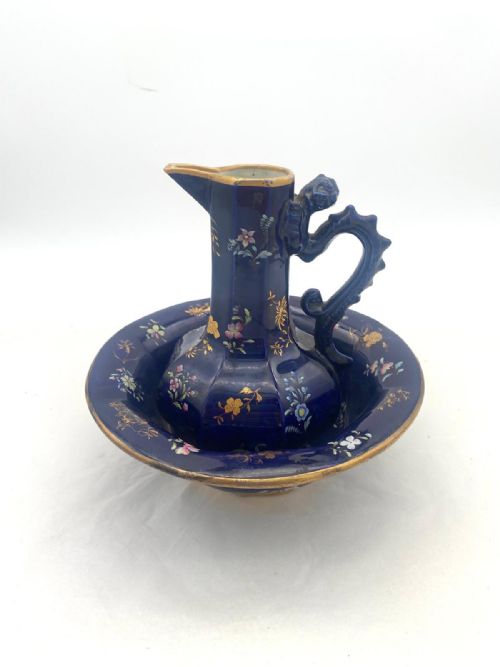
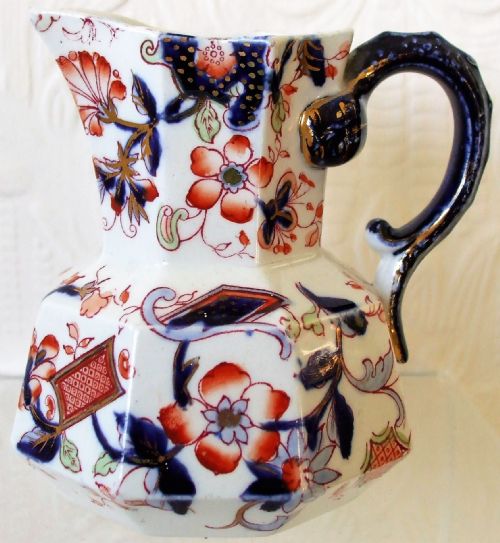
The forms range from small sparrow beak milk jugs and mask head ewers to substantial basin sets and octagonal vessels. These objects served functional roles at the tea table or washstand before becoming purely decorative display items.
How they were made
Makers utilised porcelain, soft-paste porcelain, ironstone, and earthenware, shaping them by hand or mould before applying cobalt glaze. Many examples feature hand-painted underglaze blue decoration, sometimes heightened with enamel or gold leaf.
Early pieces rely on high-temperature Chinese kilns or delicate English paste bodies, while later 19th-century works often employ durable ironstone bodies designed for daily household use.
Blue Porcelain Jug Retail Price Guide 2026
Typical asking prices for blue porcelain jug among the pieces listed under this phrase on Sellingantiques today, from the lower quarter to the upper quarter. They describe what is for sale here now, not the wider market.
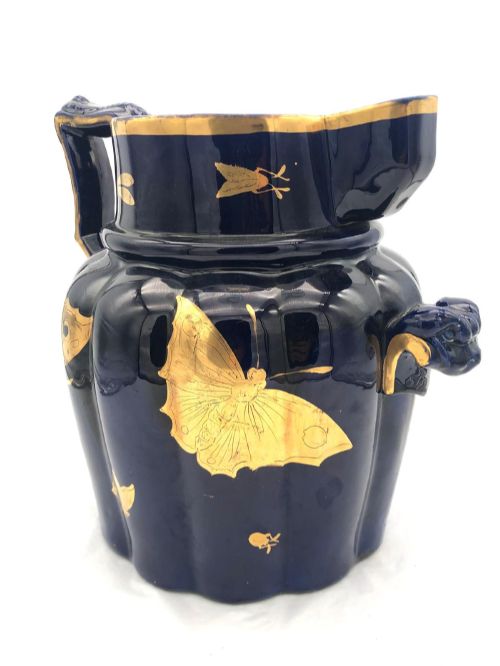
Some Victorian jugs sport fierce grotesque handles designed to frighten away bad tea.
What varies in quality
The refinement of the ceramic body and the crispness of the cobalt glaze dictate the standard of the piece. Early Worcester and Kangxi examples display meticulous brushwork and translucent bodies, whereas mass-produced Victorian wares show heavier glazing.
Artistry in the modelling of handles, such as grotesque forms or mask heads, separates standard utilitarian vessels from superior cabinet pieces.
Flight & Barr Worcester·Dr Wall Worcester·Masons Ironstone·Keeling & Co·Royal Davenport·Doulton Burslem·Stevenson & Hancock
The Blue Porcelain Jug Glossary
- Cobalt glaze
- A deep blue metallic oxide applied beneath or over the glaze to produce rich blue decoration on pottery and porcelain. It withstands high kiln temperatures without losing intensity.
- Ewer
- A large pitcher with a wide spout and elaborate handle, historically used for pouring water or wine at the table. Many include matching basins.
- Soft-paste porcelain
- A ceramic material composed of clay, glass frit, and white slip, fired at lower temperatures than true hard-paste porcelain. It has a warm, slightly creamy body popular in 18th-century English factories.
- Sparrow beak
- A small 18th-century English milk or cream jug featuring a distinctive pinched pouring lip resembling a bird's beak. These typically date to the Georgian period.
- Kendi
- A spouted drinking vessel of Eastern origin, lacking a handle, used for pouring liquids without touching the vessel to the lips. They appear in 17th-century Persian and Chinese production.
Blue Porcelain Jug: Frequently Asked Questions
How do I date an antique blue porcelain jug?
Dating relies upon examining the ceramic paste, glaze characteristics, and factory marks on the base. Early pieces often feature hand-painted cobalt underglaze without maker stamps, while Victorian examples frequently display registry diamonds or printed ironstone marks.
Stylistic cues such as Georgian neoclassical shapes or Chinese export motifs provide further chronological markers. Comparing the handle formation and weight against known period examples helps narrow the decade of production.
Can I use these antique jugs for serving liquids?
While many pieces remain structurally sound, antique porcelain and ironstone jugs are generally enjoyed as display items or decorative vases rather than functional tableware. Thermal shock or accidental knocks can easily damage centuries-old ceramic bodies and historic glazes.
If you choose to use them, avoid sudden temperature changes and hand wash them gently without harsh detergents. Porous earthenware or repaired handles particularly benefit from being kept dry.
Why are some pieces marked as ironstone instead of porcelain?
Ironstone is a patented dense earthenware developed in the 19th century to mimic Chinese porcelain while offering superior strength for daily household use. It is heavier, opaque, and fired at lower temperatures than true porcelain.
Maker firms like Mason utilised ironstone to produce robust kitchen and tablewares that resisted chipping. True porcelain remains thinner, more resonant when tapped, and often translucent.