

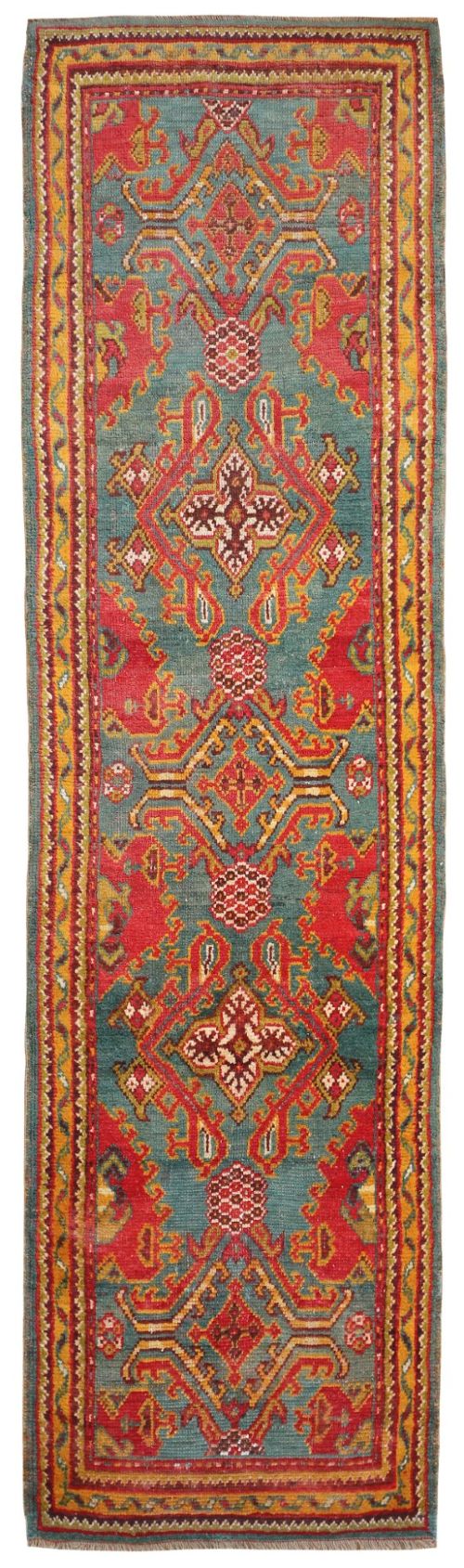
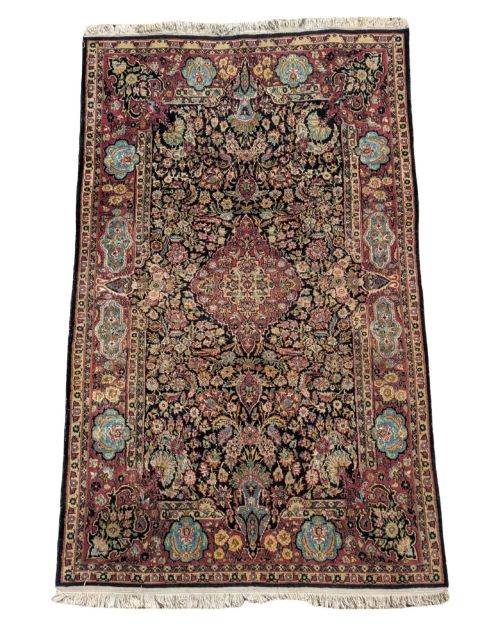
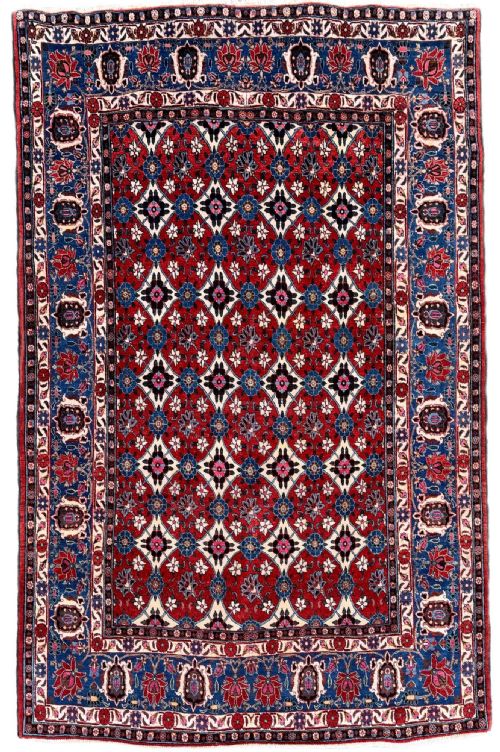
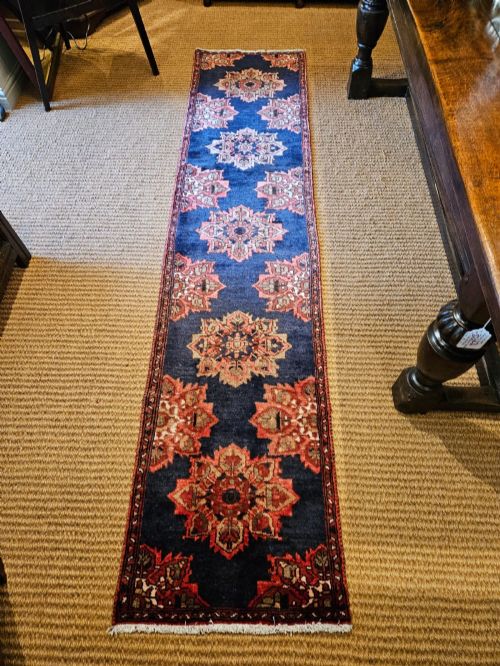



Blue Patterned Wool Carpet
These blue patterned wool carpet selections bring tactile warmth and enduring regional design into a room.
Blue Patterned Wool Carpet
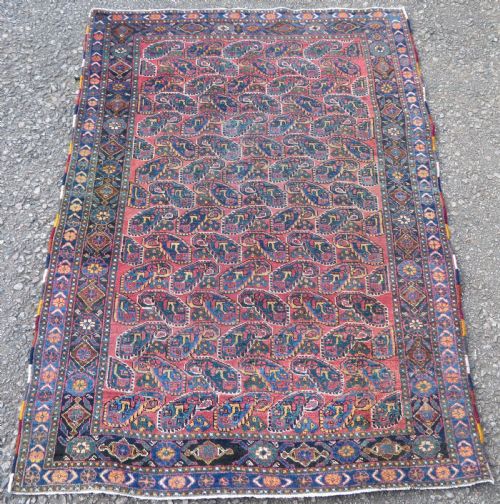
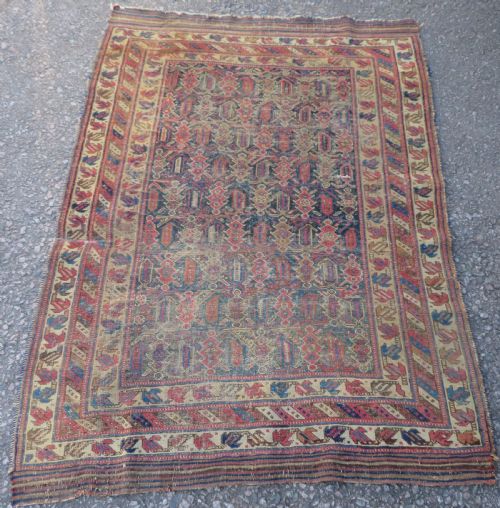
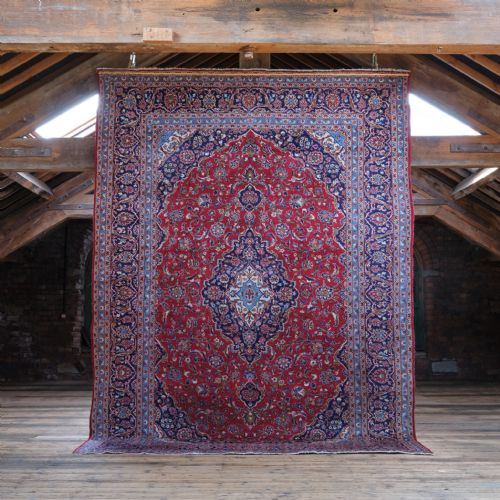
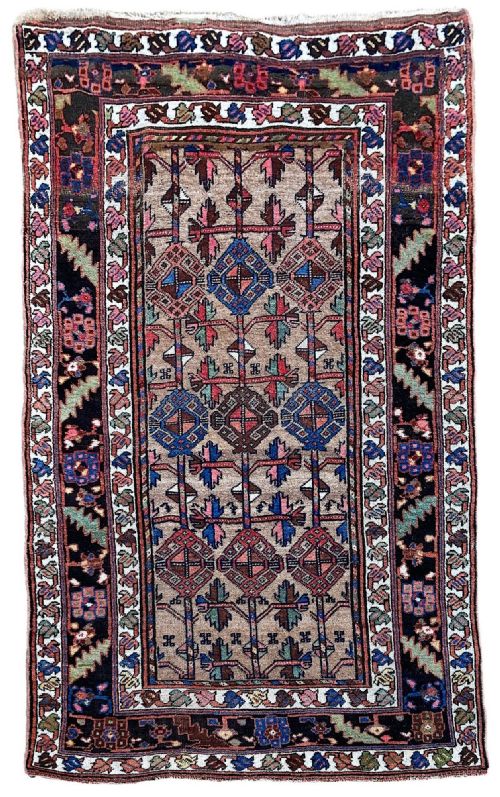
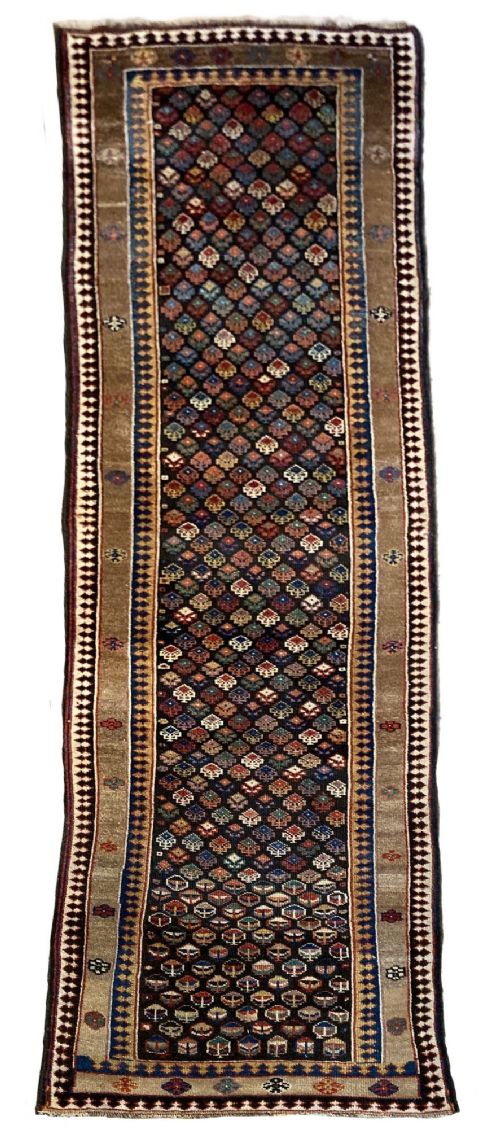
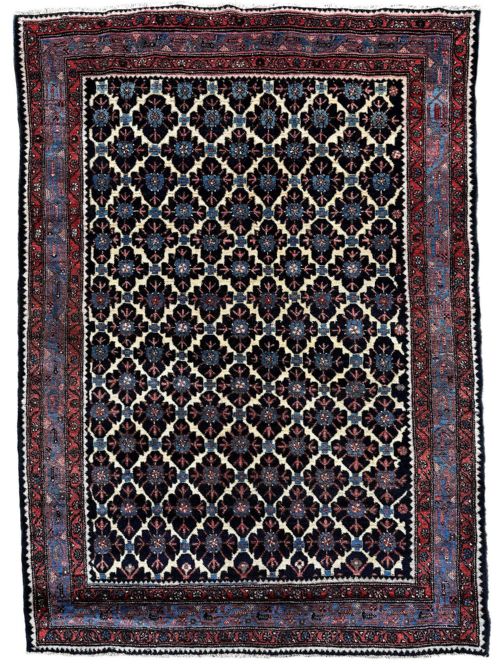
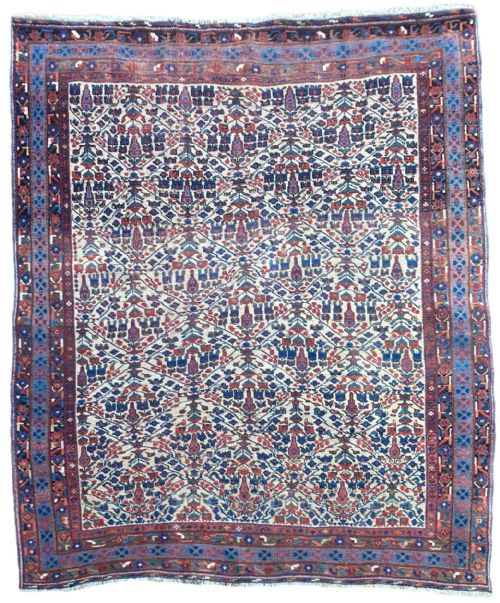
A blue patterned wool carpet encompasses hand-knotted floor coverings and runners originating from Persian, Caucasian, and Anatolian traditions, dating from the nineteenth century through the mid-twentieth century. Buyers searching this phrase look for resilient textiles that display traditional regional motifs executed in shades of navy, indigo, and soft blue.
The selections available range from large area carpets and room-sized formats down to narrow runners and small scatter rugs. Village and tribal pieces such as Kazak, Afshar, and Kurdish rugs appear alongside workshop carpets from Kashan, Heriz, and Ziegler.
Beyond standard floor formats, the forms extend to specialised tribal weavings like torba face pieces and decorative cushions created from older carpet fragments. Most items date from the late nineteenth century to the 1940s, capturing natural dyes and hand-spun materials.
How they were made
Makers constructed these textiles primarily using wool, cotton, and occasional silk highlights, employing hand-knotted techniques on foundation warps. Artisans often utilised hand-spun wool and natural dyes to achieve rich, saturated tones of blue and complementary accent colours.
Weavers worked on upright looms, tying precise knots to secure the pile before finishing the ends and edges with wool bindings. Larger format carpets required months of labour by multiple craftspeople working within specific regional design vocabularies.
Persian and Caucasian styles dominate the inventory, encompassing geometric tribal rugs and finely detailed workshop carpets.
What varies in quality
Knot density and structural integrity dictate the upper tier of the range, where fine knotting allows for crisper delineation of intricate medallions and geometric motifs. The handling of the wool pile itself determines resilience under foot, separating robust everyday floor coverings from finer, decorative pieces.
Material selection creates further distinction, particularly the depth achieved by natural dyes versus later synthetic colourants. The precision of the weave and the fidelity to traditional regional designs separate standard village production from master workshop output.
The Blue Patterned Wool Carpet Glossary
- Pile
- The upright yarn loops or cut ends that form the soft surface of a carpet. This layer absorbs foot traffic and displays the woven design.
- Knot
- The individual loops of wool or silk tied around the warp threads by the weaver. Higher knot counts generally permit finer detail in the pattern.
- Runner
- A long, narrow carpet format designed for hallways, staircases, or corridors. These pieces balance linear geometry with specific room dimensions.
- Warp
- The vertical foundation threads stretched tightly on the loom before knotting begins. Weavers tie the coloured pile yarn directly around these structural cords.
- Natural Dyes
- Colourants derived from plant, insect, and mineral sources rather than synthetic chemicals. These dyes yield complex, varied tones that mellow gracefully over decades.
Blue Patterned Wool Carpet: Frequently Asked Questions
How do I care for an old wool carpet?
Vacuum gently using suction rather than a rotating brush roll to protect the wool pile from unnecessary friction. Professional cleaning by specialists in antique textiles prevents dye bleed and fibre damage.
Keep the carpet out of direct, harsh sunlight to preserve the natural blue dyes. Rotating the placement periodically ensures even wear across high-traffic areas.
Where were these carpets made?
Production centres span Persia, the Caucasus, and Anatolia, encompassing urban workshops, rural villages, and nomadic tribal camps. Specific regions such as Heriz, Kashan, and Shirvan developed distinct local patterns and weaving structures.
Nomadic groups like the Afshar and Kurdish weavers produced smaller rugs and functional bags featuring geometric motifs. Town workshops created grander carpets with curvilinear floral designs.
Can I place these rugs in hallways?
Narrow runner formats suit hallways and corridors, providing underfoot comfort and protection for wooden floors. Wool possesses natural resilience, allowing it to withstand moderate passage when supported by a proper underlay.
Choose pieces with durable pile and sound foundations for high-traffic zones. A quality rug pad prevents slipping and reduces crushing of the wool fibres.
How are different regional styles told apart?
Caucasian rugs display bold geometric medallions and striking primary colours with angular borders. Persian workshop carpets feature sophisticated curvilinear floral arrangements, central medallions, and intricate border bands.
Tribal pieces often incorporate asymmetric elements, zoomorphic figures, and abrash colour variations resulting from successive dyebaths. Examining the knotting style and foundation materials clarifies the geographic origin.