

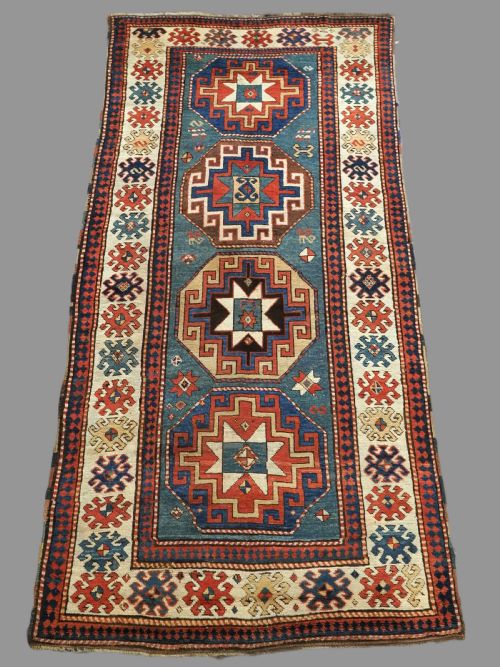

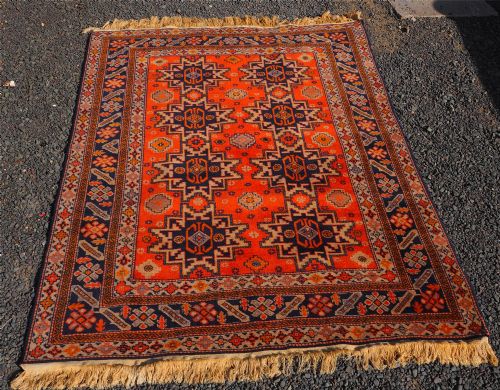
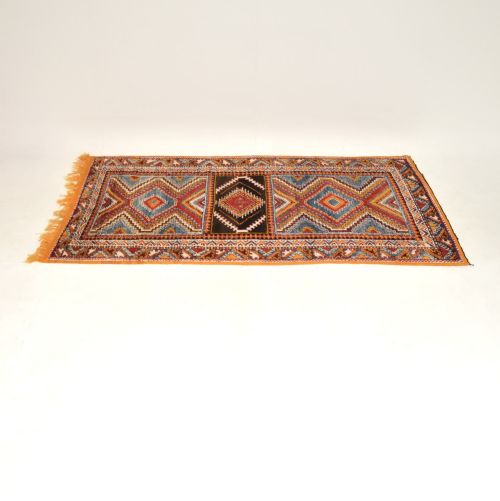
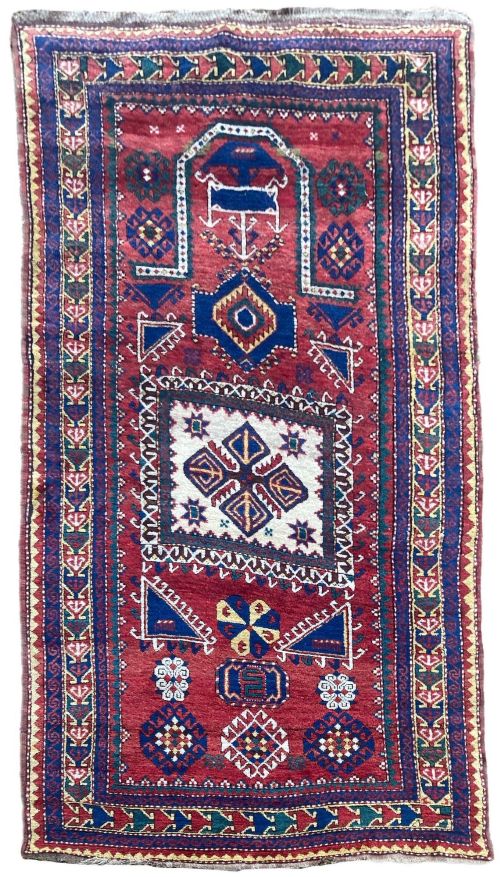
Blue Oriental Runner
A blue oriental runner brings deep indigo tones and tribal geometry into a hallway, offering durable wool construction suited for heavy foot traffic.
Blue Oriental Runner
A blue oriental runner is a long, narrow textile traditionally woven across Persia, the Caucasus, Anatolia, and Tibet during the nineteenth and early twentieth centuries. These elongated floor coverings were designed for corridors, long hallways, and narrow spaces where standard area rugs do not fit.
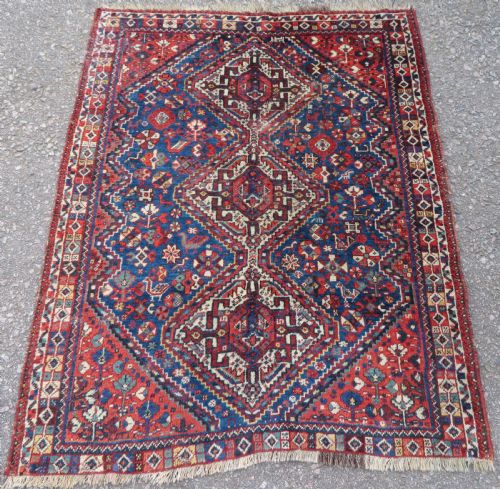
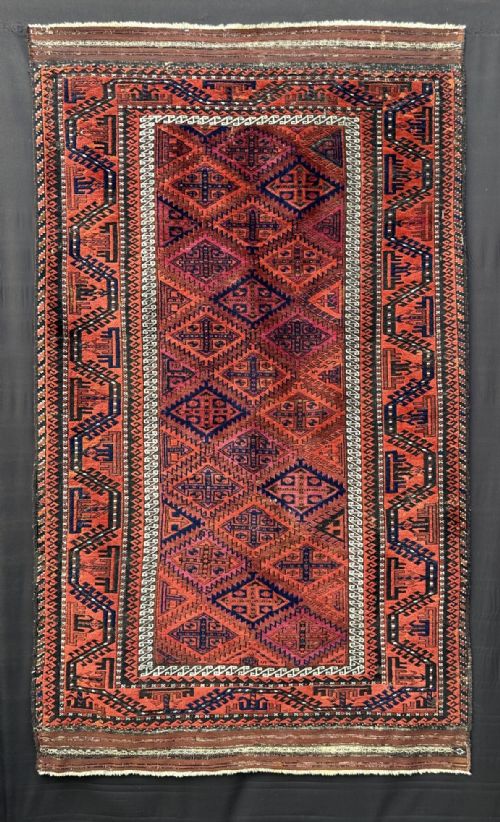
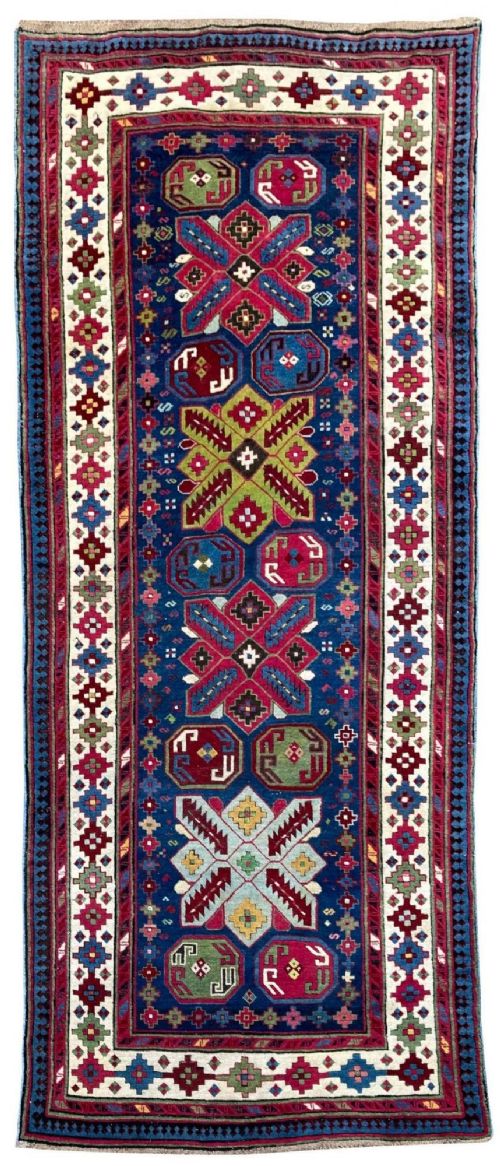
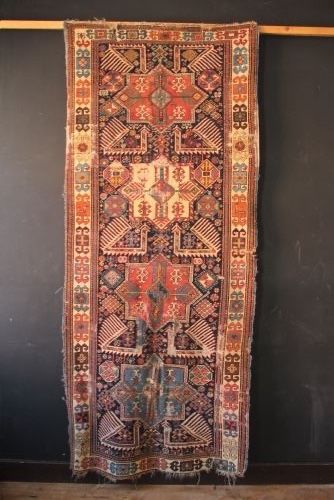
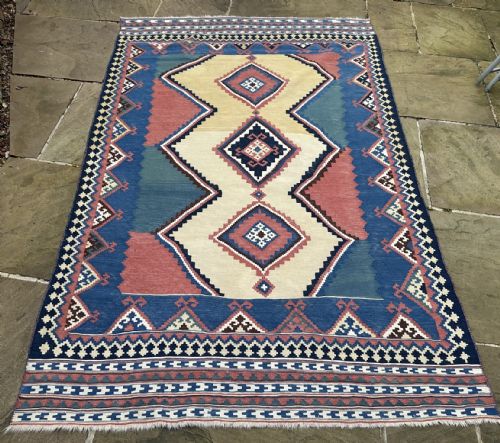
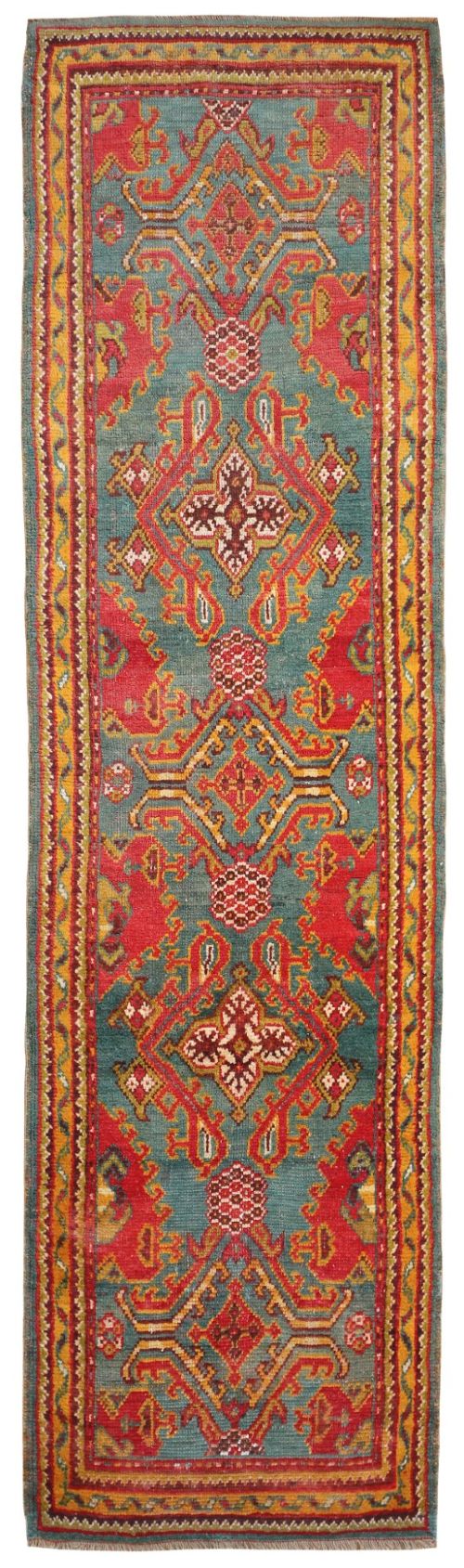
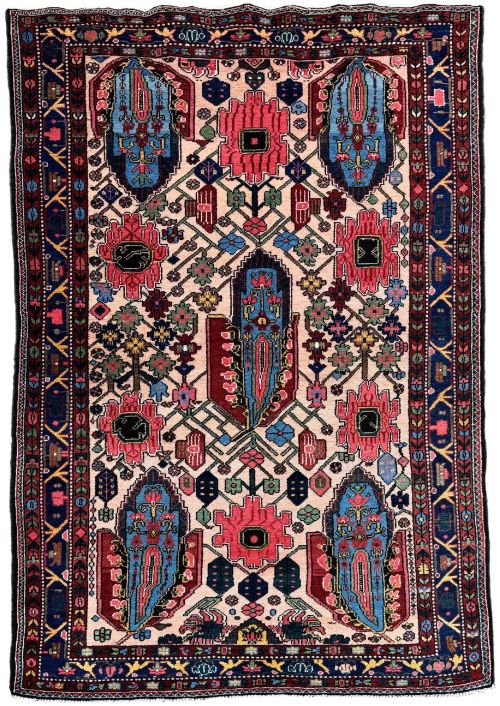
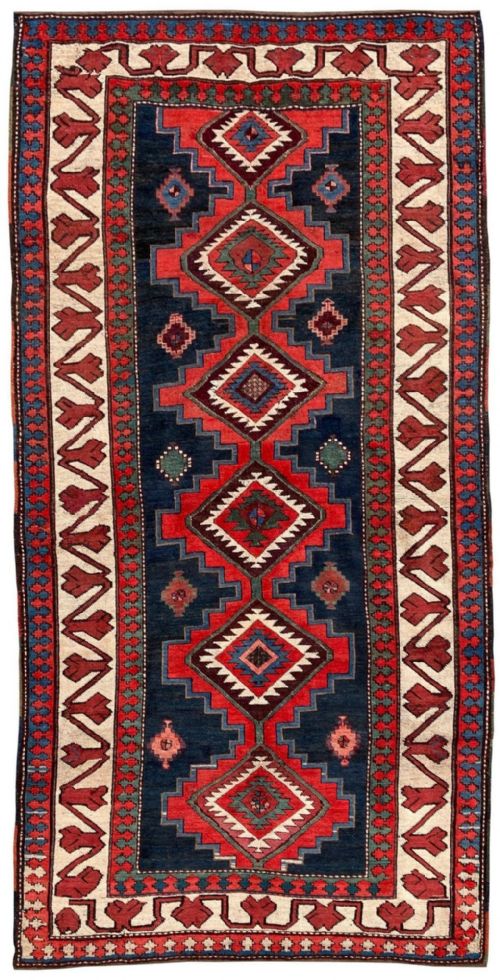
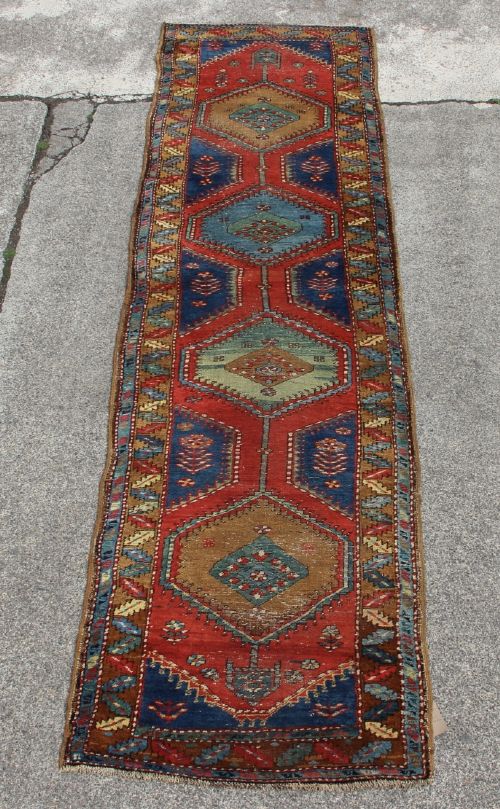
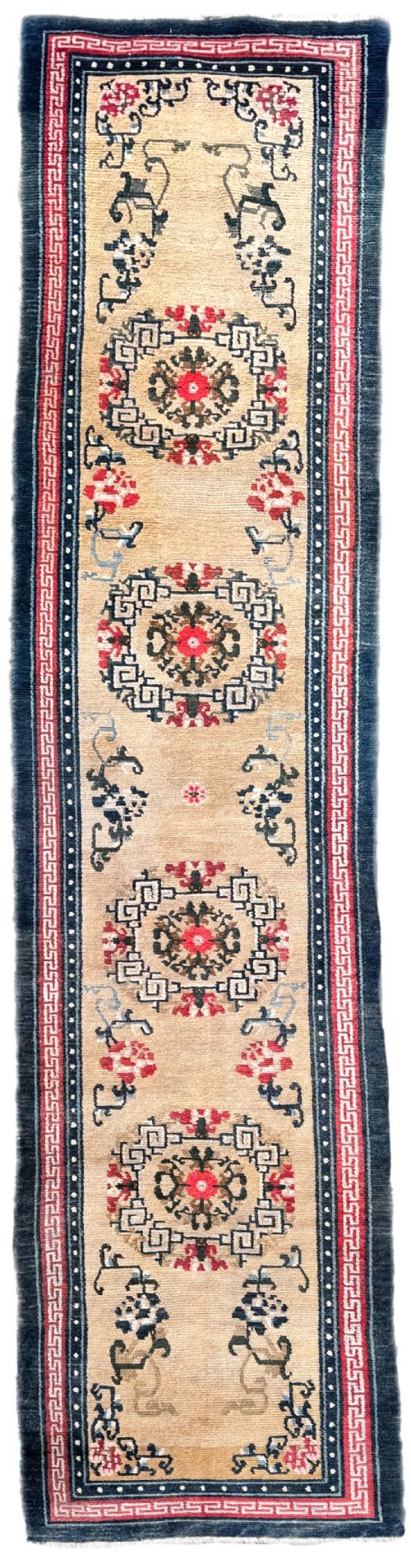
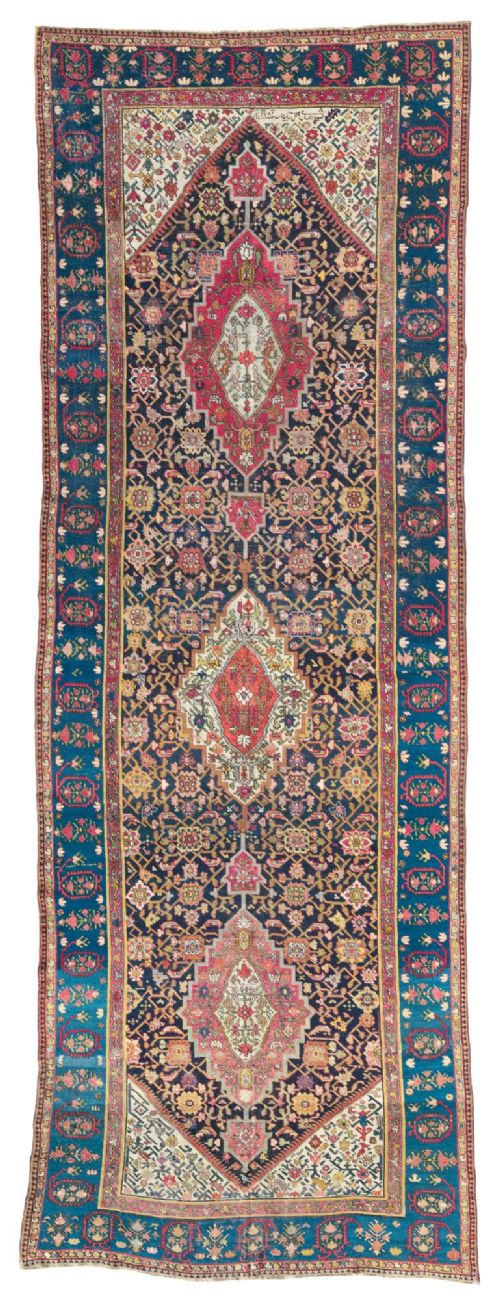
The pieces seen here encompass regional styles such as Caucasian, Khamseh, Kurdish, Ushak, and Tibetan, spanning periods from the mid-nineteenth century up to the 1930s. Runners from this selection often display geometric lattices, tribal motifs, and field patterns executed in indigo and navy shades.
Buyers seeking a blue oriental runner encounter variations including long Kazak and Talish formats, Anatolian corridor carpets, and North West Persian village weaves. Each piece reflects the specific cultural geometry and weaving traditions of its district of origin.
Materials and construction
These textiles rely on hand-spun wool and cotton foundations, utilising durable wool pile knotted or woven by hand across village and tribal workshops. Natural dyes provide the underlying palette, yielding deep blues, madder reds, and earthy tones that age gracefully.
Weavers employed traditional techniques suited to nomadic and stationary looms, incorporating sturdy warp and weft structures that withstand decades of use. The combination of hand-spun wool and natural dyeing agents ensures the pile retains structural integrity and rich coloration.
Blue Oriental Runner Retail Price Guide 2026
Typical asking prices for blue oriental runner among the pieces listed under this phrase on Sellingantiques today, from the lower quarter to the upper quarter. They describe what is for sale here now, not the wider market.
Listings span production dates from 1850 through the 1930s, featuring Persian, Caucasian, Anatolian, and Tibetan tribal traditions.
Assessing quality and character
Quality in these runners rests upon the tightness of the knotting, the precision of the tribal geometry, and the depth achieved by natural dyes. Finer examples display intricate drawing within lattice designs and well-balanced borders.
The condition of the wool pile and the integrity of the foundation determine the longevity of the piece. Superior specimens maintain structural balance across their length while exhibiting rich colour variation developed through age.
The Blue Oriental Runner Glossary
- Runner
- A long, narrow carpet format traditionally utilised in hallways, corridors, and stairs. These pieces measure significantly longer than they are wide to fit linear spaces.
- Natural Dyes
- Colourants derived from plant, insect, and mineral sources prior to the widespread adoption of synthetic aniline dyes in the late nineteenth century. They produce complex, subtle hues that develop a desirable patina over time.
- Pile
- The upright yarn loops or cut ends that form the soft surface of a carpet. In handmade rugs, the pile is knotted densely to the foundation warp and weft.
- Knot
- The individual loops of wool tied around warp threads to form the carpet pile. The density and regularity of knots often indicate the origin and fineness of the weave.
- Warp
- The stationary lengthwise threads stretched tightly on a loom upon which the entire rug is constructed. The exposed vertical cords frequently form the fringe at either end.
Blue Oriental Runner: Frequently Asked Questions
Where should I place a runner in my home?
A long narrow carpet suits corridors, hallways, entryways, and narrow galley spaces where traditional rectangular rugs fail to fit.
Positioning the textile in high-traffic zones allows the durable wool pile to function practically while introducing traditional pattern and indigo colour to transitional areas.
How do I care for an antique wool runner?
Routine gentle vacuuming without a rotating brush roll keeps dust and grit from settling deep into the wool pile. Professional cleaning by specialists in antique textiles ensures the natural dyes and hand-spun fibres remain protected.
Placing an appropriate underlay beneath the textile prevents slipping on hard floors and reduces friction between the foundation and the ground.
What causes the different shades of blue?
Natural dye processes using indigo plant extracts produce variable depths of blue across different dye lots and wool batches. Minor shifts in tone, known as abrash, occur naturally when dye absorption varies during the crafting process.
Age and exposure to light further soften these indigo tones into mellow hues that characterise older village and tribal carpets.