
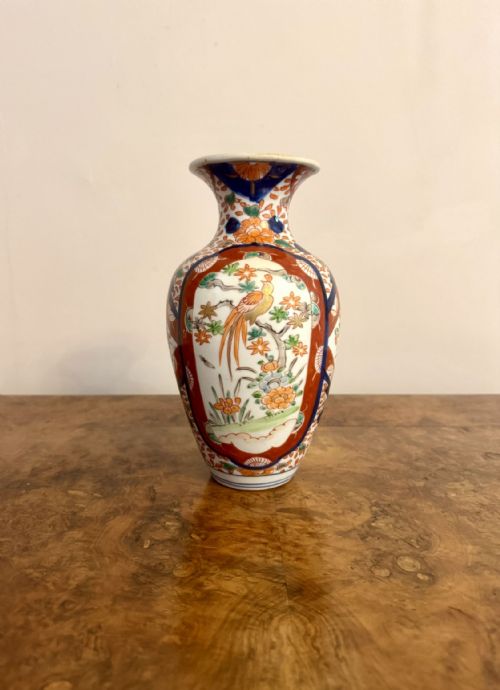


Blue Orange Porcelain Jar
A blue orange porcelain jar brings vibrant cobalt and rust-red palettes into a room, largely taking the form of Japanese Imari wares from the nineteenth century.
Blue Orange Porcelain Jar
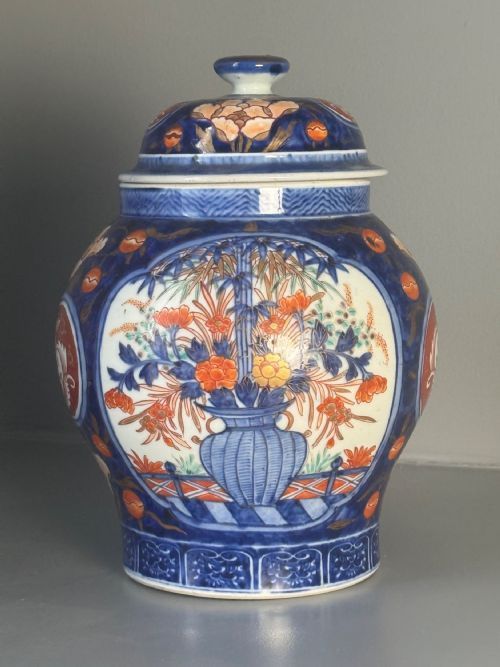
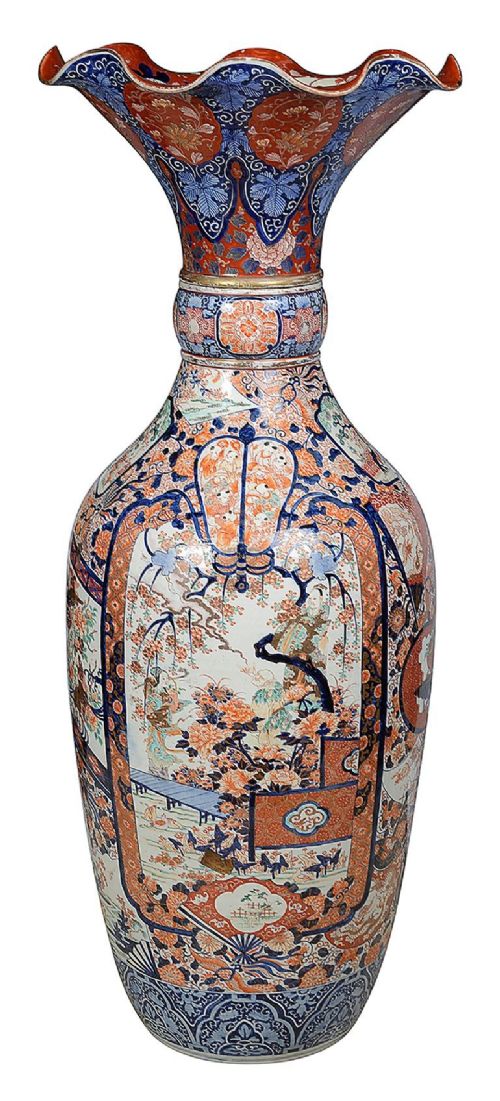
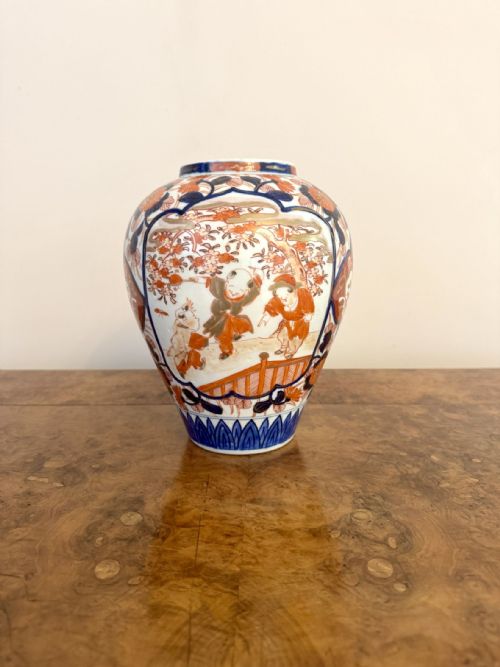
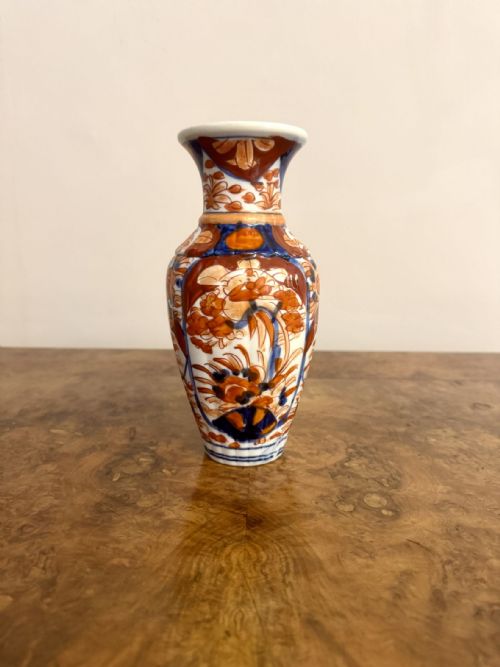
When searching for a blue orange porcelain jar, collectors encounter pieces defined by strong cobalt blue underglazes paired with iron red and gilt highlights. The examples seen here span Japanese Imari export wares alongside Victorian British interpretations.
Most entries on this page take the form of covered ginger jars, baluster vases, and double gourd vessels originating from the Meiji period or late nineteenth century. These objects function equally as decorative centrepieces or converted table lamps.
A smaller subset includes biscuit barrels and sugar bowls decorated in the same distinctive palette, demonstrating how widely the colour scheme was applied across domestic ceramics.
Materials and methods
The foundation of these items lies in hard-paste porcelain or bone china, shaped into forms such as octagonal balusters and lidded ginger jars. Potters applied cobalt blue pigments under the glaze before firing, followed by iron-red enamel and gold leaf details fixed in a second, lower-temperature kiln.
Japanese Arita kilns pioneered the aesthetic later emulated by European manufacturers, combining thrown ceramic bodies with intricate hand-painted enamel decoration. Brass fittings occasionally appear on later pieces adapted for electrical wiring or mounted on stands.
Several ginger jars spent a century moonlighting as biscuit storage before earning a quiet retirement on a mantelpiece.
Assessing quality
Quality rests upon the crispness of the hand-painted cobalt and enamel details, where precise brushwork distinguishes superior export wares from standard production pieces. The depth of the glaze and the preservation of the gold leaf significantly influence the visual impact.
Scale and form also dictate distinction, with large double gourd vases and matched pairs commanding greater presence than smaller single vessels. The weight of the porcelain and the balance of the lid reveal the skill of the original potter.
The Blue Orange Porcelain Jar Glossary
- Imari
- A style of Japanese porcelain originating from Arita, exported extensively through the port of Imari, traditionally characterised by a palette of underglaze blue, iron red, and gilt. This aesthetic heavily influenced European ceramic design during the Victorian era.
- Baluster
- A vase form featuring a rounded body that tapers toward the base and swells near the lower centre, frequently fitted with a matching cover. This shape provides a stable canvas for dense panelled decoration.
- Double Gourd
- A vessel shape resembling two stacked bulbous spheres, symbolising good fortune and heavily utilised in Japanese ceramic traditions. Pairs of these containers often serve as balanced mantel ornaments.
- Biscuit Barrel
- A ceramic container with a fitted lid used historically for storing dry biscuits at the dining table, often mounted with metal hardware. Victorian examples frequently adopt the Imari colour scheme.
- Koro
- A traditional Japanese incense burner typically featuring a pierced lid and three or more feet, frequently rendered in porcelain. These vessels often form part of larger decorative Garnitures.
Blue Orange Porcelain Jar: Frequently Asked Questions
Where were these jars made?
The majority originate from Japanese kilns in Arita during the Meiji period and late nineteenth century, exported widely to European markets.
At the same time, British potteries such as Royal Crown Derby produced domestic Victorian interpretations using the same distinctive palette.
How do I date a piece?
Dating relies on stylistic clues, potting techniques, and material traits, as many export wares carry no maker marks.
Nineteenth-century examples typically show dense hand-painted iron-red and cobalt decoration, while later twentieth-century pieces display different glaze textures and base markings.
Can I use them as lamps?
Several listings on this page show pieces that have been successfully converted into table lamps or spill vases.
This adaptation occurred frequently during the twentieth century, transforming decorative jars into functional lighting without altering the ceramic body.
Are lids usually original?
Most lidded jars and ginger containers retain their original matching covers, which is vital for completeness.
Checking the fit and the continuity of the glaze pattern between body and lid helps confirm authenticity.