



Blue Nursing Chair
A blue nursing chair brings low seating and characteristic nineteenth-century comfort to a modern bedroom or fireside.
Blue Nursing Chair
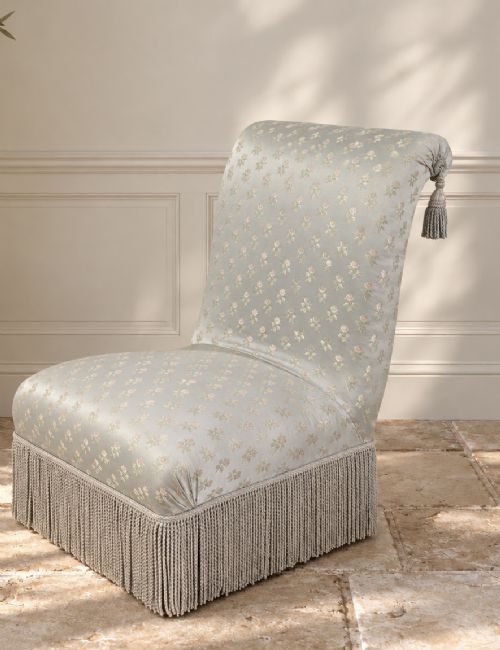
A blue nursing chair is typically encountered as a Victorian or nineteenth-century bedroom chair, slipper chair, or low armchair upholstered in fabric or velvet. These pieces span the Regency, Victorian, Art Nouveau, and Edwardian periods, appearing in forms such as low fireside chairs, rocking chairs, and small occasional chairs.
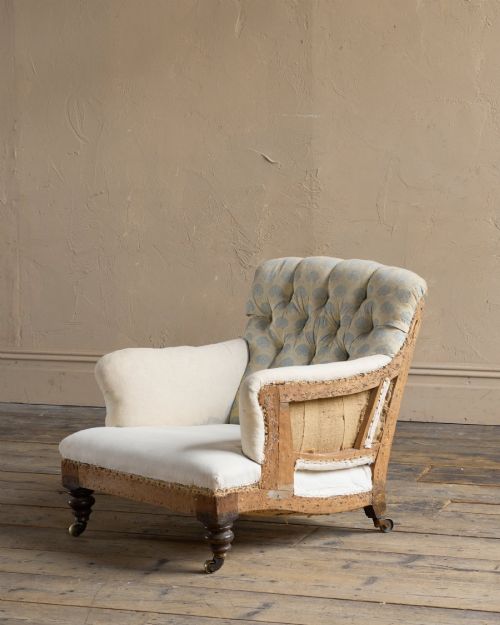
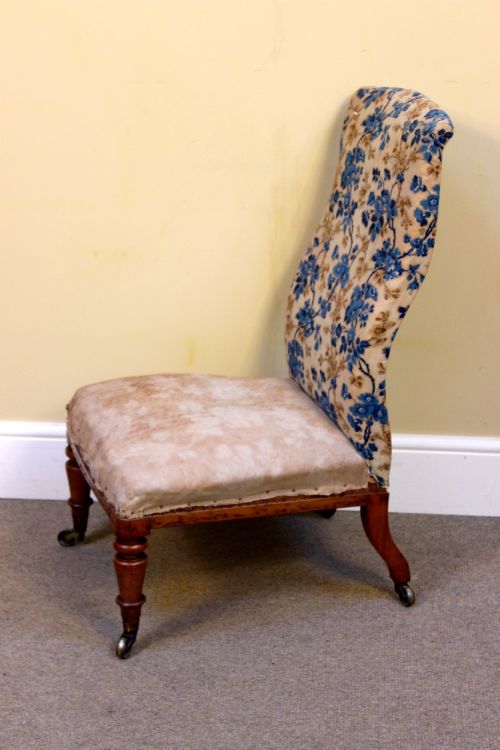
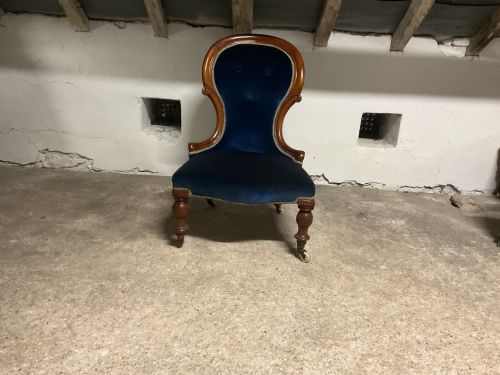
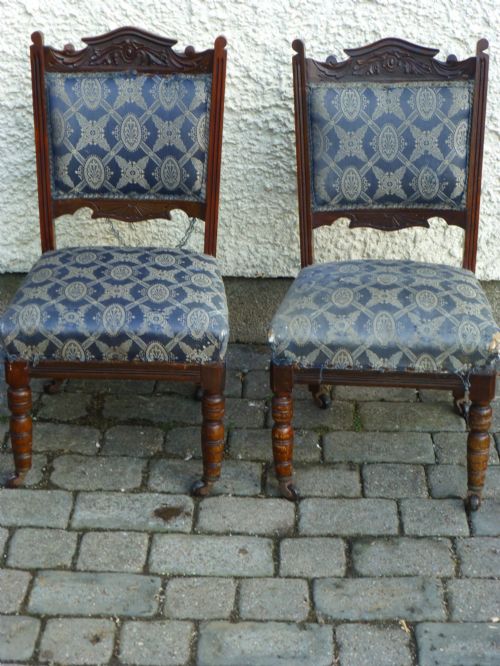
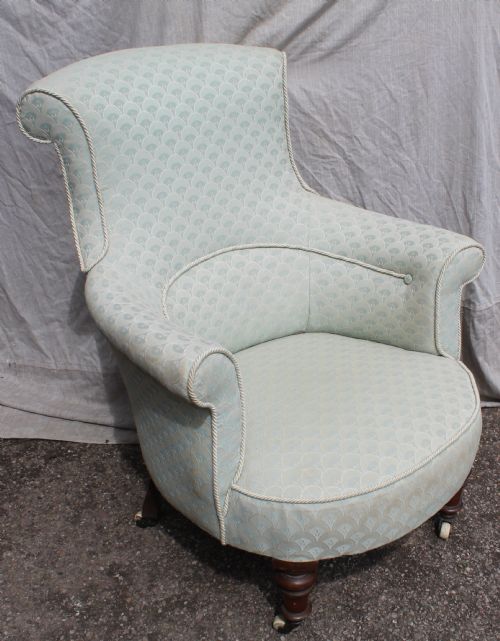
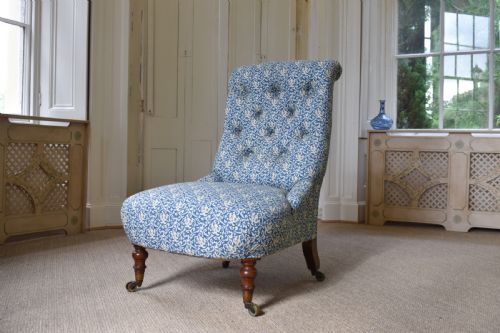
The low profile of a blue nursing chair defines its function, designed originally for nursery or fireside use where a seated person needed a lower vantage point. Examples on this page include button-backed mahogany and carved walnut frames, often featuring turned front legs fitted with castors.
Makers and workshops of the nineteenth century produced these low chairs in mahogany and walnut, frequently pairing them with velvet, cotton, or modern geometric upholstery fabric. Buyers seeking a blue nursing chair will find both restored examples ready for placement and pairs requiring reupholstery.
Materials and construction
Upholstery relied on natural stuffing materials supported by webbing and springs, finished with fabrics such as velvet, cotton, and patterned upholstery fabric. Many Victorian and Edwardian examples incorporate button-backed detailing and decorative brass castors on turned wooden legs.
Blue Nursing Chair Retail Price Guide 2026
Typical asking prices for blue nursing chair among the pieces listed under this phrase on Sellingantiques today, from the lower quarter to the upper quarter. They describe what is for sale here now, not the wider market.
Materials recorded across the inventory range from carved walnut and solid mahogany to iron, brass castors, and velvet upholstery.
Judging quality in low seating
Quality in a nineteenth-century low chair rests in the crispness of the timber carving and the integrity of the frame construction. Carved walnut and mahogany frames with refined proportions and original turned components represent the higher tier of production.
The standard of upholstery work and the choice of covering fabric significantly alter the finished character of the chair. Pieces retaining well-executed buttoning and sturdy internal framing distinguish themselves from simpler or more utilitarian bedroom chairs.
Howard and Sons
The Blue Nursing Chair Glossary
- Nursing chair
- A low-seated Victorian armchair traditionally used in bedrooms or nurseries. These chairs feature shortened legs to allow comfortable seating while tending to infants or dressing.
- Slipper chair
- An upholstered bedroom chair with no arms and very short legs. This form originated in the eighteenth century and remained popular through the Victorian era for dressing rooms.
- Buttoned back
- An upholstery technique where depressions are created in the padded backrest by pulling cord or thread through the padding to secure buttons in a geometric pattern.
- Castor
- A small wheel mounted on a swivel assembly attached to the bottom of chair legs. They allowed heavy Victorian seating to be moved easily across carpets.
- Turned leg
- A wooden chair leg shaped on a lathe to create decorative rings, columns, or spiral patterns. This method was standard for nineteenth-century seating.
Blue Nursing Chair: Frequently Asked Questions
What is a blue nursing chair?
A blue nursing chair is a low nineteenth-century armchair, slipper chair, or bedroom chair upholstered in blue fabric or velvet. These pieces were built with shorter legs to sit closer to the floor.
Today, buyers use them as decorative accent chairs in bedrooms or beside living room fireplaces where a compact, low profile is desirable.
How old are these chairs?
The chairs listed on this page primarily date from the nineteenth century, encompassing the Regency, Victorian, and Edwardian eras. Most examples originate between 1850 and 1900.
Design details such as turned wooden legs, buttoned upholstery, and carved walnut or mahogany frames help identify this period of manufacture.
Where should I place one?
Because of their low height and compact dimensions, these chairs suit bedrooms, dressing rooms, and fireside settings. They function well as occasional seating where standard armchairs might overwhelm the floor space.
Their restrained proportions also make them effective reading chairs in smaller corners of a room.
How do I care for antique upholstery?
Maintaining fabric upholstery involves regular gentle vacuuming with a soft brush attachment to remove dust and prevent fibres from matting. Keeping the chair away from direct sunlight protects the blue dye from fading over time.
Wooden frames benefit from occasional dusting with a dry cloth and should be kept away from sudden changes in room temperature.