

Blue Landscape Art
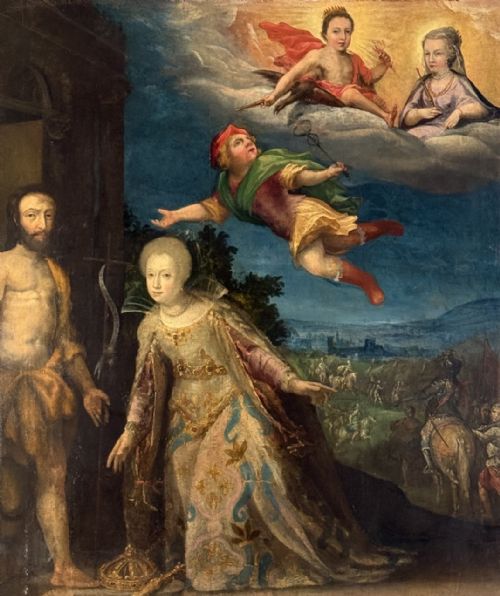
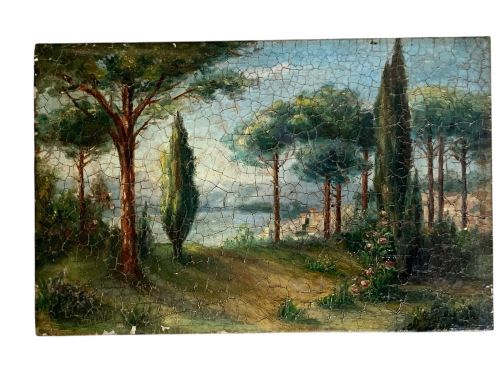
Blue landscape art spans centuries of watercolours and oils, capturing coastal scenes and river valleys that bring depth and historic atmosphere to a room.
Blue Landscape Art
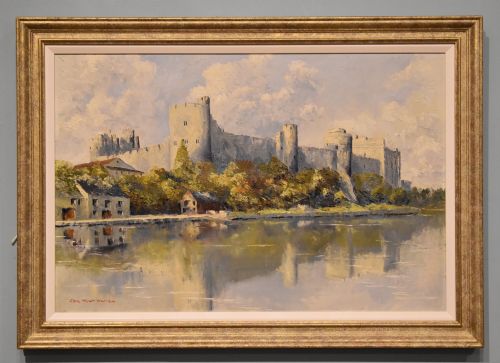
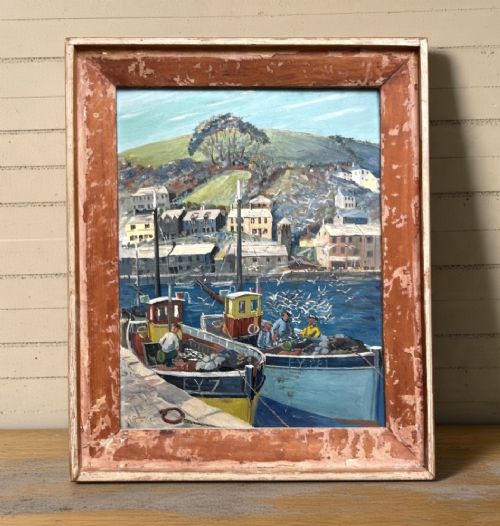
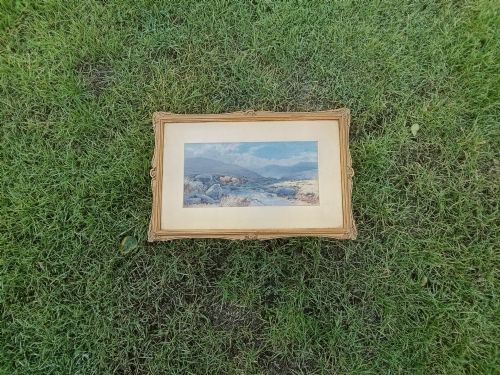
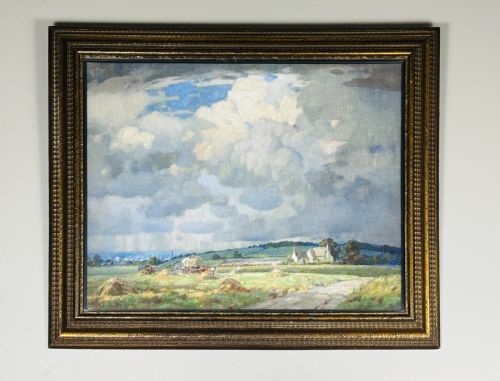
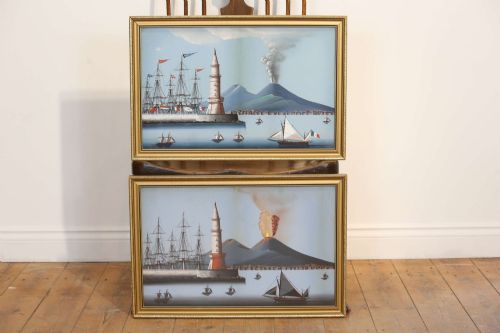
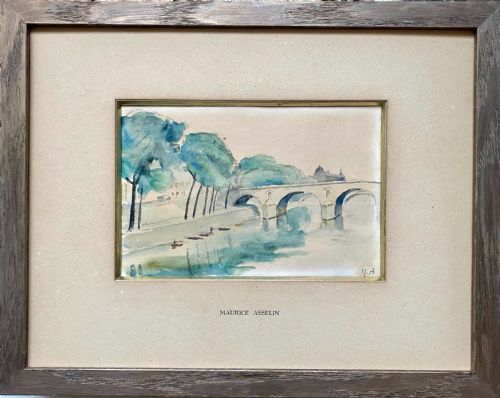
Blue landscape art encompasses paintings, watercolours, and pastel drawings depicting scenes dominated by marine views, lakes, and rivers. These works range from nineteenth-century watercolours of Scottish lochs to mid-twentieth-century oil paintings of coastal Cornwall and the Mediterranean.
Buyers look for these pieces to introduce atmospheric tones into an interior, relying on the cool palette of water and sky. The selection includes framed paintings, porcelain plaques, and enamel panels that translate vast vistas onto intimate surfaces.
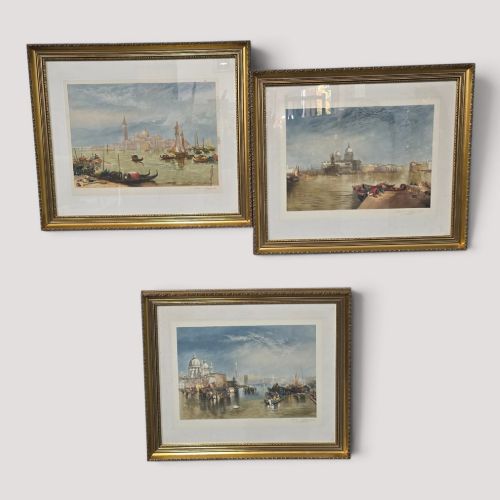
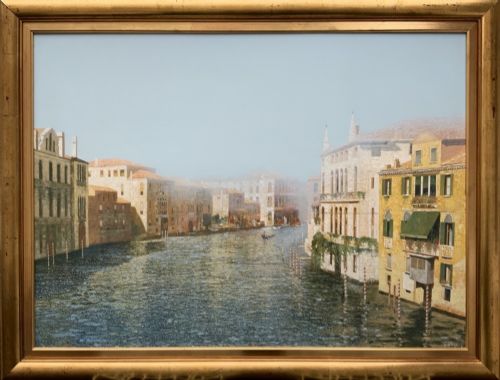
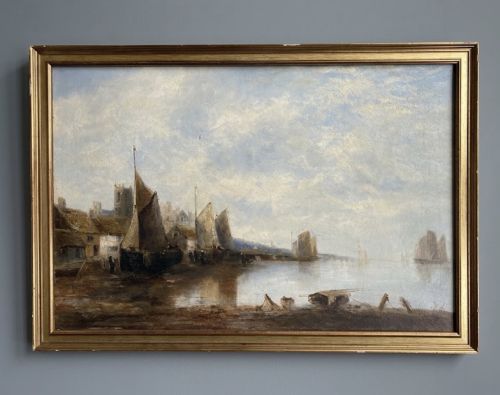
Most examples originate from British and European hands, capturing traditional subjects like Venetian canals, Lake District waters, and harbour scenes. The formats vary from grand oil canvases to modest studio portfolios of pastel and gouache.
Materials and Technique
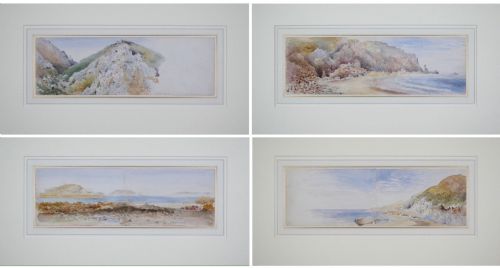
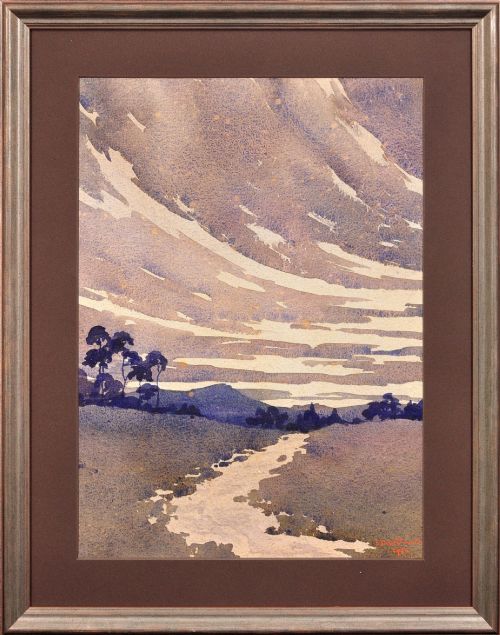
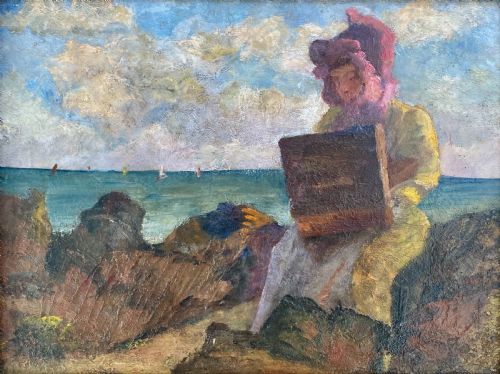
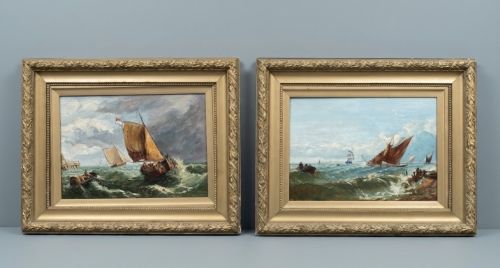
The medium defines the character of each piece, utilising oil paint on canvas, transparent washes of watercolour on paper, or rich pastel and gouache combinations. Canvas supports allow for textured impasto in marine and coastal views, while paper preserves the delicate luminosity of skies and distant water.
Artists working en plein air applied these materials directly to capture changing light across sea and shore. Enamel work on silver boxes and plaques demonstrates the same landscape traditions rendered through kiln-fired pigments on metal.
Blue Landscape Art Retail Price Guide 2026
Typical asking prices for blue landscape art among the pieces listed under this phrase on Sellingantiques today, from the lower quarter to the upper quarter. They describe what is for sale here now, not the wider market.
Listings feature works spanning the nineteenth century through the 1960s, utilising canvas, paper, oil, and watercolour.
Assessing Quality and Execution
Quality rests on the sureness of the hand and the handling of light within the blue and grey palette. Superior works demonstrate precise control over atmospheric perspective, distinguishing atmospheric distance in skies and water without relying on formulaic brushwork.
The distinction between standard decorative pieces and finer works lies in the depth of tone and the integration of the subject with its support. Stronger compositions command the eye through confident mark-making, whether in the fluid transparency of a watercolour wash or the dense application of oil paint.
Angus Rands·Philip Naviasky·Herbert Royle·Sir David Murray RA·Donald McIntyre·Guild of Handicrafts·William Taylor Longmire·Thomas Miles Richardson Jnr·James Orrock·William Henry Earp·Richard Principal Leitch·Alfred Young Nutt·Percy Lancaster·Reginald Arthur Borstel·Sidney A. Court·Robert Leslie Howey·John E. Aitken·William Banks Fortescue·Thomas William Morley·Alfred Pollentine·Lucy Pratt
The Blue Landscape Art Glossary
- Watercolour
- A painting method where fine pigment is suspended in a water-soluble binder and applied to paper. It relies on the white of the paper to provide luminosity through translucent washes.
- Impasto
- Paint applied thickly to a canvas or panel so that it stands out from the surface. This technique preserves the physical gesture of the brush and catches real light.
- En plein air
- The practice of painting outdoors directly from the subject. It allows artists to capture transient effects of light and weather in real time.
- Pastel
- A dry painting medium consisting of powdered pigment and a binder rolled into sticks. It offers immediate colour saturation and soft textural effects.
- Gouache
- An opaque water-soluble paint similar to watercolour but mixed with a white pigment to create a heavier, denser finish. It provides solid matte coverage for highlights and details.
Blue Landscape Art: Frequently Asked Questions
How do I date an antique blue landscape?
Dating relies on stylistic markers, framing conventions, and the physical characteristics of the paper or canvas support. Nineteenth-century works often feature detailed wash techniques, whereas mid-century examples lean towards looser impressionistic brushwork.
Examining the reverse of the frame or panel frequently reveals artist inscriptions, studio stamps, or exhibition labels that narrow down the period of execution.
Where should I hang a watercolour landscape?
Watercolours require careful placement away from direct sunlight to prevent the pigments and paper from fading over time. Hanging them on interior walls with controlled ambient lighting preserves the subtle blue tones of skies and water.
Pairing them with neutral walls allows the cool palette of the landscape to draw the eye without competing with other furnishings.
What is the difference between oil and watercolour landscapes?
Oil paintings use a heavier binder that allows for textured brushwork and deep, saturated layers of blue pigment on canvas or wood panels. Watercolour works on paper depend on transparency and light reflecting through thin washes.
Oils generally offer a robust surface suited to marine storms and coastal views, while watercolours excel at capturing atmospheric morning mists and quiet lakes.
How do I care for antique works on paper?
Works on paper need archival framing with acid-free mounts to prevent discolouration and deterioration from trapped moisture. Keeping them in stable indoor environments protects both the paper fibres and the water-soluble pigments.
Glass fronts protect the surface from dust and accidental contact, provided the mount creates sufficient space between the paper and the glazing.