



Blue Guilloche Enamel Case
These blue guilloche enamel case pieces offer intricate patterned metalwork beneath translucent colour, combining practicality with striking geometric design.
Blue Guilloche Enamel Case
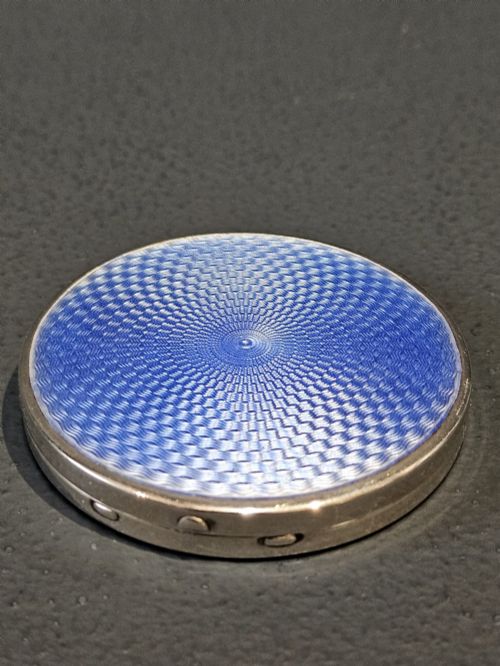
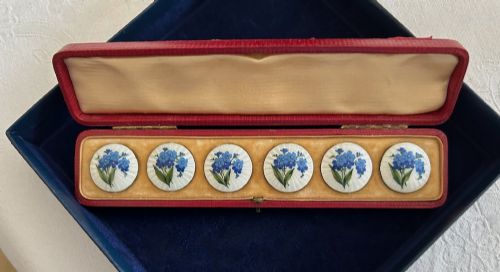
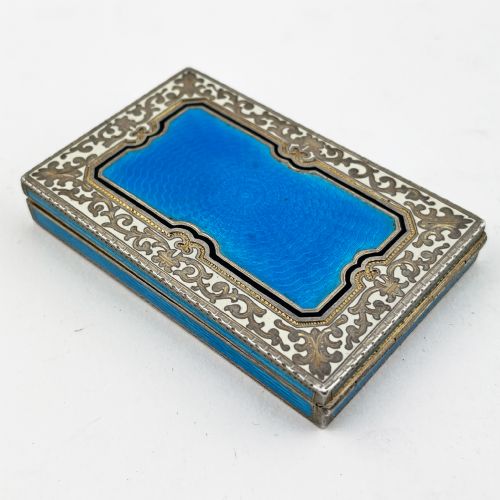
A blue guilloche enamel case brings together functional personal accessories and detailed decorative craft spanning the Edwardian era through the mid twentieth century. When searching for a blue guilloche enamel case, collectors encounter a variety of forms including powder compacts, card cases, cheroot holders, boudoir timepieces, buttons, and teaspoons.
The objects originate from the nineteenth century, Edwardian period, and the nineteen-tens, nineteen-twenties, nineteen-thirties, and nineteen-forties. Art Deco and Edwardian design movements heavily influence the aesthetic, presenting clean geometric layouts alongside delicate floral enamelling.
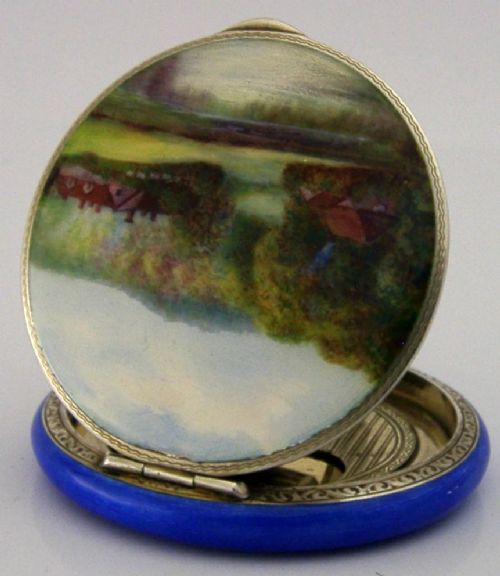
Most examples found on this page display sterling silver or standard silver foundations beneath the vitreous coating, though gilt metal and chrome also appear. Interiors may feature suede linings or hand-painted details that distinguish individual items.
How they were made
The underlying metal surface receives a precise mechanical engraving using a rose engine lathe to cut repetitive geometric patterns into the substrate. This technique, known as guilloche, provides a shimmering texture that reflects light through subsequent layers.
Vitreous enamel is applied in powdered form over the engraved metal and fired at high temperatures to fuse the glass to the silver or base metal. Artisans frequently hand-paint additional floral motifs directly onto the fired enamel surface before a final glaze is applied.
Blue Guilloche Enamel Case Retail Price Guide 2026
Typical asking prices for blue guilloche enamel case among the pieces listed under this phrase on Sellingantiques today, from the lower quarter to the upper quarter. They describe what is for sale here now, not the wider market.
The listings span pieces from the nineteenth century, Edwardian era, and the nineteen-tens through nineteen-forties, constructed from silver, enamel, and chrome.
What varies in quality
The crispness of the underlying machine engraving dictates the visual depth of the piece, where sharper cuts produce a more vibrant play of light through the translucent glaze. Deeper, more complex engine-turned patterns require greater skill from the metalsmith.
The uniformity and purity of the vitreous enamel coating separate standard production items from finer workshop output. Freedom from bubbling, discolouration, or irregular thickness indicates superior firing control in the kiln.
Henry Matthews·Henry Perkins and Sons·Evans
The Blue Guilloche Enamel Case Glossary
- Guilloche
- An ornamental engraving technique where a mechanical lathe etches precise geometric repeating patterns into metal. This process creates the characteristic shimmering backdrop seen beneath translucent enamel.
- Vitreous Enamel
- A material made by fusing powdered glass to a substrate through firing at high temperatures. The resulting glossy coating provides durable colour and protection for the metal underneath.
- Sterling Silver
- An alloy of silver containing ninety-two point five percent silver by mass and seven point five percent other metals, usually copper. This standard metal forms the structural body for many finer compacts and card cases.
- Compact
- A small portable case containing a mirror and typically used for holding face powder. These accessories often feature elaborate enamel lids and internal compartments.
- Cheroot Case
- A rigid container designed to hold small cigars or cheroots safely in a pocket or handbag. They frequently share dimensions with card cases of the period.
Blue Guilloche Enamel Case: Frequently Asked Questions
What is a guilloche case?
A guilloche case is a personal accessory featuring precision-engraved metal beneath a translucent layer of coloured glass enamel. These items include compacts, card holders, and small timepieces.
The engraved pattern shows through the glaze to create a distinctive radiating or wave-like optical effect.
How do I date an enamel compact?
Dating relies on hallmarks stamped into the silver, stylistic indicators such as Art Deco geometry, and associated materials like chrome or suede linings.
Maker marks and silver assay office stamps provide the most precise chronological markers for these pieces.
Were these cases used daily?
Original owners carried these items as fashionable daily accessories for holding cosmetics, calling cards, or cigarettes. Boudoir clocks sat upon dressing tables for everyday timekeeping.
Their sturdy silver and metal construction allowed them to withstand regular handling in pockets and handbags.
How should I clean enamel items?
Maintenance requires gentle wiping with a soft, damp cloth to remove surface dust without abrasive polishes. Harsh chemical cleaners can damage the delicate vitreous glaze or lift hand-painted details.
Silver components may be polished carefully with a specialist cloth while avoiding direct contact with the enamel edges.