



Blue Gouache Artwork
Blue gouache artwork offers a vivid palette of opaque pigments on paper, prized by collectors for its rich tone and fine handling.
Blue Gouache Artwork
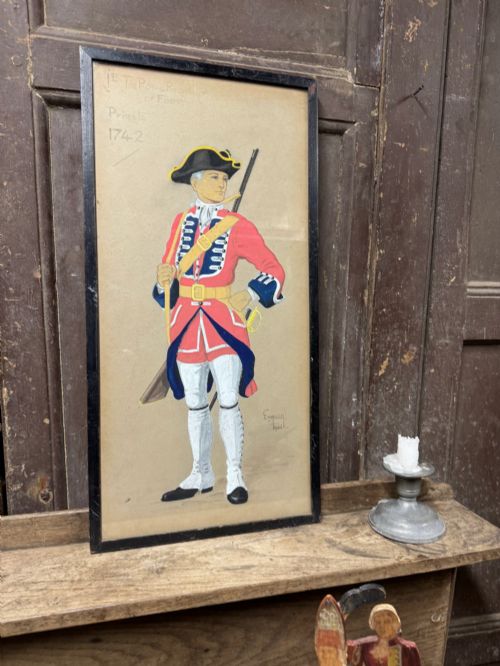
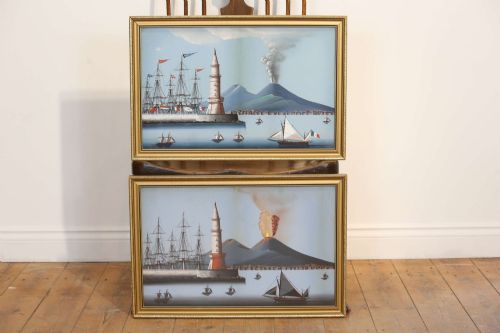
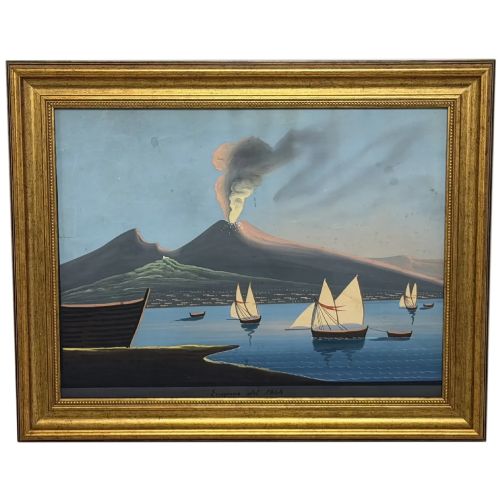
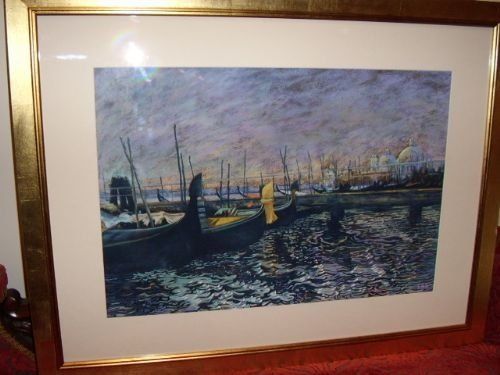
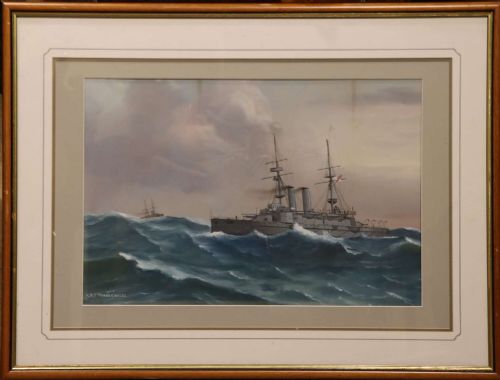
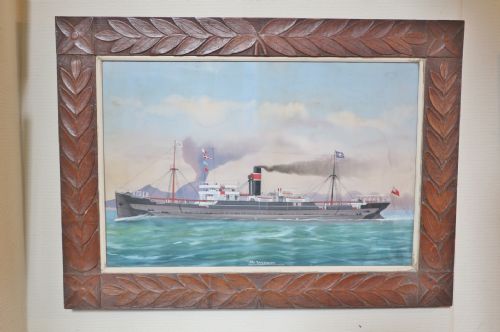
Blue gouache artwork spans maritime scenes, landscapes, and abstract compositions created across several centuries. The pieces on this page include framed paintings, wall art, and miniatures.
The selections range from nineteenth-century romantic and Chinese export pith paper works to early twentieth-century British impressionism and mid-century modernism. Buyers encounter diverse regional subjects from Italian lakes to Arabian landscapes.
Makers and artists represented span named painters such as Vincenzo D’Esposito and Kershaw Schofield alongside anonymous historical creators. Each piece demonstrates the distinctive opaque quality of water-based pigment.
Materials and construction
These works utilise gouache pigment combined with watercolour or ink applied to paper, card, or pith paper. Pith paper provides a delicate, absorbent surface typical of nineteenth-century Chinese export items.
Supports often include wood and glass within period frames that protect the fragile pigment. Pigments are brushed onto the paper to create flat areas of saturated blue tone or detailed miniature work.
Blue Gouache Artwork Retail Price Guide 2026
Typical asking prices for blue gouache artwork among the pieces listed under this phrase on Sellingantiques today, from the lower quarter to the upper quarter. They describe what is for sale here now, not the wider market.
Sailors and travellers recorded distant ports on fragile pith paper using vivid blue pigment.
Variations in quality
Quality rests in the precision of the brushwork and the preservation of the opaque pigment across the paper surface. Finer examples display confident handling of light and maritime or landscape detail.
The integrity of the original frame and mount contributes significantly to the overall standing of an artwork. Superior pieces maintain their vibrant blue hues without extensive fading or surface abrasion.
Vincenzo D’Esposito·Kershaw Schofield·Milton Drinkwater·Andrè Maurice
The Blue Gouache Artwork Glossary
- Gouache
- An opaque water-based paint consisting of pigment, water, and a binding agent such as gum arabic. It dries to a smooth, matte finish that reflects less light than oil paint.
- Pith paper
- A traditional Chinese support material sliced from the pith of the Tetrapanax papyrifer plant. It has a velvety texture that absorbs water-based pigments with exceptional brilliance.
- Watercolour
- A transparent medium often used alongside gouache to add washes and fine linear details. The combination allows artists to balance translucent and opaque passages.
- Pigment
- The finely ground coloured powder that forms the basis of the paint. Historical works utilise various mineral and organic compounds to achieve deep blue shades.
- Framed artwork
- A piece enclosed within a protective border of wood and glass. Original frames from periods like the Edwardian era enhance the historical context of the painting.
Blue Gouache Artwork: Frequently Asked Questions
What is blue gouache artwork?
Blue gouache artwork consists of paintings created with opaque water-based pigments where blue tones dominate the composition. These pieces utilise paper supports and often feature maritime, landscape, or abstract subjects.
Artists value the medium for its ability to deliver dense colour saturation and precise detail. The works range from small miniatures to large framed paintings.
How do I care for gouache on paper?
Gouache paintings require protection from direct sunlight to prevent the pigments from fading over time. Keeping the works behind glass in stable environmental conditions preserves the paper support.
Avoid hanging these pieces in areas with high humidity to protect both the pigment and the backing. Proper framing ensures the fragile painted surface remains untouched.
How old are these paintings?
The pieces span multiple periods from the eighteenth century through to the mid-twentieth century. Early examples include Chinese export pith paper works and European maritime scenes.
Later items venture into mid-century modernism and abstract compositions. Each period employs distinct stylistic conventions and mounting techniques.
Are these paintings original works?
The listings feature hand-painted original works rather than modern mass-produced reproductions. Artists applied the pigment directly to paper or card during their respective periods.
Signatures and historical inscriptions on the works or frames often provide clues to their authorship and origin. This direct creation gives each piece a unique character.