




Blue Glazed Staffordshire Figure
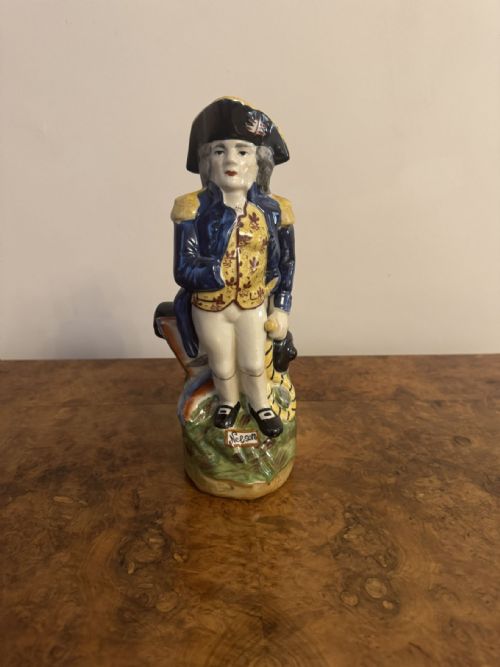
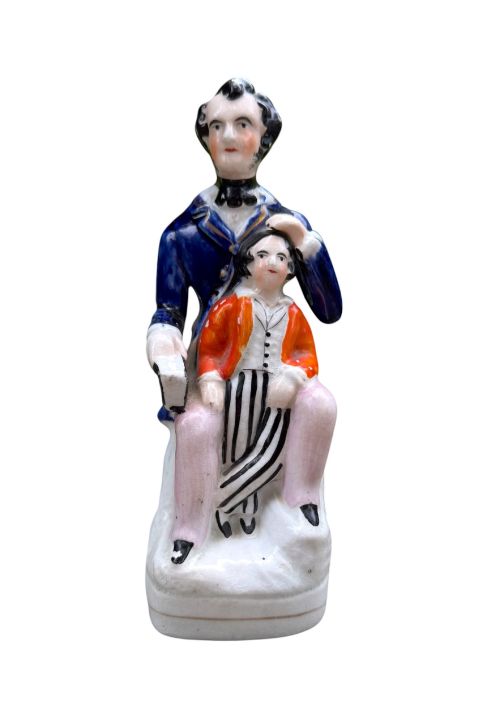
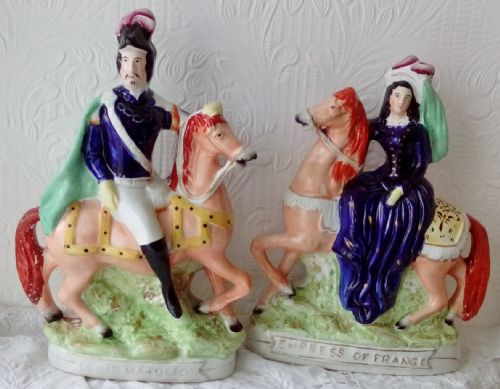
A blue glazed staffordshire figure brings Victorian character to a room through hand-painted earthenware and striking cobalt decoration.
Blue Glazed Staffordshire Figure
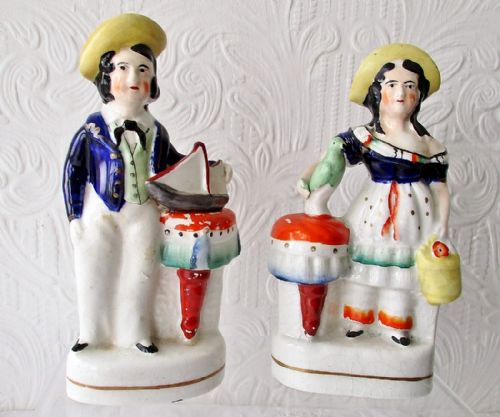
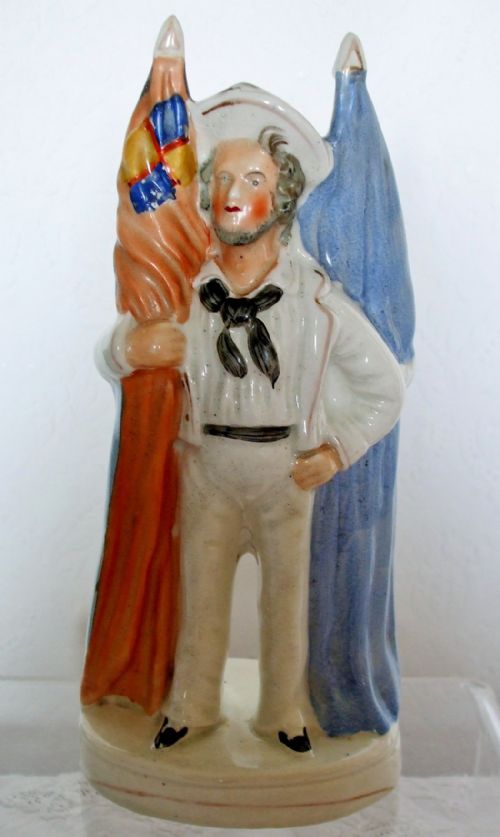
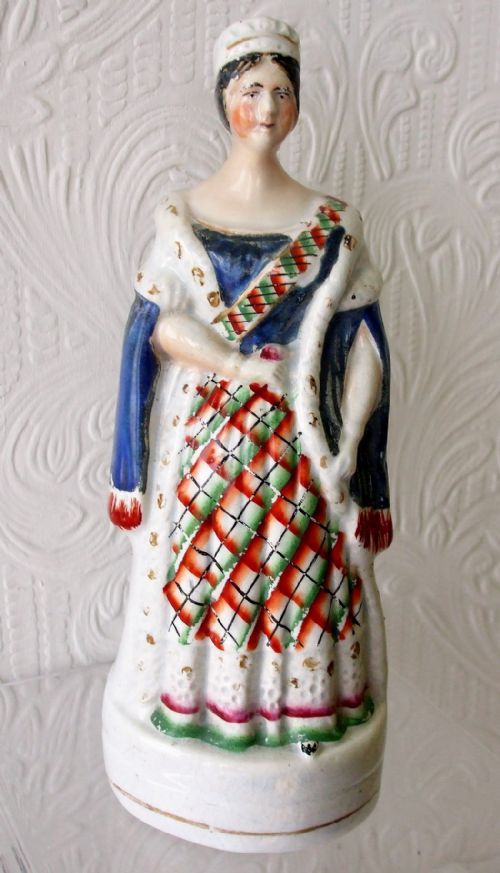
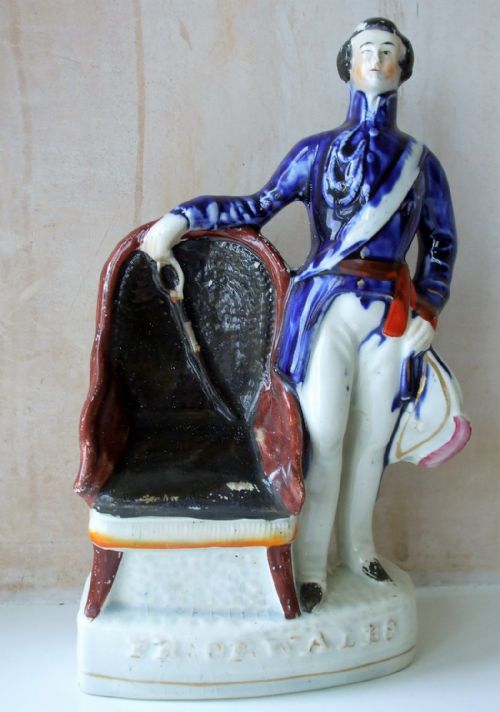
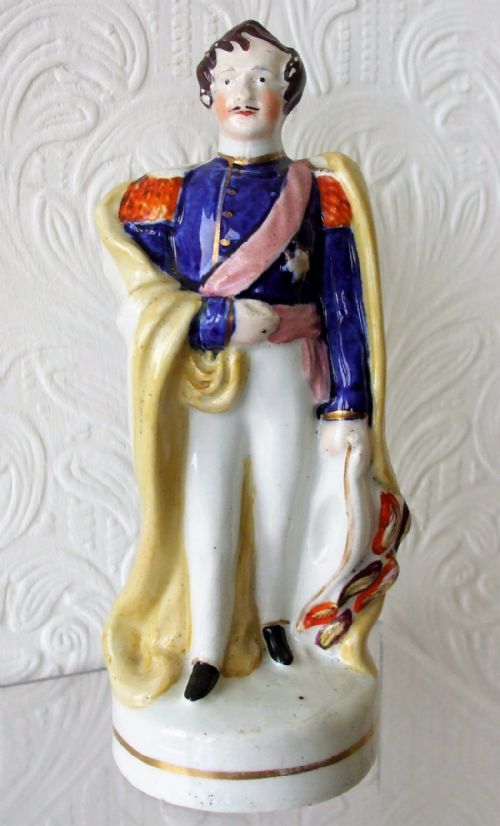
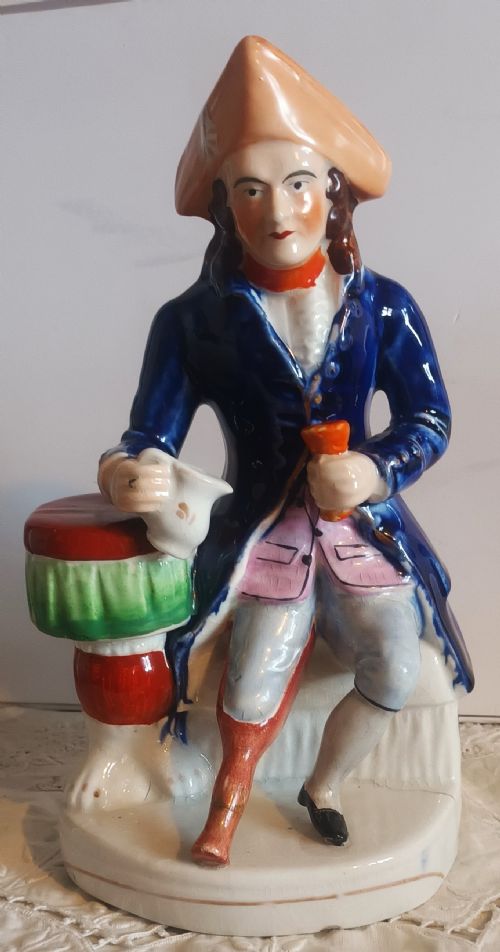
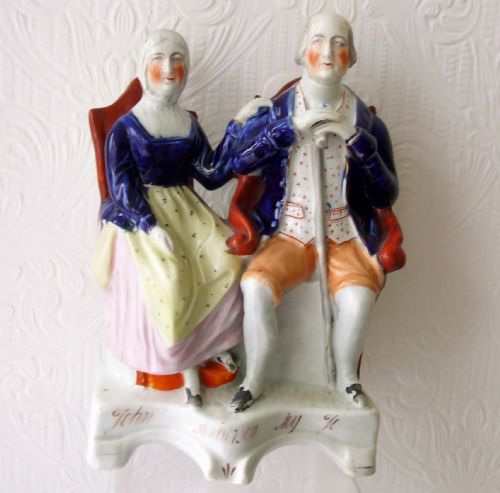
A blue glazed staffordshire figure represents the portrait subjects, animals, and literary characters modelled in the potteries during the nineteenth century. These ceramic works capture royals, sailors, and domestic pets in forms ranging from flatback ornaments to functional inkwells and watch holders.
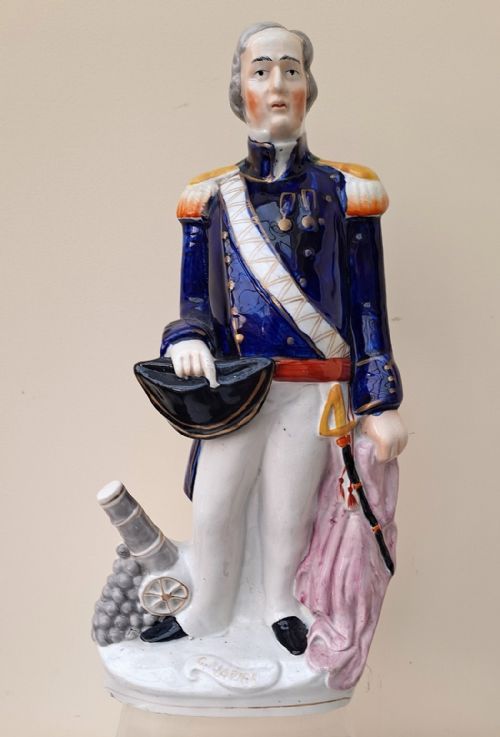
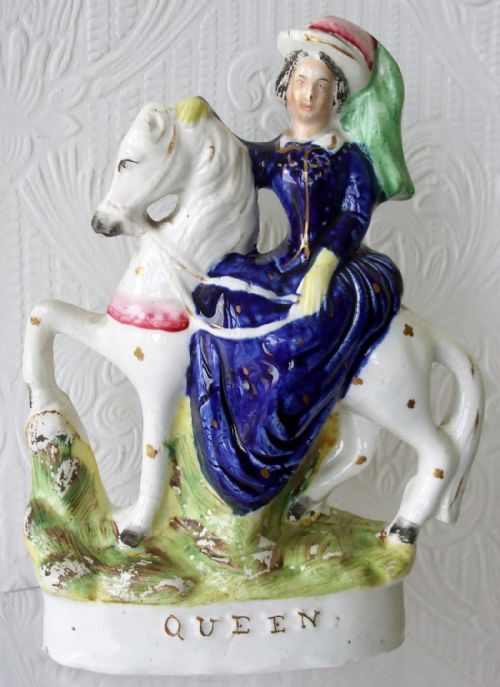
Buyers most frequently encounter Victorian pieces shaped as portrait subjects like Queen Victoria or literary figures such as John Anderson, My Jo. The selection on this page centres on earthenware bodies finished with distinctive glazes and enamel highlights typical of the period.
Materials and methods
Potters shaped these earthenware figures using local clay before applying lead glaze and vibrant enamel paint to create the colourful surface details. Many examples incorporate cobalt blue glaze to accentuate garments, bases, and decorative trim.
Select pieces receive hand-painted touches in gold leaf or detailed enamel paint over the fired ceramic body. Artisans produced these objects across the nineteenth century using traditional moulding techniques suited to Staffordshire pottery workshops.
Blue Glazed Staffordshire Figure Retail Price Guide 2026
Typical asking prices for blue glazed staffordshire figure among the pieces listed under this phrase on Sellingantiques today, from the lower quarter to the upper quarter. They describe what is for sale here now, not the wider market.
Materials recorded across the inventory include ceramic, enamel paint, gold leaf, and cobalt blue glaze.
Judging the range
Larger figures, such as grand portrait groups and detailed animal models, demand greater skill from the potter and present a more ambitious composition on the mantelpiece.
The Blue Glazed Staffordshire Figure Glossary
- Flatback
- A figure moulded with a finished front and a plain, unglazed or semi-glazed back designed to sit against a wall.
- Earthenware
- A porous ceramic body fired at lower temperatures, standard for nineteenth-century Staffordshire production.
- Lead glaze
- A glossy coating applied to pottery before firing that gives the surface a smooth and protective sheen.
- Enamel paint
- Coloured decoration applied over the fired glaze and subjected to a lower second firing.
- Spill vase
- A hollow ceramic figure incorporating a small cylinder meant to hold wooden spills for lighting fires.
Blue Glazed Staffordshire Figure: Frequently Asked Questions
What subjects appear on these figures?
Makers modelled these ceramics after British royalty, military commanders, literary characters, and domestic animals.
Subjects span from Queen Victoria and Admiral Sir Charles Napier to greyhounds, poodles, and pairs of dalmatians.
How were these ceramic pieces used?
Households placed these colourful figures on mantelpieces, sideboards, and tables as decorative ornaments during the Victorian era.
Certain forms served practical purposes, functioning as inkwells, quill holders, watch-holders, or spill vases.
Are these figures solid or hollow?
Staffordshire potters typically hollowed out these earthenware pieces to ensure even drying and firing in the kiln.
Flatback figures feature a distinct flat rear wall, allowing the ornament to rest flush against a shelf.
How do I identify a flatback figure?
Turn the piece around to check the reverse side, which lacks the detailed modelling and vibrant painting found on the front.
This construction method became standard for nineteenth-century mantelpiece ornaments intended to be viewed from one direction.