





Ceramic Military Figurine
These ceramic military figurine pieces capture historic conflicts and leaders through Victorian Staffordshire pottery and continental porcelain.
Ceramic Military Figurine
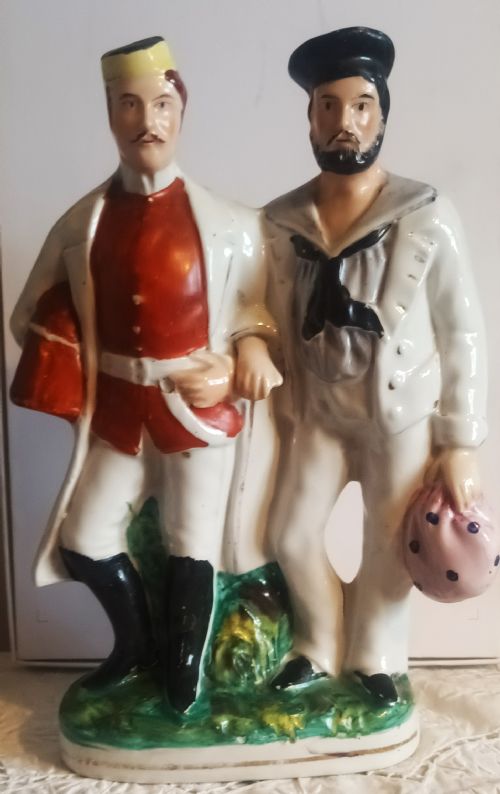
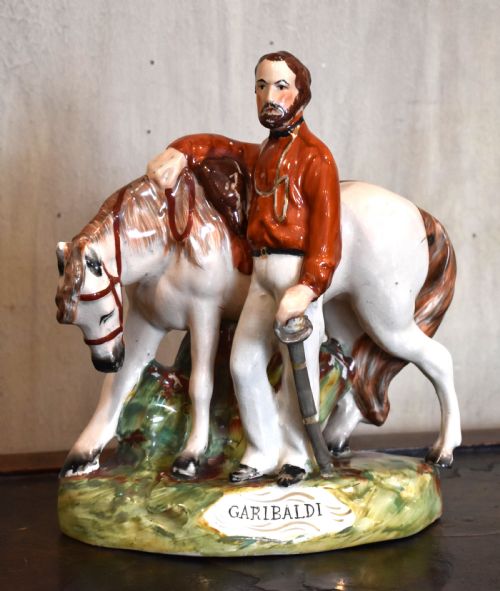
A ceramic military figurine represents soldiers, sailors, monarchs and commanders from the nineteenth century, capturing personalities such as Napoleon III, Garibaldi and Admiral Sir Charles Napier. These pieces take the form of portrait figures, decorative figures and pairs depicting historic alliances and campaigns.
Buyers searching for a ceramic military figurine most frequently encounter nineteenth century Victorian Staffordshire pottery figures alongside hard-paste porcelain examples. Subjects range from Crimean War sailors and royal portrait figures to generals and foreign leaders.
The objects serve as commemorative and decorative figures that reflect the political events and military figures of the Victorian era. Originating primarily from English potteries, these glazed ceramic pieces record historical conflicts and alliances through modelled likenesses.
How they were made
Potters shaped these figures using earthenware and hard-paste porcelain, applying lead glaze and enamel paint to finish the surface. Skilled hands added gilt detailing to enhance uniforms, insignia and decorative bases.
The manufacturing process combined moulded ceramic forms with hand-painted enamel colours and glazing techniques typical of Victorian pottery workshops. Makers utilised glaze layers to protect the painted details and give the figures their characteristic shine.
Ceramic Military Figurine Retail Price Guide 2026
Typical asking prices for ceramic military figurine among the pieces listed under this phrase on Sellingantiques today, from the lower quarter to the upper quarter. They describe what is for sale here now, not the wider market.
The documented periods span the nineteenth century, including specific dates such as eighteen-sixty and the Victorian era.
What varies in quality
The definition of the ceramic form and the evenness of the glaze application distinguish superior pieces from simpler production. Superior modelling captures the likeness of specific historical figures with greater accuracy and presence.
Meissen
The Ceramic Military Figurine Glossary
- Earthenware
- Porous pottery fired at lower temperatures, commonly used for Victorian Staffordshire figures. It requires a glaze to become impermeable to liquids.
- Hard-paste porcelain
- A durable ceramic composition fired at high temperatures, seen in continental figures. This material allows for finer detail and a whiter body than earthenware.
- Lead glaze
- A glossy coating containing lead oxide applied to pottery before firing. It creates a smooth, shiny surface that protects the underlying body and painted decoration.
- Gilt
- A thin layer of gold applied to highlights on uniforms and bases. It adds a decorative finish that signifies higher status.
Ceramic Military Figurine: Frequently Asked Questions
What do these figures depict?
These ceramic pieces depict military figures, naval officers, royalty and political leaders from the nineteenth century. Subjects include specific historical personalities such as Garibaldi, Napoleon III and Admiral Sir Charles Napier.
Many pieces commemorate specific conflicts like the Crimean War or alliances such as the Companions in Arms figures. They serve as historical records of Victorian military history.
Where were these figures produced?
The majority of these pieces originate from English Staffordshire potteries during the Victorian era. These regional workshops specialised in portrait figures and commemorative pottery.
Continental factories, such as Meissen, also produced porcelain figures depicting military themes and classical conquests.
How do I identify Victorian pieces?
Victorian pieces typically employ earthenware bodies finished with lead glaze and hand-painted enamel colours. The subject matter often references mid-nineteenth century conflicts, monarchs and military commanders.
Stylistic markers include historicism and portraiture characteristic of the nineteenth century aesthetic.