



Blue Glass Vanity Bottle
A blue glass vanity bottle sits on a dressing table to hold scent, catching light through tinted glass and precious metal mounts.
Blue Glass Vanity Bottle
A blue glass vanity bottle is a container for perfume, scent, or dressing table powder, housed within periods stretching from the Regency era through the nineteenth century and into the twentieth. The examples found here span diverse styles, including Victorian, Art Nouveau, and Art Deco designs alongside studio glass and Venetian production.
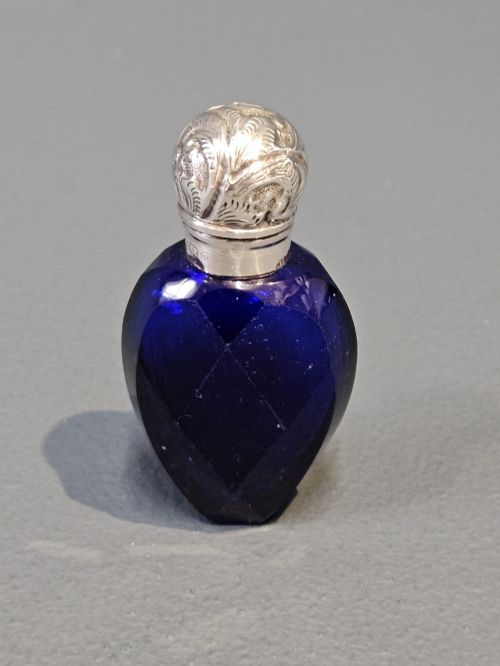
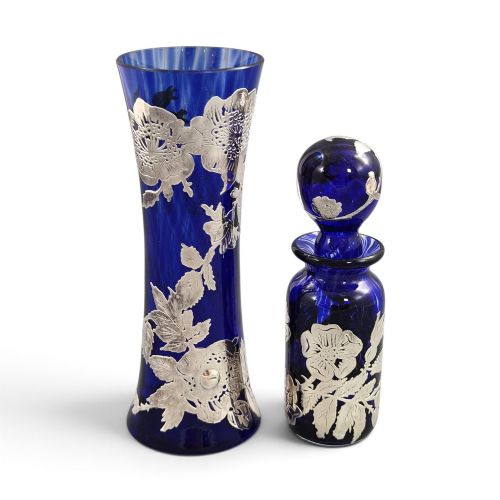
Most pieces encountered on this page belong to the Art Deco period, particularly French opalescent vessels, alongside Victorian silver-mounted teal and cobalt examples. These vessels appear as perfume bottles, scent bottles, and dressing table jars.
Makers and origins range from English silversmiths and Welsh studio glass to French workshops producing moulded opalescent pieces and Italian murrine glass. Each form serves the dressing table, combining functional storage with decorative presence.
How they were made
Makers combined glassblowing and pressing techniques to shape the vessels, utilising cobalt, teal, opalescent, and cut glass bodies. Moulded production allowed for intricate relief designs, such as butterflies and geometric patterns, seen on twentieth-century pieces.
Mounts, collars, and stoppers incorporate sterling silver, brass, and enamel work, including guilloche enamel details secured to the glass necks. Silversmiths fitted hallmarked caps and hinged lids directly to the bottle rims.
Blue Glass Vanity Bottle Retail Price Guide 2026
Typical asking prices for blue glass vanity bottle among the pieces listed under this phrase on Sellingantiques today, from the lower quarter to the upper quarter. They describe what is for sale here now, not the wider market.
Butterflies frozen in opalescent glass linger on dressing tables, refusing to fly away from the scent.
What varies in quality
The sophistication of the glass body and the precision of the metal mounts determine the quality of a blue glass vanity bottle. Deeply saturated colours, crisp moulding in opalescent pieces, and clean facet cutting in nineteenth-century glass elevate the work.
Hallmarked sterling silver mounts, intact enamel work, and original stoppers that fit the neck securely indicate superior manufacture. Maker signatures on the glass or silver add distinct provenance to the piece.
Rene Lalique·Sabino·Franchini And Bigaglia·Laugharne Glass
The Blue Glass Vanity Bottle Glossary
- Opalescent Glass
- Glass that diffuses light with a milky, translucent quality, often showing blue or orange tones when lit from different angles. This effect appears frequently in twentieth-century French pieces.
- Guilloche Enamel
- Decorative metalwork covered with translucent enamel over an engraved geometric pattern. It provides a coloured, patterned surface to bottle caps.
- Murrine
- Coloured patterns made by stretching glass canes and slicing them crosswise, visible in nineteenth-century Venetian pieces. These cross-sections create complex mosaic designs within the glass.
- Slice-Cut
- A method of cutting flat facets onto the exterior of a glass vessel to refract light. It is commonly found on nineteenth-century Victorian scent bottles.
- Sterling Silver
- An alloy of silver containing ninety-two point five percent silver by mass, used for the collars, lids, and overlays on dressing table bottles.
Blue Glass Vanity Bottle: Frequently Asked Questions
What is a blue glass vanity bottle?
A blue glass vanity bottle is a small vessel designed to hold perfume, scent, or cosmetics on a dressing table. These pieces combine tinted glass bodies with metal mounts, stoppers, and sometimes enamel decoration.
They emerged in various forms across the nineteenth and twentieth centuries, reflecting the aesthetic shifts from Victorian ornamentation to Art Deco geometry.
How do I date a scent bottle?
Dating relies on the style of the glass, the hallmarks on any silver mounts, and manufacturing techniques like moulding or cutting. Victorian pieces often feature heavy cut glass with hallmarked silver collars.
Twentieth-century examples tend to show Art Deco moulding or opalescent effects associated with specific period glassmakers.
Are stoppers usually original?
Many surviving bottles retain their matching original stoppers, which is important for the completeness of the piece. Ground glass stoppers and fitted metal screw caps were made specifically for each bottle neck.
Replacements do occur, so checking the fit and the glass colour match helps determine if a stopper belongs to the bottle.
How were these bottles used?
They sat upon dressing tables and inside travelling vanity cases to dispense liquid perfumes or hold powders. Owners used them during daily toiletry routines to apply scents.
Their decorative nature also made them display items in bedchambers and boudoirs.