
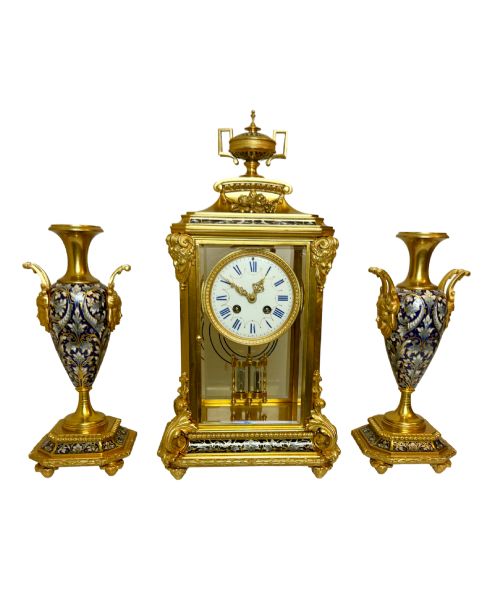


Blue Gilt Side Table
A blue gilt side table brings colour and metalwork together in occasional, centre, and console tables.
Blue Gilt Side Table
A blue gilt side table brings together glazed surfaces and metallic enrichment across console tables, centre tables, and occasional tables. These forms emerge from French Chateau and French Rococo Revival traditions.
The selections span the nineteenth century alongside later twentieth-century interpretations in the Empire style. Buyers encounter pieces influenced by French Neoclassical design alongside Japanese Edo period porcelain adapted into furnishings.
Makers and workshops of the period draw upon Sevres style porcelain and hand-painted decoration to create surfaces paired with ormolu and gilt bronze mounts. These forms serve practical roles in period interiors.
How they were made
Craftsmen combine porcelain, glass, and marble with gilt bronze, ormolu, and brass mounts to build decorative framework. Painted surfaces often receive a protective glaze before metal elements are applied.
Foundry workers cast ormolu and gilt bronze mounts using traditional methods, then chase the metal details by hand. Champleve enamel and fabric elements further enrich the decorative vocabulary of these objects.
Listings feature periods spanning the eighteenth and nineteenth centuries alongside pieces from nineteen-thirty, using porcelain, marble, gilt bronze, and champleve enamel.
What varies in quality
The refinement of the hand-painted porcelain panels and the precision of the gilt bronze or ormolu mounts dictate the overall standard of the work. Finer examples display crisp chasing in the metal and delicate brushwork on ceramic bodies.
Construction methods also separate standard production from superior pieces, particularly in the fit of marble tops and the stability of wooden console frames. The integration of Japanese Arita Imari porcelain reflects distinct levels of adaptation.
The Blue Gilt Side Table Glossary
- Ormolu
- Gilded bronze used widely for mounts and decorative trims on nineteenth-century furniture and clocks. The technique involves applying a mercury and gold amalgam to a bronze base before heating.
- Champleve enamel
- A technique where troughs are dug into a metal surface and filled with vitreous enamel before firing. This method creates colourful patterns bordered by thin lines of exposed metal.
- Gueridon
- A small circular table supported by one or more columns, often featuring a marble top. Originating in seventeenth-century France, these tables frequently incorporate gilt accents.
- Console table
- A table designed to stand against a wall, traditionally fixed with brackets. Nineteenth-century versions often feature painted wooden bases and marble tops.
- Arita Imari
- Japanese porcelain produced in the town of Arita and exported through the port of Imari. These wares are characterised by underglaze blue and overglaze iron red and gold decoration.
Blue Gilt Side Table: Frequently Asked Questions
What is a blue gilt side table?
A blue gilt side table is a decorative furniture piece that combines blue ceramic or glass elements with gilded metal mounts. These tables often take the form of console tables, centre tables, or occasional tables.
Peculiarities in these listings show that forms frequently draw upon French styles and nineteenth-century manufacturing techniques.
How do I identify French Rococo Revival pieces?
French Rococo Revival pieces are characterised by asymmetrical scrolls, naturalistic floral motifs, and curved lines. They often utilise gilt bronze mounts paired with porcelain or painted surfaces.
Craftsmen of the nineteenth century revived these eighteenth-century motifs to satisfy demand for ornate domestic furnishings.
What materials are common in these furnishings?
Common materials include porcelain, marble, gilt bronze, ormolu, and glass. Many pieces also incorporate champleve enamel and painted wood.
These materials are selected to create contrast between the blue surfaces and the bright metallic highlights.
How should I care for marble-topped tables?
Marble surfaces require regular dusting with a soft cloth and immediate cleaning of any liquid spills. Acidic substances can etch the polished stone surface over time.
Protective felt pads beneath objects placed on the marble help prevent scratching.
Where were Sevres style porcelains made?
Sevres style porcelains replicate the aesthetic of the famous French royal porcelain manufactory. While genuine pieces hail from Sevres, many nineteenth-century items are produced by other European kilns emulating the style.
These ceramic bodies are frequently mounted in ormolu or incorporated into lamp bases.