




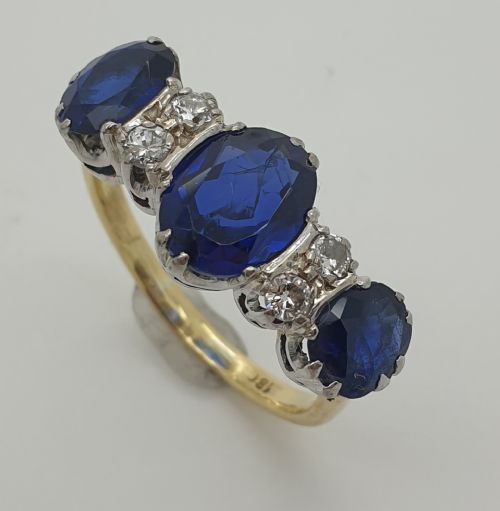

Blue Gemstone Trilogy Ring
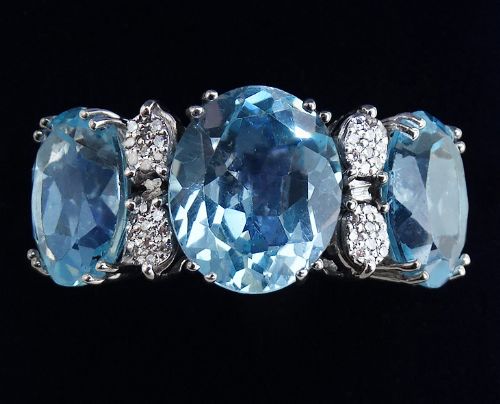
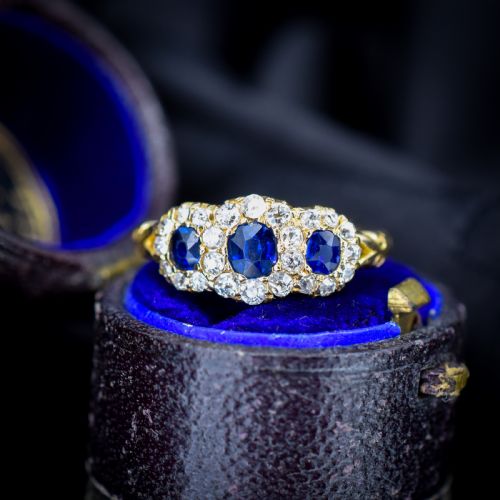
A blue gemstone trilogy ring brings together three stones representing the past, present and future in precious metal.
Blue Gemstone Trilogy Ring
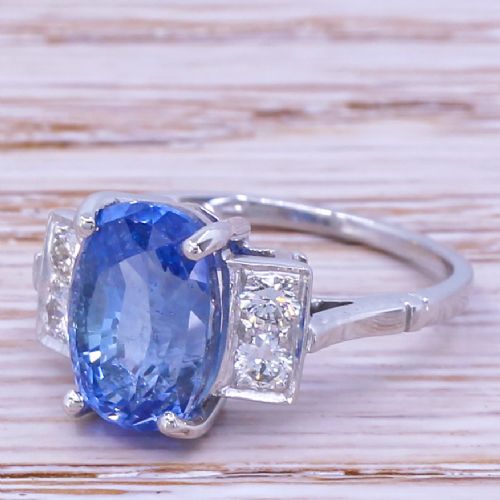
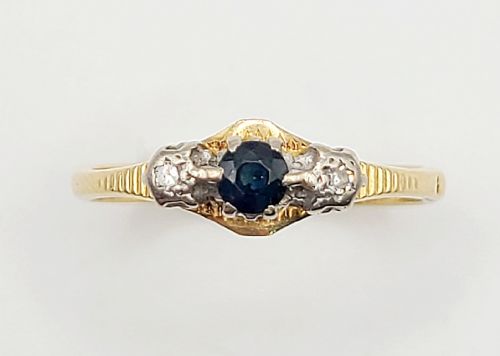
A blue gemstone trilogy ring displays a central stone flanked by two matching gems, a design configuration seen across several eras on this page. These pieces span from the 19th century through the Victorian, Edwardian, Art Deco and Mid-Century periods.
The selections here feature sapphires alongside aquamarines and tanzanites, paired with diamonds in three-stone layouts. Buyers frequently encounter 18ct yellow gold, 18ct white gold, platinum and 9 carat gold mountings across these periods.
Materials and construction
Goldsmiths utilised durable precious metals including platinum and 18ct gold to secure significant gemstones safely in multi-stone settings. These mountings range from traditional yellow gold bands to crisp white gold and platinum settings that enhance the visual clarity of the stones.
Gemstones such as natural Ceylon sapphires, Burmese sapphires and aquamarines are shaped into emerald and round cuts alongside diamonds. The construction balances structural metalwork with stone arrangements designed to maximise light transmission through each gem.
Precious materials recorded include sapphire, diamond, platinum, 18ct gold, yellow gold and 9 carat gold.
Evaluating the range
The distinction between tiers rests upon the origin, carat weight and natural characteristics of the primary blue gemstone. Stones originating from specific regions like Ceylon or Burma, alongside unheated specimens, sit alongside heavier diamond accompaniments.
Craftsmanship in metalwork, from substantial 18ct yellow gold shanks to fine platinum settings, dictates the integrity of the piece. The harmony of proportions between the central blue gem and its flanking diamonds completes the visual balance.
The Blue Gemstone Trilogy Ring Glossary
- Trilogy ring
- A ring featuring three principal stones, traditionally symbolising the past, present and future of a relationship.
- Rubover setting
- A mounting style where a thin collar of metal encircles the edge of the gemstone to hold it securely in place.
- Basaltic sapphire
- A sapphire originating from alkaline basalt terrains, typically displaying rich saturation and distinct chemical traces.
- Ceylon sapphire
- A sapphire originating from Sri Lanka, noted for lively brilliance and characteristic bright blue tones.
Blue Gemstone Trilogy Ring: Frequently Asked Questions
What is a trilogy ring?
A trilogy ring is a finger ornament containing three distinct gemstones set in a row along the band. This layout carries traditional symbolism representing past, present and future.
Such designs appear across Victorian, Edwardian and Mid-Century periods utilising various precious metals.
Which metals are used?
Jewellery makers utilised 18ct yellow gold, 18ct white gold, platinum and 9 carat gold for these settings. The choice of metal often reflects the prevailing style of the specific period.
White metals like platinum and white gold became particularly favoured during the Art Deco era.
How do I spot an Art Deco ring?
Art Deco pieces typically feature geometric lines, platinum settings and emerald-cut stones such as aquamarines. This design language emerged during the 1930s.
The aesthetic prioritises clean symmetry and architectural forms over organic Victorian curves.
Are all sapphires heated?
Not all sapphires undergo thermal treatment to enhance their natural colour and clarity. Listings occasionally specify unheated stones or note specific geographical origins like Ceylon or Burma.
Such natural properties are recorded by gemological observations.