

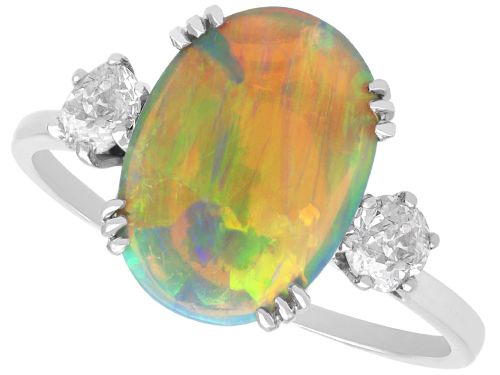
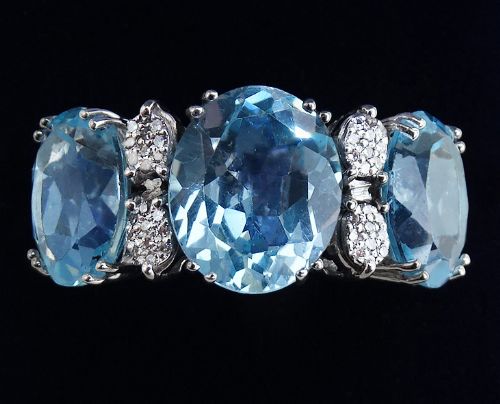
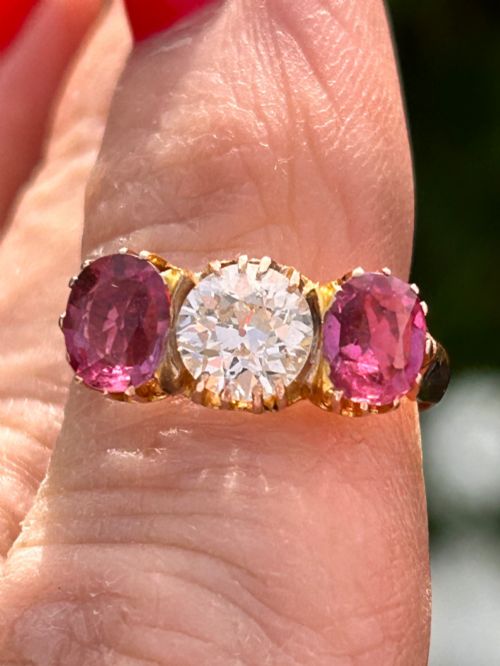
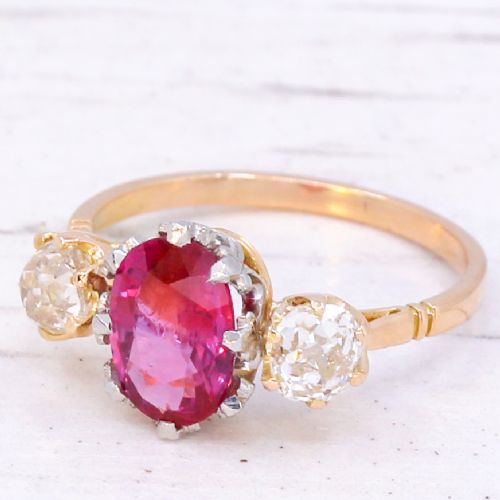
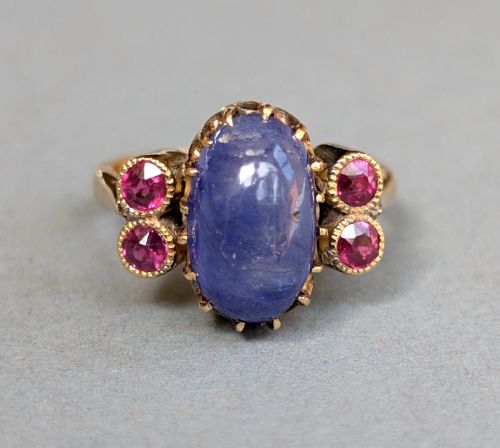


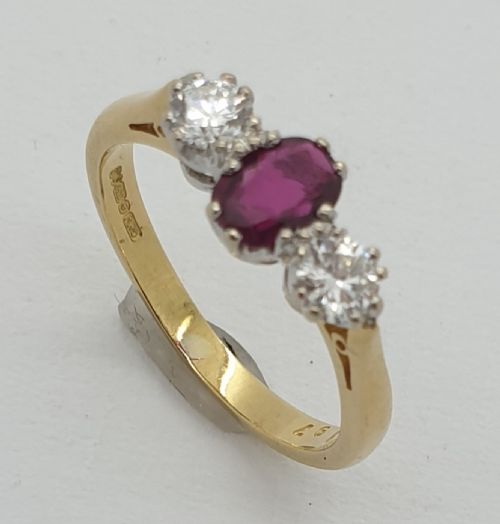


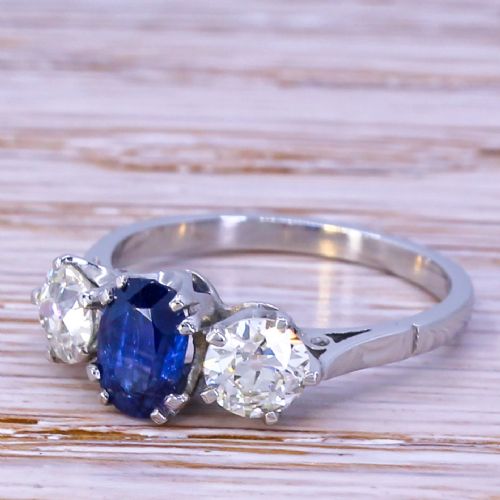
Oval Three Stone Ring
An oval three stone ring holds three gems across the finger in a balanced line, offering timeless symmetry and remarkable brilliance.
Oval Three Stone Ring
An oval three stone ring presents a trio of gems set in a row along the finger, commonly known as a trilogy ring. This arrangement spans periods from the Victorian era through the Edwardian years and Art Deco designs into the mid-century.
The selections encountered here pair central gemstones with flanking diamonds or side stones, mounted in gold, 18ct gold, or platinum settings. Sapphires, rubies, and opals appear frequently alongside aquamarine and pearls.
Materials and construction methods
Master jewellers utilised durable white and yellow metals, employing platinum and 18ct yellow or white gold to secure the central stones safely. Rubover settings and claw mounts provide distinct structural profiles across different decades.
Gemstones display traditional cutting styles, including old cut diamonds alongside calibrated rubies and sapphires. Natural unheated stones from origins such as Burma and Ceylon appear in period pieces.
Oval Three Stone Ring Retail Price Guide 2026
Typical asking prices for oval three stone ring among the pieces listed under this phrase on Sellingantiques today, from the lower quarter to the upper quarter. They describe what is for sale here now, not the wider market.
Materials recorded across the inventory include platinum, 18ct yellow gold, white gold, diamonds, sapphires, rubies, opals, and pearls.
Distinguishing quality factors
Superior examples demonstrate precise gem matching in colour, saturation, and proportion across all three stones. The clarity of the central gem and the weight distribution relative to the side stones dictate the visual balance.
Metalwork execution defines the calibre of the piece, visible in the fineness of the claw work and the integrity of the setting. Period authenticity and documented stone origins elevate the standing of a ring.
The Oval Three Stone Ring Glossary
- Trilogy ring
- A ring set with three stones, symbolising the past, present, and future. This term is frequently used interchangeably with three stone designs.
- Old cut diamond
- A hand-cut diamond shape from the late nineteenth and early twentieth centuries, featuring a small table and high crown.
- Rubover setting
- A mounting style where a thin collar of metal surrounds the edge of the gemstone to hold it securely in place.
- Platinum
- A dense, strong, and ductile white metal utilised extensively in Edwardian and Art Deco jewellery for secure stone settings.
Oval Three Stone Ring: Frequently Asked Questions
What is an oval three stone ring?
An oval three stone ring is a jewellery piece featuring three distinct gems arranged horizontally on the band. The central stone typically takes prominence while two side stones provide balance.
These designs have remained popular across Victorian, Edwardian, and Art Deco periods, often symbolising past, present, and future.
How do I wear a trilogy ring?
Trilogy rings sit comfortably on the hand as standalone statement pieces or paired alongside simple wedding bands. Their horizontal setting draws the eye across the finger.
Daily wear requires basic care, such as removing the ring during heavy manual tasks to protect the settings and stones.
How are periods told apart?
Victorian rings often display heavier gold work and rich coloured stones, whereas Edwardian and Art Deco pieces lean towards platinum and geometric lines. Mid-century examples show sleeker profiles.
Examining the metal type, claw style, and gemstone cut helps determine the likely era of manufacture.
What stones are used?
Diamonds are the traditional choice for side stones, paired with central gems such as sapphire, ruby, opal, or aquamarine. Pearls and pink sapphires also appear in period pieces.
Coloured gemstones are often specified by origin, including Burmese sapphires or unheated rubies.