
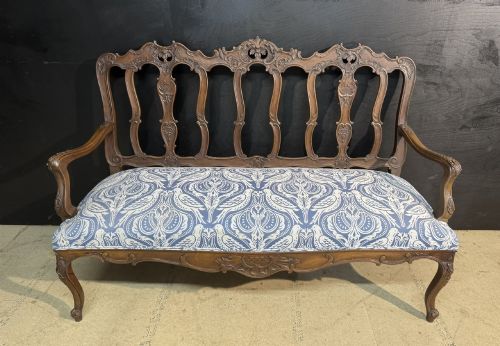


Blue French Settee
These blue french settee examples combine carved frames with upholstered seats, bringing Continental elegance into any reception room.
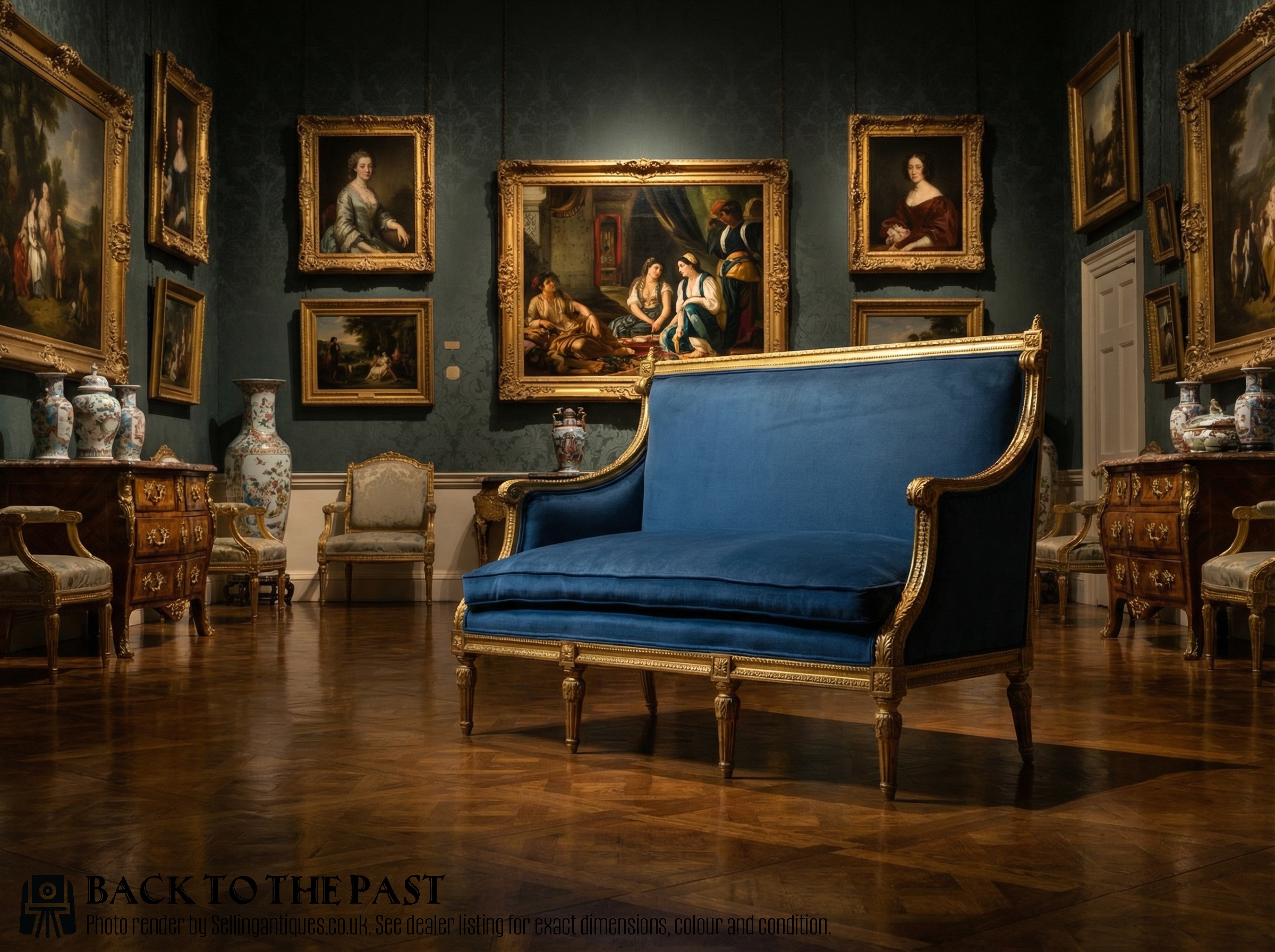
Blue French Settee
When you search for a blue french settee, you are looking at upholstered seating created in various historical periods spanning the nineteenth and early twentieth centuries. These pieces draw heavily on traditional continental aesthetics, including Rococo Revival, Louis XV, and Louis XVI styles.
The most common versions met on this page are two-seat and three-seat couches formed from materials such as walnut, mahogany, and beech. Frames often feature painted, giltwood, or polished wood finishes paired with velvet, fabric, or textile upholstery in blue tones.
Object types vary slightly in terminology across the listings, appearing variously as settees, sofas, canapés, and hall seats. Their origins connect directly to nineteenth century cabinet making alongside later interpretations from around nineteen ten and nineteen thirty.
How they were made
Makers shaped these timber frames from hardwoods like walnut, mahogany, and beech, frequently employing hand carving to achieve intricate details such as fluted legs and decorative crest rails. Some frames received finishes in gold leaf or paint, while others relied on the natural grain of the polished wood.
Upholstery methods combined supportive internal structures with textile coverings including velvet, fabric, and cane panels. Details such as button backs and tassel trims added texture and completed the finish of the seat.
One unexpected bedroom sofa here comes complete with a tassel trim, proving that nineteenth-century lounging took its fringe very seriously.
What varies in quality
The standard of carving across the wooden frame separates finer pieces from simpler workshop productions, with crisp, deep relief work indicating superior craftsmanship. Smooth integration of joints and the selection of dense timbers like walnut further elevate the standing of a piece.
The quality of the upholstery finish, from the tightness of the textile stretch to the precision of decorative trims like tassels, marks the difference between standard production and elevated design. Original surface treatments, whether gold leaf or aged paint, retain greater character than later interventions.
The Blue French Settee Glossary
- Canapé
- An ornamental sofa or settee featuring an upholstered back and seat, typically with exposed wooden framing.
- Giltwood
- Wood that has been covered with a thin layer of gold leaf, frequently utilised on formal continental seating frames.
- Louis XVI Style
- A neoclassical design vocabulary characterised by straight lines, symmetrical geometry, and fluted cylindrical legs.
- Rococo Revival
- A nineteenth century design movement drawing on earlier eighteenth century motifs with curving lines and asymmetrical scrollwork.
Blue French Settee: Frequently Asked Questions
What periods do these settees come from?
The listings span the nineteenth century and extend into the early twentieth century, specifically including dates around eighteen sixty, eighteen eighty, nineteen hundred, nineteen ten, and nineteen thirty.
Victorian examples also appear alongside Continental design revivals, reflecting diverse manufacturing dates within that broader timeframe.
How were these settees used historically?
These seating pieces served primarily in formal reception rooms, parlours, and bedrooms as refined places for conversation or resting.
Smaller two-seat versions and hall seats also functioned in entrance spaces and private chambers where space required more compact proportions.
What wood types are used?
Makers constructed the frames using various timbers recorded in the evidence, most notably walnut, mahogany, and beech.
These woods were either left with a natural polished finish, painted, or covered with gold leaf to suit the aesthetic of the specific design style.
How do you identify Louis XV and XVI styles?
Louis XV style pieces typically display flowing, curved lines and organic ornamentation inspired by rococo forms. In contrast, Louis XVI style designs feature straighter lines, geometric symmetry, and fluted legs characteristic of neoclassical taste.