
Blue Floral Vase
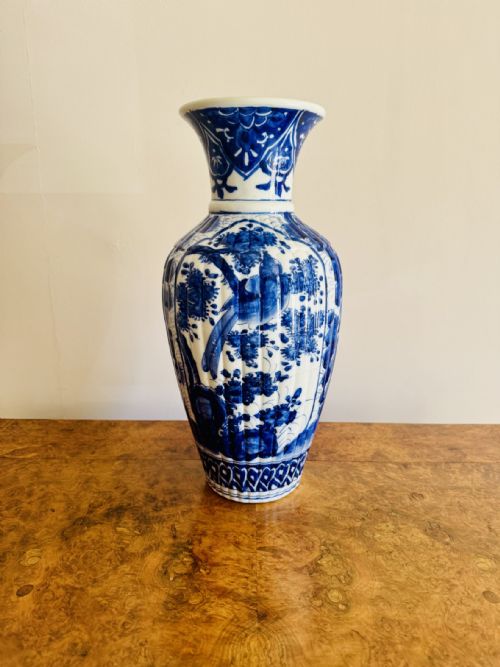
A blue floral vase brings the quiet weight of nineteenth-century ceramics, Japanese imari patterns and earthenware glazes straight into a room.
Blue Floral Vase
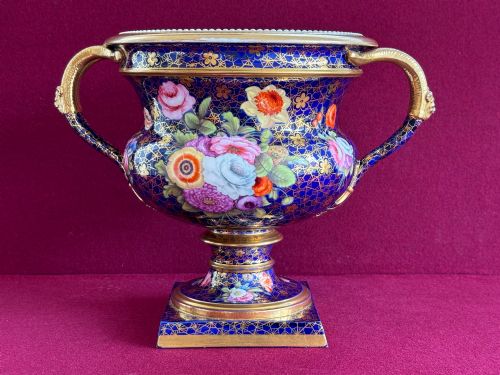
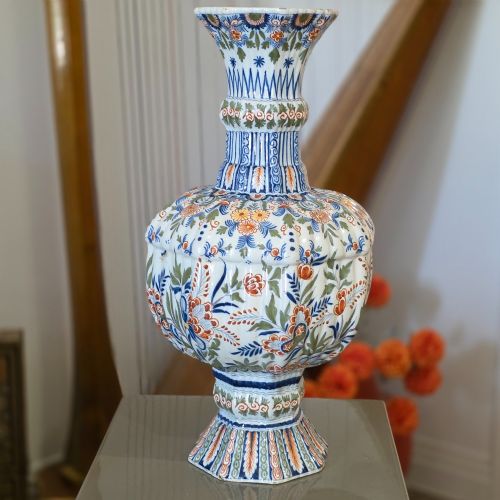
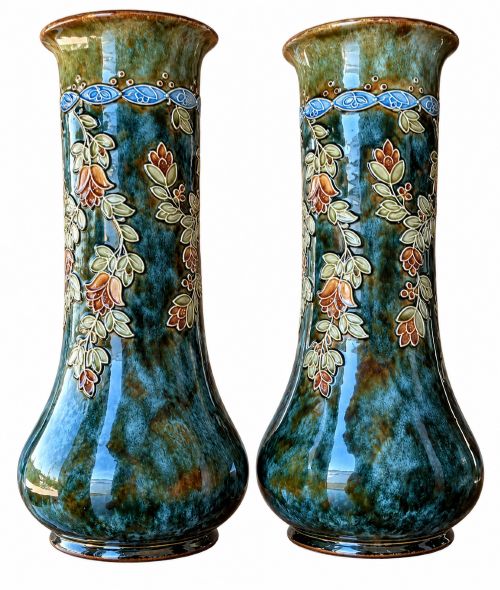
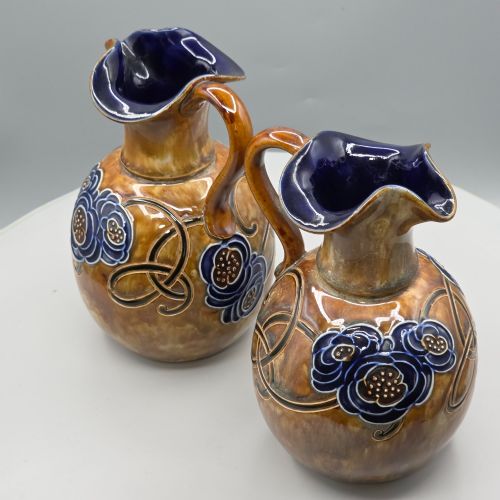
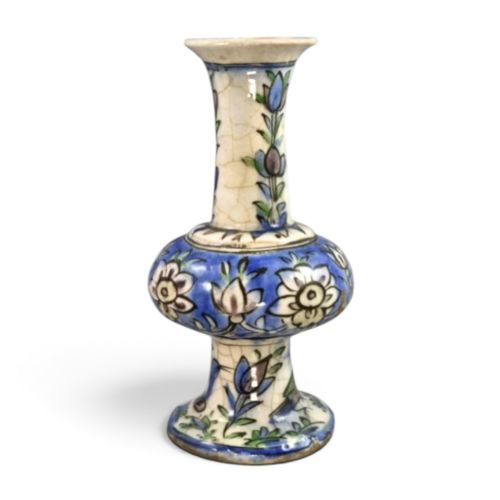
A blue floral vase spans centuries of ceramic history, encompassing everything from Delft tin-glazed earthenware and nineteenth-century porcelain to Japanese imari vessels and stoneware jugs.
The versions most commonly met on this page date from the nineteenth and early twentieth centuries, reflecting Victorian, Edwardian, Art Nouveau and Meiji period aesthetics.
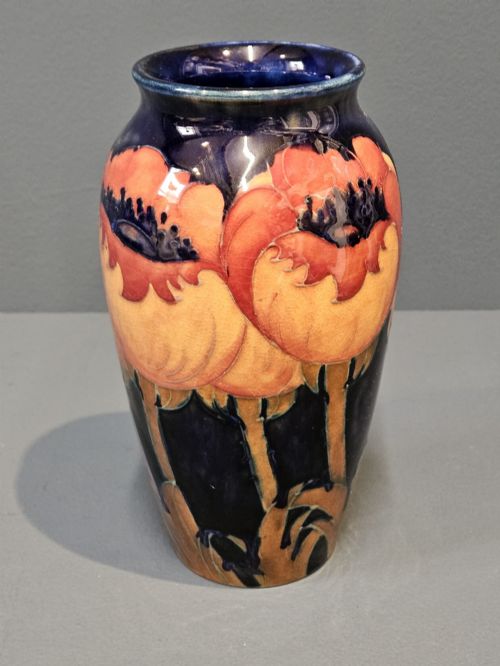
Makers and potteries such as Royal Doulton, Spode, Coalport and Moorcroft dominate the selections alongside continental and Asian workshops working in cobalt and polychrome blue palettes.
How they were made
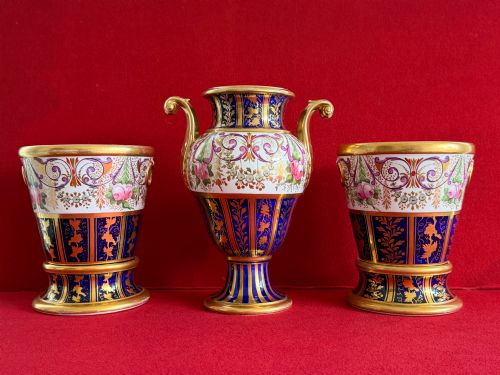
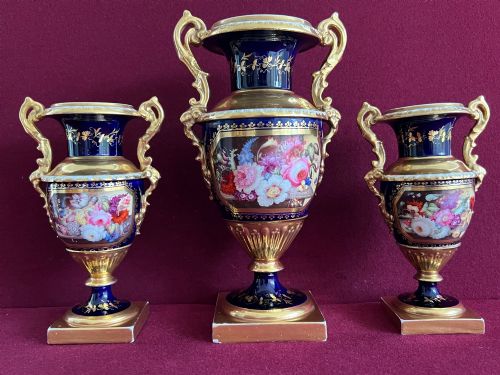
Potters shaped porcelain, earthenware and stoneware by hand or on the wheel before applying underglaze blue, enamel colours, and occasionally gold leaf or gilt bronze trim.
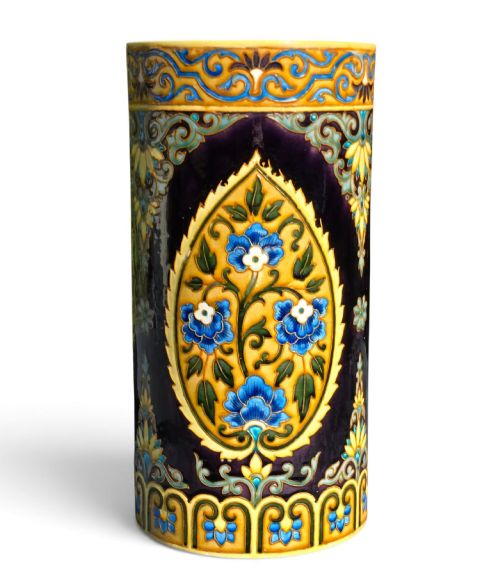
Techniques range from the intricate hand-painted floral motifs of English bone china to the heavy, textured glazes of Arts and Crafts stoneware and champlevé enamel on bronze.
The listings feature nineteenth-century porcelain, earthenware and stoneware alongside Japanese imari and Art Nouveau designs.
What varies in quality
The distinction between standard commercial output and superior craftsmanship rests on the precision of the hand-painting and the depth of the cobalt glaze.
Named artists and major potteries demonstrate greater control in their firing and finer detail in their floral compositions than anonymous factory pieces.
Royal Doulton·Moorcroft·Spode·Coalport
The Blue Floral Vase Glossary
- Imari
- A style of Japanese export porcelain featuring deep cobalt blue and iron red, often highlighted with gold.
- Baluster
- A vase shape characterised by a rounded body that tapers toward the neck and base.
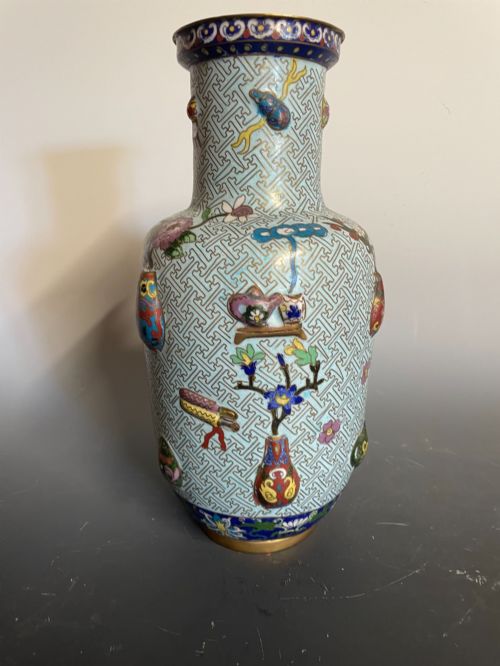
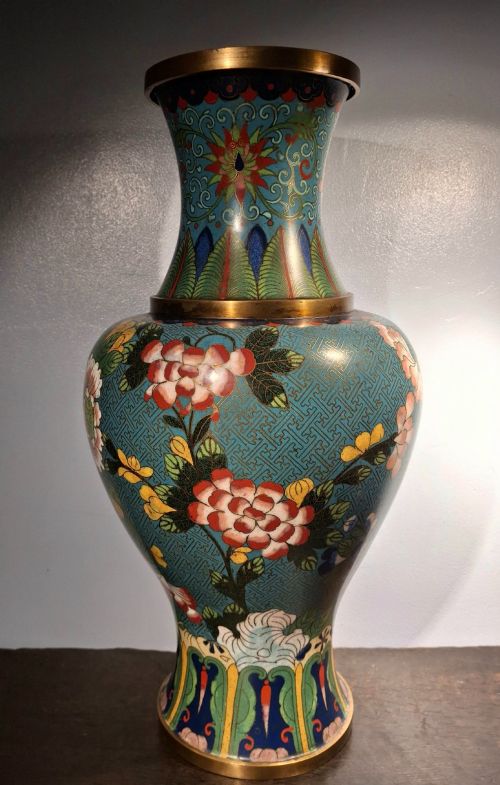
- Cloisonné
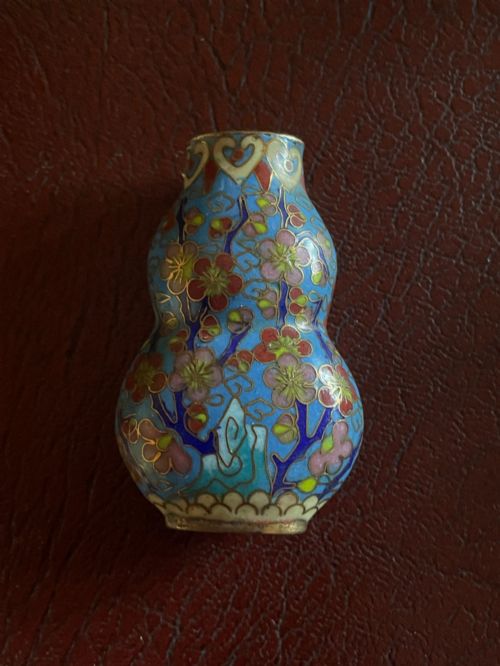
- Metalwork technique where enamel paste is baked within compartments formed by soldered wire.
- Faience
- Tinned-glazed earthenware originating from European pottery traditions.
- Stoneware
- A robust, vitrified ceramic fired at high temperatures to achieve a dense, impermeable body.
Blue Floral Vase: Frequently Asked Questions
How do I date a ceramic vase?
Dating relies on factory marks stamped or painted on the underside, stylistic cues like Art Nouveau curves, and the specific type of glaze used.
Examining the weight of the clay and the method of decoration helps place the vessel within its proper nineteenth or twentieth-century period.
Where should I display a porcelain vase?
These vessels suit stable wooden surfaces such as sideboards, mantels and tables where their height and colour can be appreciated.
Keeping them away from direct sunlight protects hand-painted enamels and gold leaf highlights from fading over time.
How are stoneware and earthenware different?
Stoneware is fired at higher temperatures until the clay body vitrifies, making it non-porous and durable.
Earthenware is more porous and requires a tin or lead glaze to hold water, remaining slightly softer in its overall composition.
What defines Japanese imari ware?
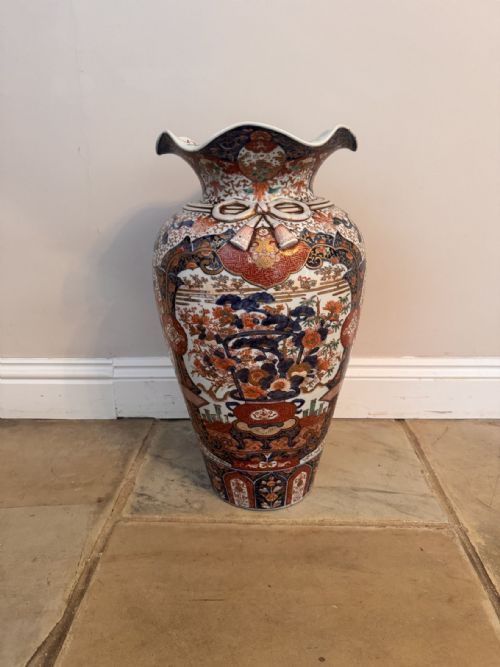
Imari pieces combine underglaze cobalt blue with iron red and supplementary colours, often set against a crisp white porcelain ground.
Artisans frequently added gilt detailing to enhance the richness of the floral and panel designs.