


Blue Enamel Vanity Mirror
A blue enamel vanity mirror brings the striking colour of vitrified glass fused to metal onto a dressing table.
Blue Enamel Vanity Mirror
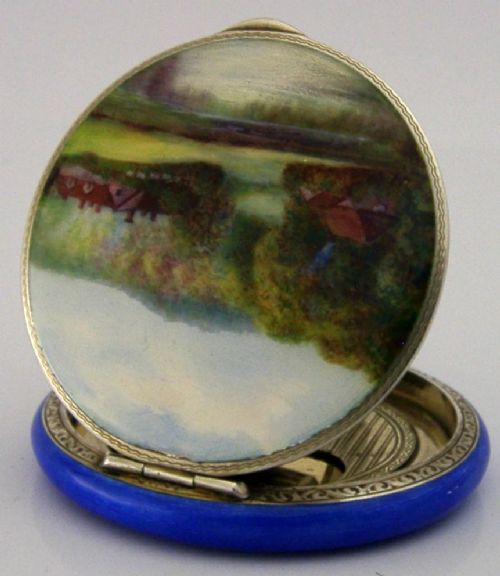
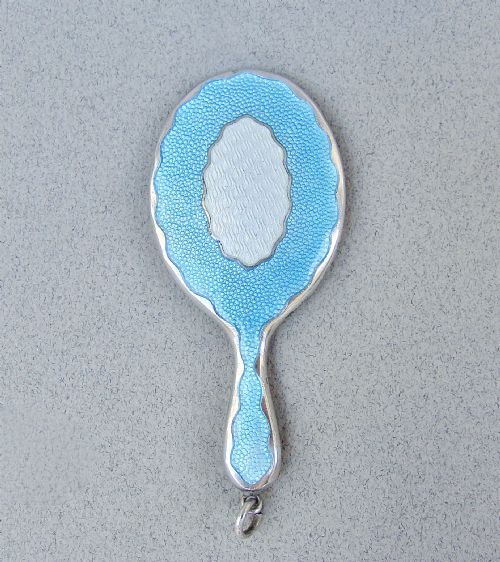
A blue enamel vanity mirror comprises portable hand mirrors, compacts, and larger tabletop or dressing table mirrors designed for personal grooming. These pieces incorporate vibrant blue coatings applied to silver, gilt bronze, or base metal surfaces.
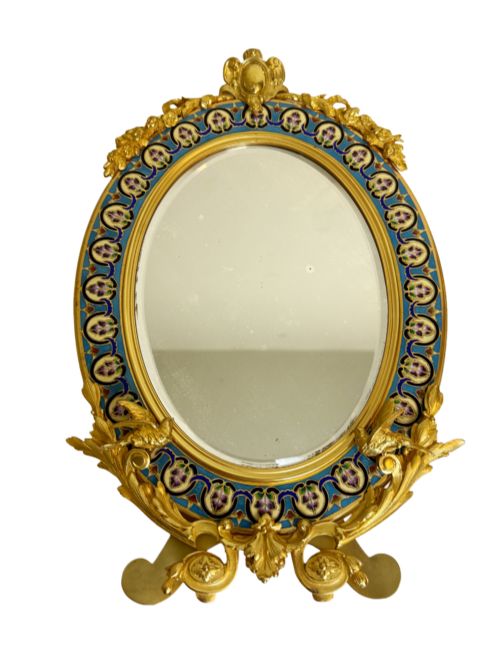
The selection ranges from late nineteenth-century French champleve designs to geometric Art Deco creations and mid-century Italian silver pieces. Hand mirrors and compacts form the primary focus, often accompanied by matching vanity items.
How they were made
Makers fused powdered glass onto metal substrates through high-temperature firing, creating durable vitreous enamel surfaces. Techniques such as guilloche engraving beneath translucent enamel produced intricate geometric patterns that caught the light.
Support structures combined sterling silver, gilt bronze, and chrome, paired with bevelled glass mirror plates. Finer examples integrated champleve compartments where metal troughs held the coloured enamel paste.
Some compacts hide suede linings alongside their mirrors, holding onto the faint scent of vanished face powder.
What varies in quality
The depth and clarity of the enamel layer distinguish standard production from superior craftsmanship. Translucent guilloche work reveals precise engine-turned metal underneath, whereas heavier opaque enamels conceal the base entirely.
Substantial mounts in sterling silver or heavy gilt bronze provide structural integrity lacking in lighter chrome or base metal alternatives. Maker attributions and intact original linings or bevelled glass elevate the standing of a piece.
Henry Williamson Birmingham·Henry Matthews·Evans·Giuliano Spinelli Florence·Asprey
The Blue Enamel Vanity Mirror Glossary
- Guilloche
- A decorative mechanical engraving technique that etches precise repeating patterns into metal before applying translucent enamel.
- Champleve
- An enamelling process where troughs or cells are hollowed out of a metal surface to receive coloured glass paste.
- Vitreous enamel
- A material made by fusing powdered glass to a substrate by firing, resulting in a smooth, durable glass coating.
- Gilt bronze
- Bronze that has been treated with a thin layer of gold, providing a rich metallic finish often seen in nineteenth-century frames.
- Compact
- A small portable case containing a mirror, traditionally used for holding face powder or cosmetics.
Blue Enamel Vanity Mirror: Frequently Asked Questions
What periods do these mirrors come from?
The pieces span from the late nineteenth century through the Art Deco era of the 1920s and 1930s, extending into mid-century Italian production.
Earlier examples often feature ornate French gilt bronze and champleve, while later items embrace geometric silver guilloche designs.
How do I clean blue enamel safely?
Enamel requires gentle maintenance using a soft cloth and mild soapy water to preserve the glossy glass surface.
Harsh metal polishes and abrasive brushes should remain strictly away from the coloured vitreous coatings.
What is guilloche enamel?
Guilloche involves mechanical engine-turning on a metal base to create intricate geometric patterns beneath a translucent coloured coating.
This technique allows light to pass through the enamel and reflect off the engraved metal beneath.
Are these mirrors made of solid silver?
Many dressing table items and compacts utilise sterling silver or continental silver standards, often bearing hallmarks for verification.
Other pieces rely on gilt bronze, chrome, or base metals beneath the enamel layer.