




Blue Enamel Charm
A blue enamel charm brings rich colour and tiny scale together, offering miniature works of art that fasten easily to bracelets or chains.
Blue Enamel Charm
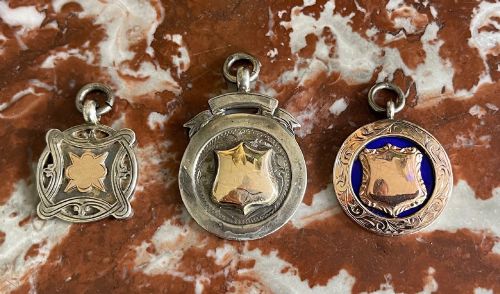
A blue enamel charm appears across several distinct periods, most notably through Victorian, Edwardian, and mid-century eras. The selection frequently includes small pendants, watch keys, and novelty items designed to hang from chains or bracelets.
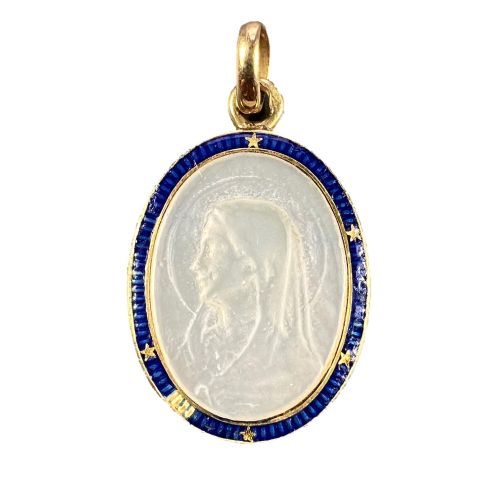
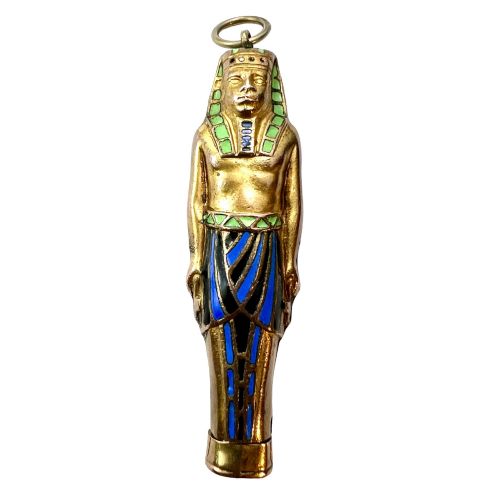
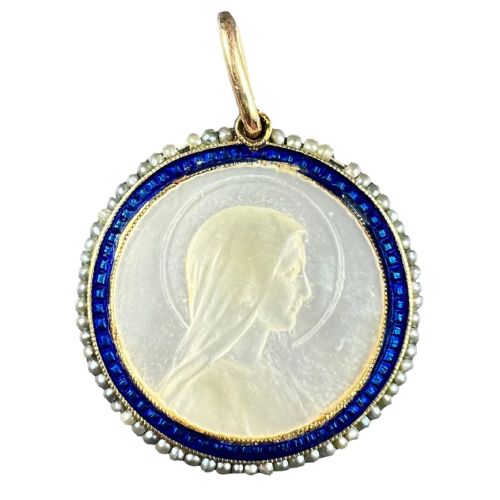
Makers shaped these miniature objects in gold, silver, and glass, often incorporating mother-of-pearl or diamonds alongside blue enamel work. Pieces range from French devotional medals to Bristol blue glass jars and Egyptian revival novelties.
The assortment spans diverse styles including Art Nouveau, Chinese decorative art, and French antique designs. Buyers encounter everything from heart lockets to coat of arms pendants.
How they were made
Craftspersons applied vitreous enamel, guilloche, and plique-a-jour techniques to base metals and precious gold, fusing glass powders under high heat. This process created translucent cells and patterned backgrounds that caught the light.
Goldsmiths worked with 18K yellow gold, 15ct gold, and silver to house the enamel work, frequently mounting rose cut diamonds or seed pearls around the central blue panels.
Quails made of cloisonne stand ready to guard your dressing table alongside tiny glass jars.
What varies in quality
Quality rests in the precision of the metalwork and the clarity of the enamel layer, whether solid opaque vitreous paste or light-transmitting plique-a-jour. Superior examples display intricate hand-painted detail and secure stone settings.
The sophistication of the design, from simple silver egg pendants to elaborate French gold hearts set with diamonds, dictates the distinction between standard production and master craftsmanship.
The Blue Enamel Charm Glossary
- Guilloche enamel
- A decorative technique where an engine-turned metal surface is coated with translucent enamel. This method allows the underlying geometric pattern to show through the coloured glass layer.
- Plique-a-jour
- An enamelling technique resembling stained glass, lacking a solid backing metal. Light passes directly through the transparent coloured enamel cells.
- Vitreous enamel
- A material made by fusing powdered glass to a substrate by firing. The resulting compound provides a durable, glossy coloured surface.
- Rose cut diamond
- A diamond cut featuring a flat base and a domed crown faceted with triangular stones. This historic cut produces a soft, starry reflection rather than modern brilliance.
- Watch key
- A small portable key used to wind pocket watches before keyless mechanisms became standard. Many were decorative and worn on chatelaines or chains as charms.
Blue Enamel Charm: Frequently Asked Questions
How do I date a blue enamel charm?
Dating relies upon examining the gold carat marks, mounting styles, and specific enamelling techniques such as plique-a-jour or guilloche. Hallmarks and stylistic markers help place pieces into Victorian, Edwardian, or later periods.
Materials like mother-of-pearl, rose cut diamonds, and particular regional motifs also provide clear clues to the decade of manufacture.
How should I wear a blue enamel charm?
These pieces suspend neatly from fine gold or silver neck chains, or attach securely to charm bracelets using appropriate jump rings. Their compact scale makes them suitable for daily wear when handled with care.
Pairing them with period chains enhances their historical character.
Are these charms made of solid gold?
Many listings feature items constructed from high carat gold, including 18K yellow gold and 15ct gold mountings. Other examples utilise silver or incorporate glass elements alongside the precious metal.