



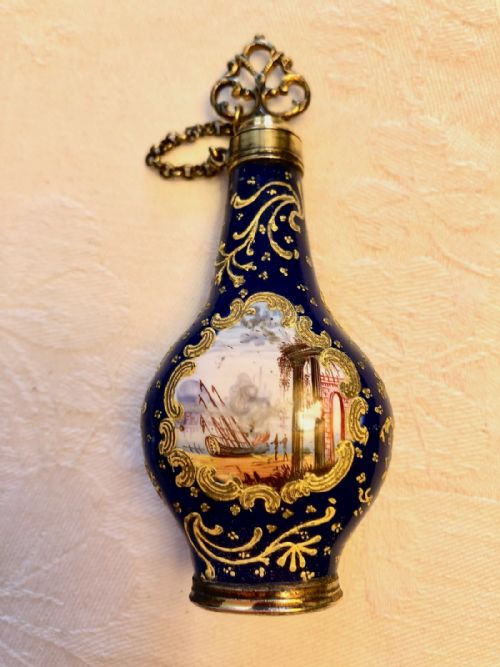
Blue Enamel Bottle
A blue enamel bottle is a striking vessel of coloured glass or metal, prized for its vibrant hue and intricate surface detail.
Blue Enamel Bottle
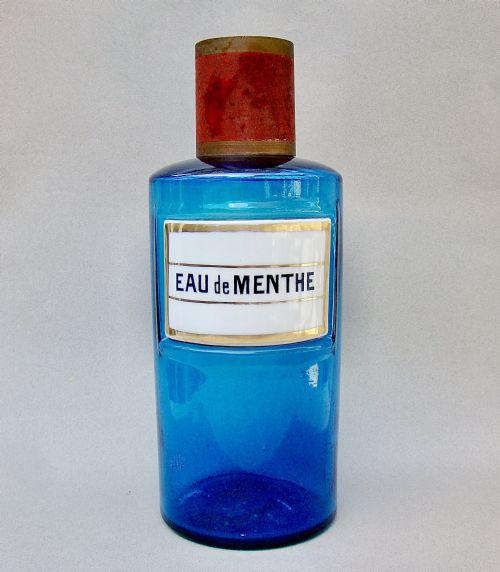
A blue enamel bottle combines rich vitreous pigments with materials such as glass, sterling silver, and copper to create small decorative vessels. When searching for a blue enamel bottle, buyers encounter an eclectic mix of objects ranging from Victorian scent bottles to Art Deco perfume flasks.
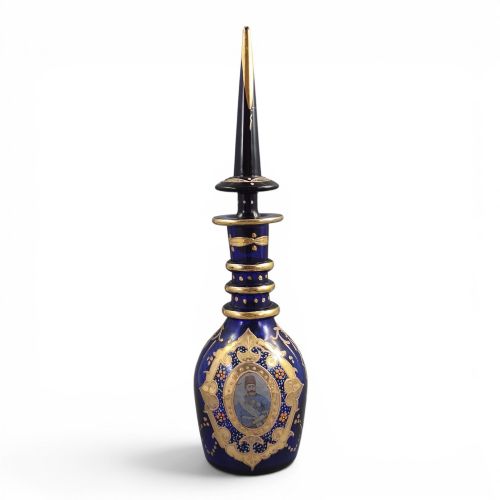
The pieces on this page span several distinct periods, including Georgian, Victorian, and mid-century eras. Formats vary from miniature scent bottles to larger decanters intended for the Persian Qajar market.
Makers and artisans from diverse cultural traditions utilised cobalt glass, cut glass, and gold leaf alongside enamel. This variety ensures that collectors find examples reflecting Chinese export art, Bohemian craftsmanship, and European modernist design.
Materials and construction
The foundational bodies of these vessels rely on blown or cut glass, often featuring deep cobalt tones, paired with mounts of sterling silver, copper, or brass. Artisans applied enamel directly onto metal surfaces or glass, sometimes incorporating guilloche patterns beneath translucent layers of blue pigment.
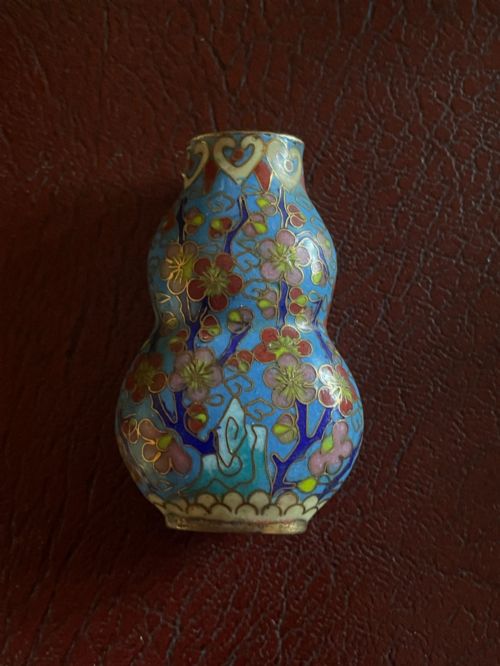
Techniques such as cloisonne involve soldering metal wires to a base to form compartments filled with enamel paste, which is then fired. Hand-painted scenes and gold leaf accents frequently embellish the exterior surfaces of Georgian and Victorian examples.
Blue Enamel Bottle Retail Price Guide 2026
Typical asking prices for blue enamel bottle among the pieces listed under this phrase on Sellingantiques today, from the lower quarter to the upper quarter. They describe what is for sale here now, not the wider market.
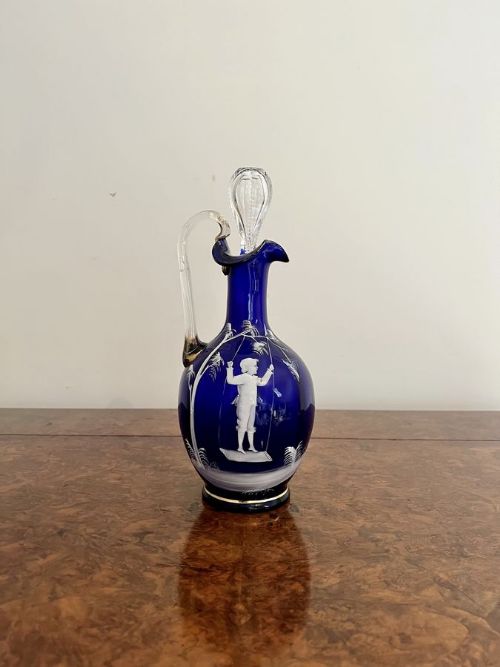
Some Victorian decanters feature Mary Gregory style silhouettes, capturing Victorian children caught forever in white enamel against the dark blue glass.
Quality variations in pieces
The integrity of the underlying glass or silver chassis matters greatly, with heavier gauge metal and unblemished cut glass elevating the piece. Furthermore, the crispness of stylistic markers, whether Art Deco geometric precision or traditional Chinese export detailing, separates standard production from finer workmanship.
René Lalique
The Blue Enamel Bottle Glossary
- Guilloche
- A decorative engraving technique in which a precise, intricate repeating pattern is mechanically etched into a metal substrate. It is frequently seen beneath translucent enamel on Art Deco items.
- Cloisonne
- An ancient metalwork technique where fine wires are soldered to a metal body to create cells that hold coloured enamel paste. These cells are then fired and polished flat.
- Cobalt Glass
- A deep blue glass coloured by the addition of cobalt oxide during the melting process. It forms the rich translucent body of many historical decanters and scent bottles.
- Vitreous Enamel
- A material made by fusing powdered glass to a metallic substrate by firing at high temperatures. This creates a durable and glossy coloured coating.
- Sterling Silver
- An alloy of silver containing ninety-two point five percent silver and seven point five percent other metals, typically copper. It provides the structural mounts and lids for many antique scent bottles.
Blue Enamel Bottle: Frequently Asked Questions
What is a blue enamel bottle used for?
These vessels were historically manufactured to hold volatile perfumes, scented oils, or spirits for the dressing table and parlour. Smaller examples functioned as personal scent flasks carried in evening bags, while larger pieces served as decorative decanters.
Today, they are collected primarily as cabinet objects and decorative display pieces rather than for daily use. Their vibrant blue surfaces and metallic mounts make them striking focal points in a room.
How do I date a blue enamel bottle?
Dating relies heavily on stylistic indicators, manufacturing techniques, and any accompanying hallmarks on silver components. Art Deco pieces display geometric symmetry and guilloche work, whereas Georgian and Victorian examples often feature hand-painted floral or figural motifs.
Examining the base and the method of glass formation also provides clues to the era of production. Comparing the object against known periods such as the Qajar export market or Meiji period helps narrow the timeline.
How should I clean a blue enamel bottle?
Cleaning requires gentle methods to protect delicate enamel surfaces and aged metal mounts. Soft, dry cloths are best for removing dust from the exterior without risking abrasion to the glass or vitreous coating.
Harsh chemical solvents and immersion in water should be avoided, particularly if the piece contains exposed metal or old cement. Professional conservation advice is recommended for items with fragile painted scenes or compromised structural joints.
Are all blue enamel bottles made of silver?
Not all pieces utilise silver, as makers frequently employed copper, brass, or direct glass foundations for their vessels. Sterling silver is common in British scent bottles from the Edwardian and Art Deco periods, often stamped with assay office marks.
Other items rely entirely on ceramic or metallic bodies decorated with cloisonne wirework without any silver components. The choice of material often corresponds to the geographic origin and the period style of the object.