
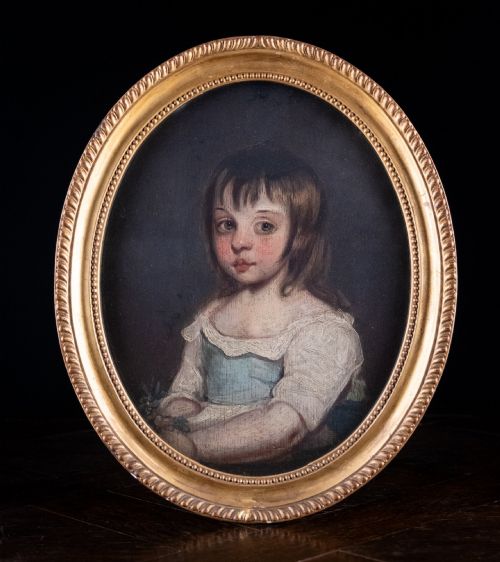
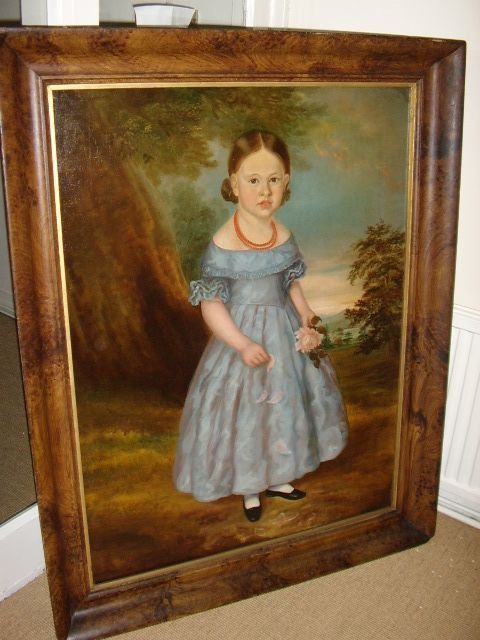
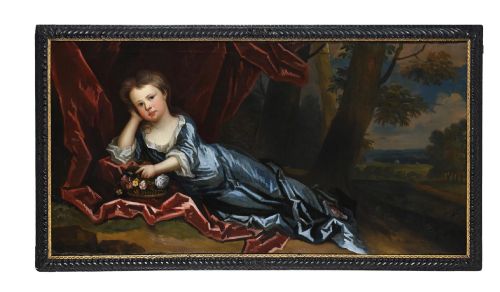


Blue Dress Child Portrait
A blue dress child portrait captures youth in pigment and paper, offering an intimate glimpse into past centuries through fine art.
Blue Dress Child Portrait
A blue dress child portrait brings together centuries of painting traditions, ranging from grand oil canvases to delicate watercolours and miniature portraits. These works record the likenesses of young subjects across the Georgian, Victorian, and Regency eras.
Buyers meet various formats on this page, including large framed oils, intimate portrait miniatures on paper, and nineteenth-century watercolours. The subjects appear in formal settings or domestic scenes, often rendered by regional schools or named artists.
The materials span oil on canvas, paper, watercolour, and pastel, housed within period frames of giltwood and wood. Works date from the early eighteenth century through to the early twentieth century, reflecting shifting tastes in child representation.
Materials and Techniques
Painters used oil paint on canvas or wood panels, building rich surfaces with layered pigments that retain their depth over centuries. Watercolourists applied translucent washes of pigment onto paper, capturing soft light and delicate tones in smaller formats.
Miniature paintings required exceptional precision, executed on specialised surfaces behind protective glass, sometimes framed in fine metal or wood. Pastels offered a velvety texture, blending dry pigments directly to create immediate, tactile portraits of young sitters.
Listings feature works spanning from the early 1700s through to the 1920s, utilising oil paint, watercolour, pastel, and paper.
Assessing Quality and Execution
Quality rests upon the sureness of the brushwork and the anatomical accuracy with which the child's form and expression are rendered. Master painters captured posture and gaze with striking immediacy, whereas more primitive works display charming stylistic simplifications.
The condition of the surface and the originality of the frame heavily influence the standing of a piece. Works retaining their original giltwood or wood surrounds and stable paint layers command greater regard among collectors of historic fine art.
Charles D’Agar·William Egley·George Knapton·Thomas Gibson·William Lee-Hankey·Harry John Pearson
The Blue Dress Child Portrait Glossary
- Portrait Miniature
- A small-scale painting, often executed on ivory, vellum, or paper, designed for intimate viewing or portable display. These detailed works frequently date from the eighteenth and nineteenth centuries.
- Giltwood
- Wood carved and coated with a thin layer of gold leaf, commonly used for framing historic mirrors and fine art paintings. This technique provides a warm, reflective border that complements oil canvases.
- Regency
- A British stylistic period spanning the early nineteenth century, noted for classical restraint and refined elegance in portraiture and decorative arts. Works from this era often display clean lines and harmonious colour palettes.
- Folk Art
- Artistic work created by untrained or provincial painters outside the academic tradition, emphasising expressive charm over strict perspective. These pieces offer a direct, unpretentious record of historical likenesses.
Blue Dress Child Portrait: Frequently Asked Questions
How do I date a child portrait?
Dating relies on the clothing style of the sitter, the framing materials, and the preparation of the canvas or paper support. Details such as lace collars, sashes, and hairstyles shift noticeably across the Georgian and Victorian eras.
Examine the reverse of the work for old labels, framer stamps, or inscriptions left by previous owners. These physical clues often confirm the period of creation alongside the artistic style.
Are watercolours as durable as oils?
Watercolours require careful preservation behind glass to protect the paper and pigments from atmospheric moisture and direct sunlight. When kept away from harsh light, they retain their subtle tones for centuries.
Oil paintings on canvas offer greater physical resilience against environmental changes, provided the backing canvas remains stable and taut. Both mediums benefit from stable indoor humidity and gentle handling.
How should I display historic portraits?
Hang paintings on interior walls away from direct sunlight, heating vents, and damp zones to protect the pigments and wooden frames. Stable ambient conditions prevent the canvas and paper from warping or cracking over time.
Ensure that heavy giltwood frames are secured with appropriate wall fixings suited to the weight of the piece. Proper lighting using low-heat LED picture lights enhances the visibility of dark oil canvases without causing damage.