



Blue Dragon Vase
A blue dragon vase brings powerful imperial symbolism and striking cobalt painting to a room.
Blue Dragon Vase
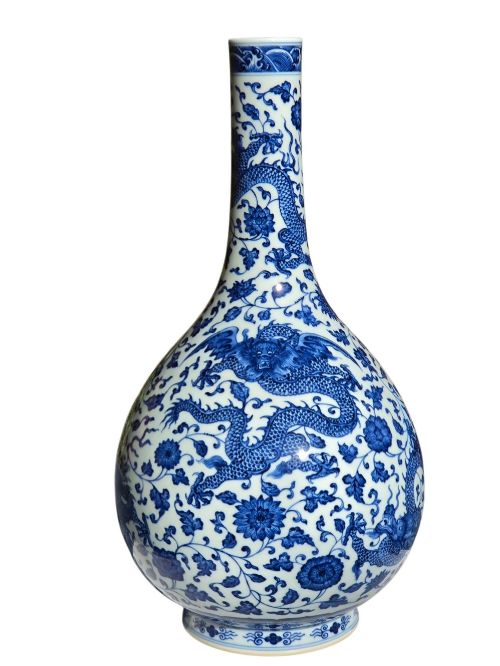
A blue dragon vase combines traditional ceramic forms with dynamic painted or enamelled reptilian motifs. Pieces matching this blue dragon vase search span centuries of production, drawing on Chinese imperial designs as well as later European interpretations.
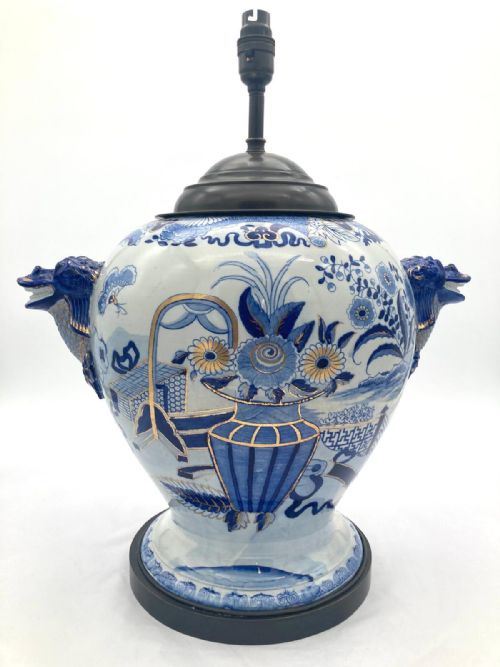
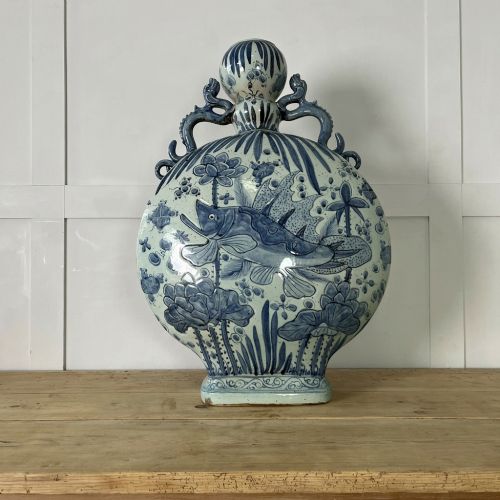
The selection here encompasses porcelain bottle vases, moon flasks, and converted lamp bases from the eighteenth century through to the interwar decades. Buyers frequently encounter nineteenth-century Chinese export wares alongside English ironstone and pottery adaptations from firms such as Wedgwood and Mason's.
Forms range from compact cabinet pieces to substantial floor-standing standards and pairs suited for mantel displays. Each example relies on the contrast between cobalt decoration and pale ground bodies to create a strong visual impact.
Materials and construction methods
Production centres on high-fired porcelain and ironstone bodies painted with cobalt underglaze before glazing and firing. Cobalt underglaze gives a deep blue pigment that sits beneath a glassy surface, ensuring durability and depth.
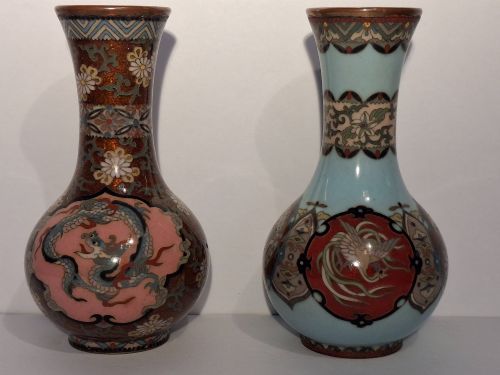
Alternative constructions utilise cloisonné enamel on metal bases, where wire cells contain the coloured enamel pastes before firing and polishing. Gilt bronze and brass mounts appear on pieces adapted into lamps during the nineteenth and twentieth centuries.
Moulding and throwing techniques define the shapes, from ribbed double gourd silhouettes to standard baluster and meiping forms. Wedgwood pieces employ specialised lustre glazes to build up the dragon imagery.
Blue Dragon Vase Retail Price Guide 2026
Typical asking prices for blue dragon vase among the pieces listed under this phrase on Sellingantiques today, from the lower quarter to the upper quarter. They describe what is for sale here now, not the wider market.
Dragons winding around these vessels frequently chase a flaming pearl across the glaze.
Assessing quality in execution
The purity and consistency of the ceramic or porcelain body dictate the weight and tactile appeal of the vessel. Cloisonné examples rely on the neatness of the metal wirework and the smoothness of the polished enamel surface.
Historical marks, whether apocryphal reign marks or genuine factory stamps, influence the standing of an item. The integration of mounts on converted pieces affects the overall coherence of the design.
Hicks and Meigh·Wedgwood·Fukagawa·Mason's
The Blue Dragon Vase Glossary
- Cobalt Underglaze
- A blue metallic oxide pigment applied to the raw clay body before the application of a clear glaze and high-temperature firing. This technique protects the painted design beneath a glossy seal.
- Cloisonne Enamel
- A metalwork technique using thin wire soldered to a base to create compartments that are filled with enamel paste and fired. Multiple firings and polishings produce a smooth, patterned surface.
- Ironstone
- A heavy, durable type of feldspathic earthenware patented in the nineteenth century to rival true porcelain. It provides a sturdy white body well suited to bold underglaze decoration.
- Meiping
- A traditional high-shouldered Chinese vase shape with a narrow neck, designed originally to hold flowering plum branches. The silhouette tapers gracefully toward the base.
- Moon Flask
- A flattened circular flask form set upon a small foot, featuring a short neck and two handle loops. This shape derives from ancient leather prototype vessels adapted into ceramic form.
Blue Dragon Vase: Frequently Asked Questions
How do I date an older blue dragon vase?
Dating relies on combining stylistic clues, potting characteristics, and any base marks present on the piece. Porcelain composition and glaze textures often indicate whether a vessel originates from the nineteenth century or a later period.
Changes in manufacturing methods and export trends also provide context. Comparing base markings with known factory outputs helps narrow down the decade of production.
Where should I display a large dragon vase?
Substantial vases function effectively as floor-standing decor or as focal points on sturdy sideboards and entrance tables. Their vertical presence draws the eye upward in a room.
When positioning pairs, maintaining symmetry on mantels or flanking furniture creates a balanced arrangement. Ensure the surface weight capacity matches the heavy nature of ironstone or porcelain.
Are converted lamp vases safe to use?
Many nineteenth-century vessels were adapted into lamps during their history, which requires checking the modern electrical wiring for safety. Qualified electricians can easily update old fittings without altering the ceramic body.
Retaining the original vase form beneath the hardware preserves the collectible integrity of the piece. Regular dusting and careful handling keep the surface glazes protected.
What does five-clawed dragon mean?
In imperial Chinese tradition, dragons depicted with five claws on each foot were restricted to use by the emperor and high-ranking court officials. Four-clawed dragons were used by nobility and lesser officials.
Finding this motif on a vessel indicates a design derived from imperial patterns. It adds a layer of historical narrative to the painted decoration.