


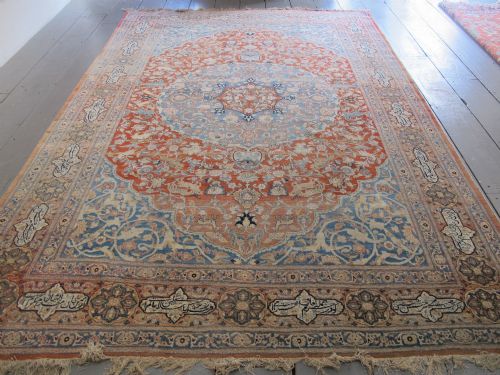


Blue Bordered Persian Carpet
A blue bordered persian carpet brings distinctive depth to a room through centuries-old regional weaving traditions.
Blue Bordered Persian Carpet
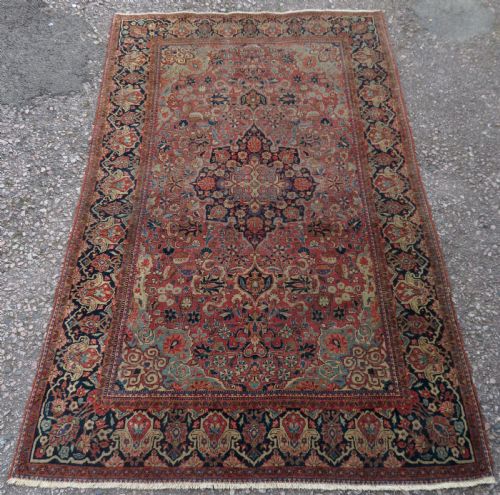
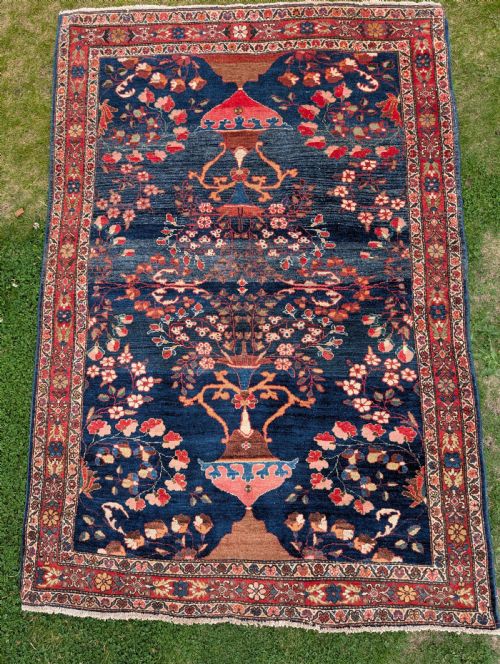
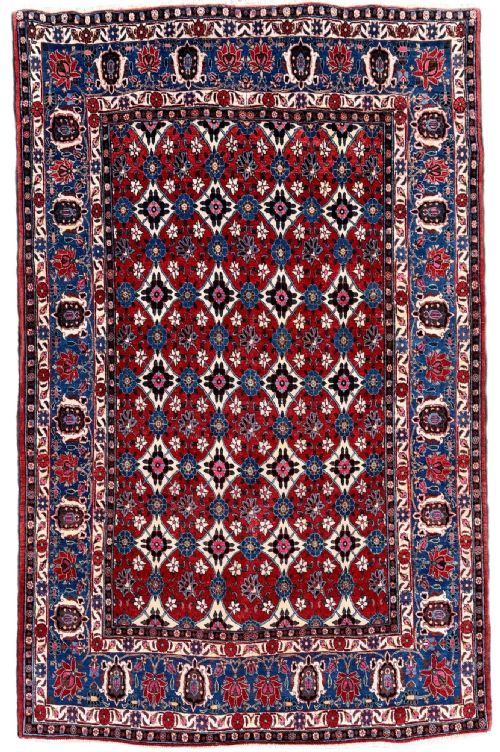
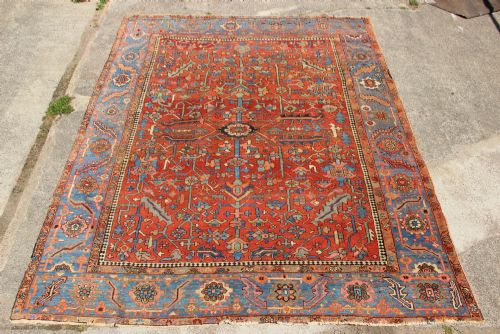
A blue bordered persian carpet encompasses room-size floor coverings, runners, and area rugs originating from Persian weaving centres and tribal regions. When searching for a blue bordered persian carpet, buyers typically encounter pieces originating from the nineteenth century through the early twentieth century.
The selection includes specific regional types such as Heriz, Sultanabad, Tabriz, and Kashan, alongside tribal works by Bakhtiari, Qashqai, and Khamseh weavers. These examples range from compact area rugs to large gallery carpets intended for formal spaces.
How they were made
These textiles utilise hand-spun wool, cotton, and occasionally silk foundations and pile, knotted by hand on vertical looms. Natural dyes derived from plants and minerals provide the palette, creating varied tones across the wool surface.
Weavers employed characteristic regional knotting techniques and structural foundations, utilising cotton for warps and wefts in city workshops while tribal weavers frequently incorporated wool foundations.
Blue Bordered Persian Carpet Retail Price Guide 2026
Typical asking prices for blue bordered persian carpet among the pieces listed under this phrase on Sellingantiques today, from the lower quarter to the upper quarter. They describe what is for sale here now, not the wider market.
The listings feature wool, cotton, and silk carpets spanning the nineteenth century and the 1930s.
What varies in quality
Quality depends upon the fineness of the knot density, the precision of the design execution, and the condition of the wool pile. Higher quality examples demonstrate skilled handling of natural dyes, resulting in harmonious colour saturation across the field and border.
The integrity of the original outer edges and fringe foundations significantly influences the overall character of the weaving, distinguishing master city workshops from simpler tribal pieces.
Ziegler and Co·Haji Jalili
The Blue Bordered Persian Carpet Glossary
- Warp
- The vertical threads stretched on a loom that form the foundation of the carpet. The ends often appear as fringing at the top and bottom of the textile.
- Weft
- The horizontal threads passed between the warp threads to secure the knots in place. Together with the warp, they create the foundational grid of the rug.
- Pile
- The upright cut ends of the yarn that form the usable surface of the carpet. Its thickness and wool quality determine how the rug responds to foot traffic.
- Heriz
- A style originating from north-west Persia known for bold geometric medallion designs and robust wool construction. These carpets typically display strong structural character.
- Sultanabad
- A nineteenth-century commercial weaving style produced in west Persia characterised by large-scale, open floral patterns adapted for Western markets.
Blue Bordered Persian Carpet: Frequently Asked Questions
How do I date an old Persian carpet?
Dating relies on stylistic markers, structural materials, and dye characteristics observed across nineteenth and early twentieth-century examples.
Changes in palette and weaving density help place a textile within specific decades or centuries.
Where were these carpets traditionally used?
These textiles served as floor coverings in formal reception rooms, nomadic tents, and merchant homes across Persia.
Larger formats anchored main living spaces while runners traversed corridors and galleries.
How do I care for a wool rug?
Regular gentle vacuuming without a rotating brush roll prevents dust accumulation within the wool pile.
Professional cleaning by specialists in antique textiles ensures the preservation of natural dyes.
What distinguishes city rugs from tribal rugs?
City workshop pieces feature intricate curvilinear floral motifs and high knot densities executed by professional artisans.
Tribal examples display geometric tribal symbols, spontaneous local designs, and coarser wool construction.