


Blue and White Lighting
Blue and white lighting brings together centuries of ceramic vessels and metal mounts to illuminate interiors with patterned cobalt designs.
Blue and White Lighting
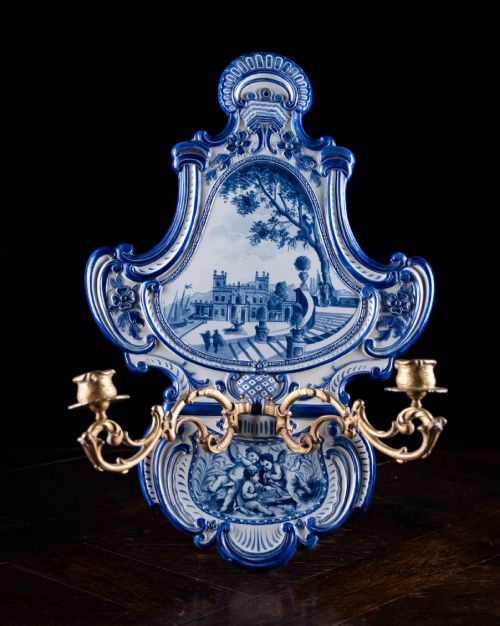
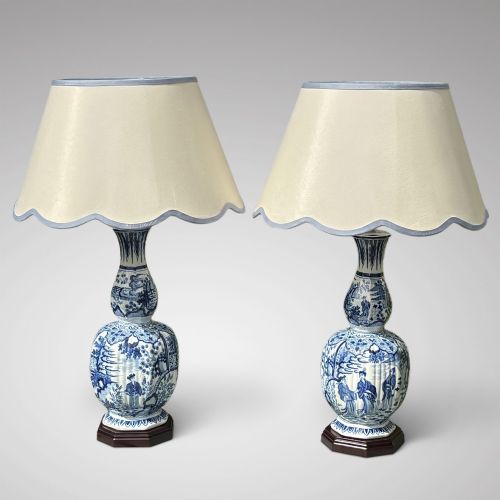
Blue and white lighting encompasses table lamps, wall sconces, oil lamps, and candlesticks formed by adapting historic ceramic vessels.
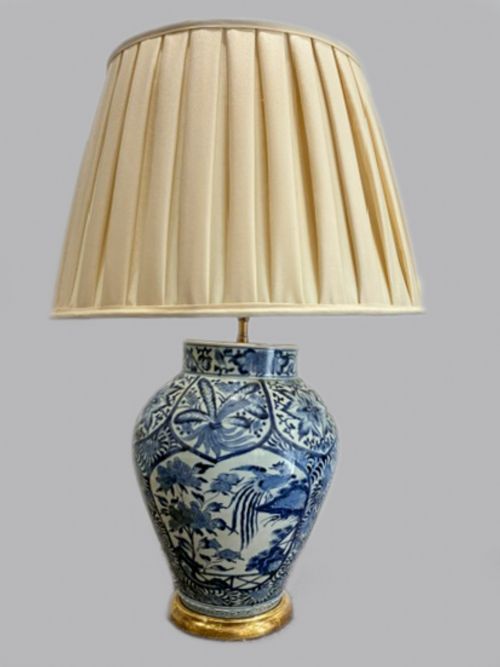
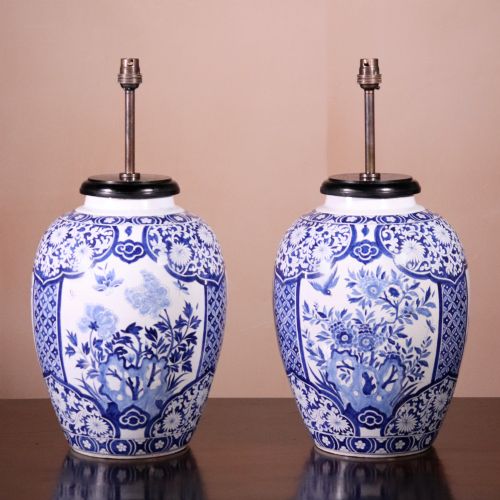
The pieces on this page are most frequently encountered as nineteenth-century Chinese vases or Dutch Delftware jars converted into table lamps.
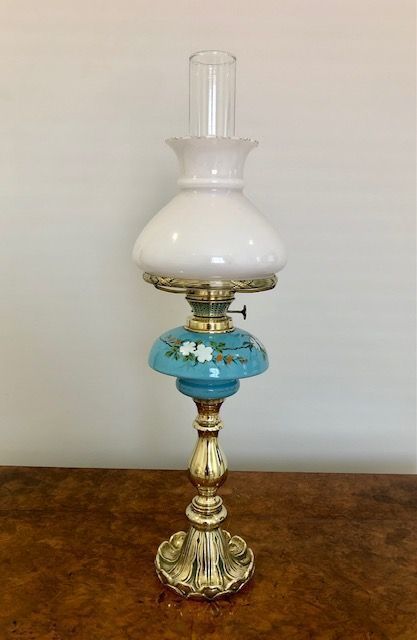
Additional examples include Japanese porcelain vessels, Georgian and Victorian oil lamps, and French crystal light fittings incorporating cobalt tones.
Materials and construction methods
The bodies of these lights rely on ceramic, porcelain, or pottery hand-painted with blue pigments beneath a glaze.
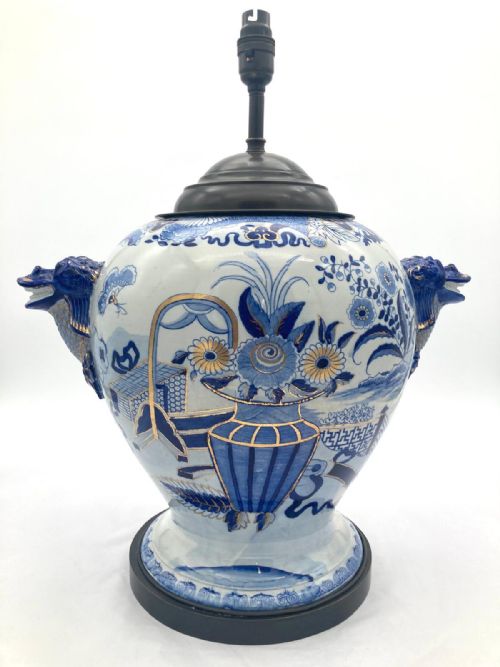
Many items incorporate brass, ormolu, gilt, and black glass bases to support the converted vessels and house electrical or oil mechanisms.
Fabric and silk handmade shades complete the lighting assemblies alongside fitted metal hardware.
Several centuries of global trade rest upon a single bedside table when a seventeenth-century vase finally learns to hold a lightbulb.
Judging quality in blue and white lighting
Quality rests upon the clarity and detail of the hand-painted cobalt decoration on the ceramic body rather than a standard formula.
The integration of the conversion matters significantly, distinguishing professional adaptations that preserve the vessel from intrusive alterations.
Villeroy and Boch·Hicks and Meigh·Lionel Horsnell·Wedgwood
The Blue and White Lighting Glossary
- Delftware
- Tin-glazed earthenware originating from the Netherlands, recognised by its characteristic blue and white painted surface.
- Ormolu
- Gilded bronze mounting applied to furniture and decorative objects as decorative feet, rims, or structural supports.
- Ginger jar
- A wide-mouthed storage jar of Chinese origin, frequently adapted into a table lamp base.
- Jasperware
- A type of stoneware developed by Wedgwood, noted for its matte surface and contrasting raised decoration.
- Chinoiserie
- European artistic style reflecting Chinese motifs and decorative techniques, applied to ceramics and furnishings.
Blue and White Lighting: Frequently Asked Questions
Are these lamps converted from old vases?
Many blue and white lamps originate from earlier ceramic vessels, such as nineteenth-century Chinese porcelain vases or seventeenth-century Japanese jars, which were later adapted for electrical use.
This conversion process typically involves mounting the historic ceramic onto a metal base and fitting it with internal wiring while preserving the exterior vessel.
How do I identify Delftware lighting?
Delftware pieces display tin-glazed earthenware bodies decorated with cobalt blue painting, often featuring European or Asian-inspired landscapes and floral motifs.
These items frequently date from the eighteenth or nineteenth centuries and appear as table lamps or wall sconces.
What styles influence these lights?
The aesthetic spans multiple decorative movements, including Chinoiserie, Qing Dynasty designs, Victorian brass work, and Art Deco porcelain forms.
These diverse stylistic influences reflect the long history of intercultural trade and changing European tastes for Asian ceramics.
How do I care for fabric shades?
Handmade silk and fabric shades require gentle dusting with a soft brush to prevent the accumulation of dirt on delicate textiles.
Avoid using liquid cleaners on antique shades to protect the fabric integrity and structural mounts.