

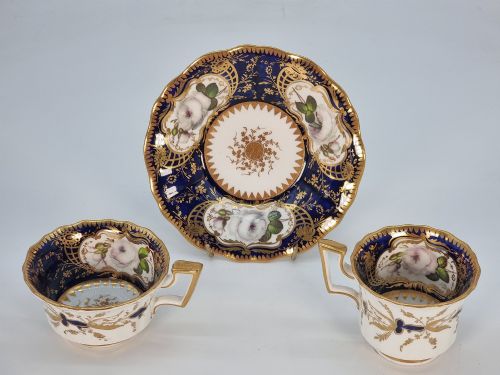


Blue and Gold Saucer
A blue and gold saucer brings refined Regency elegance and vibrant cobalt contrast to any cabinet or table setting.
Blue and Gold Saucer
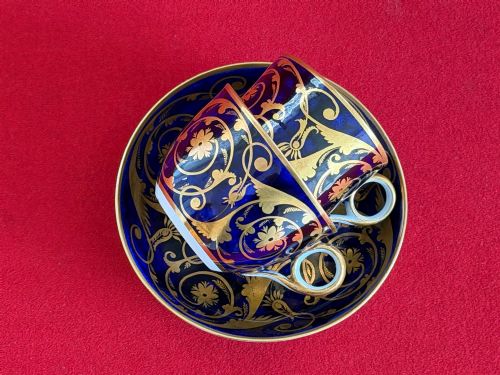
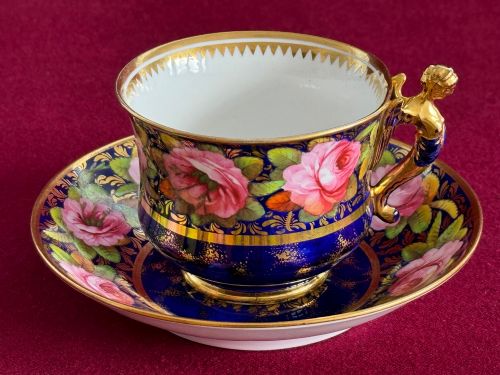
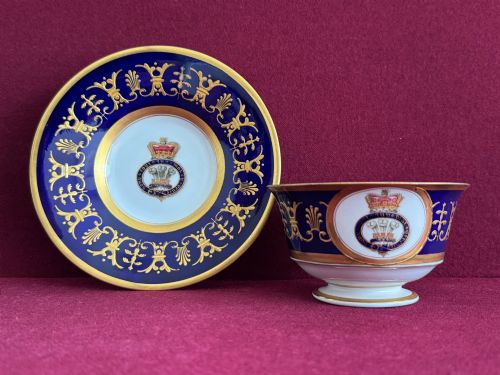
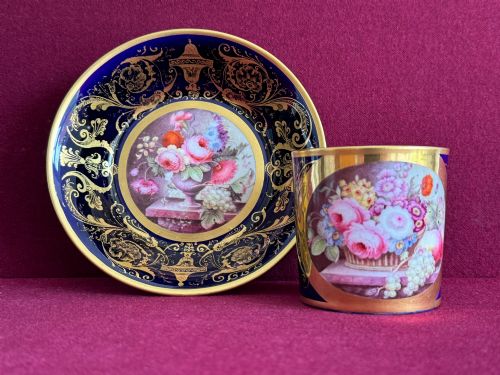
A blue and gold saucer represents a rich tradition of ceramic and glass tableware spanning from the eighteenth century through the twentieth century. These pieces appear in varied forms including teacups and saucers, coffee cans, chocolate cups, and cabinet trios.
The selection here encompasses periods from the Georgian and Regency eras to Victorian, Edwardian, and Art Deco designs. Buyers frequently encounter fine porcelain and bone china alongside delicate glassware featuring deep cobalt grounds.
Originating from esteemed English and continental manufacturers, these saucers reflect shifting decorative tastes across multiple centuries. Each example demonstrates the enduring appeal of pairing intense blue hues with gleaming metallic gilding.
Materials and construction
Makers utilised high-grade porcelain, bone china, and glass as the foundational mediums for these decorative drinking vessels. The ceramic bodies provide a smooth, stable white canvas necessary for precise cobalt application.
Cobalt enamel and rich gold leaf or gilding form the striking visual palette characteristic of these pieces. Artisans applied liquid gold and detailed enamel pigments by hand before firing the items to permanent brilliance.
Blue and Gold Saucer Retail Price Guide 2026
Typical asking prices for blue and gold saucer among the pieces listed under this phrase on Sellingantiques today, from the lower quarter to the upper quarter. They describe what is for sale here now, not the wider market.
The listings here include porcelain, bone china, and glass across Regency, Victorian, and Art Deco periods.
Judging quality in blue and gold saucers
Quality rests upon the precision of the hand-painting and the purity of the cobalt ground. Finer examples display crisp gilding work and delicate brush control that mark the output of skilled decorators.
The distinction between standard tableware and cabinet pieces lies in the complexity of the design and the reputation of the workshop. Superior items often feature specialised motifs, figural scenes, or signed artistic contributions.
Spode·Barr and Barr Worcester·Minton·Coalport·Grainger's Worcester·Fritz Heckert
The Blue and Gold Saucer Glossary
- Porcelain
- A hard, fine-grained ceramic material fired at high temperatures to achieve a vitrified, non-porous body. It serves as the primary medium for antique tea and coffee wares.
- Gilding
- The application of gold leaf or gold powder to the surface of ceramics or glass for decorative accent. On finer pieces, this work is executed by hand with considerable precision.
- Cobalt enamel
- A deep blue vitreous pigment fused to the surface of glass or porcelain during firing. This intense colour provides the dark contrasting ground typical of these designs.
- Bone china
- A type of porcelain incorporating bone ash into the paste, resulting in a strong, slightly translucent body. English factories utilised this material extensively throughout the nineteenth century.
Blue and Gold Saucer: Frequently Asked Questions
How do I date a blue and gold saucer?
Dating relies on examining the paste, glaze characteristics, and any factory marks stamped or painted on the underside. Stylistic cues such as Regency Neoclassical forms or Art Deco geometry also help establish the period of manufacture.
Comparing the potting weight and gilding style against known factory examples from the eighteenth and nineteenth centuries provides further confirmation.
Were these saucers meant for everyday use?
Many early examples, particularly those with heavy gilding and delicate porcelain bodies, were intended for formal drawing-room hospitality rather than daily dining. Cabinet plates and fine tea bowls served as displays of wealth and refinement.
Later twentieth-century productions offered more durable domestic options while retaining the classic cobalt and gold aesthetic.
What is a cabinet trio?
A cabinet trio typically consists of a matching teacup, coffee can or second cup, and a saucer designed for display within a collector's cabinet. These matched sets highlight the decorative prowess of the manufacturing pottery.
They represent comprehensive examples of a specific pattern or artistic commission.