


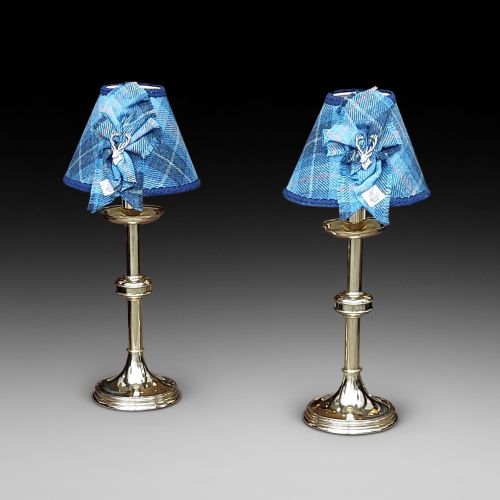

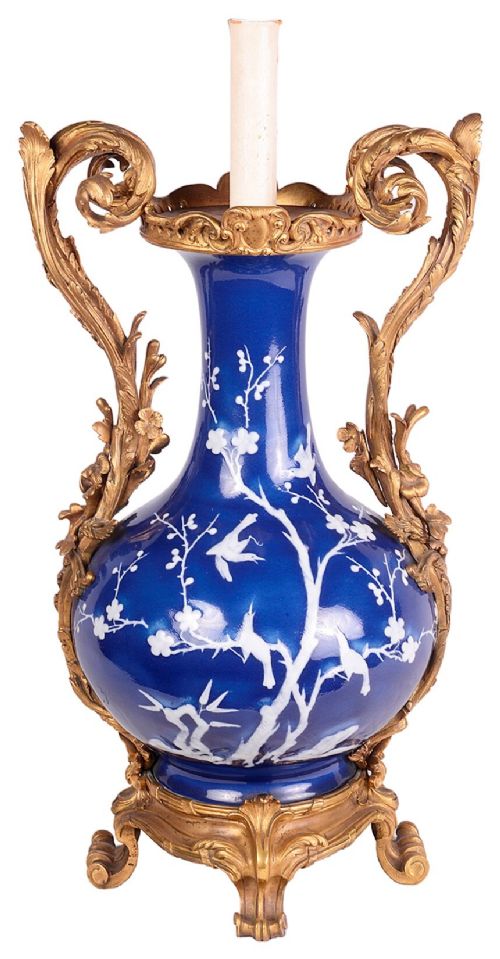

Blue and Gold Lamp
These blue and gold lamp examples combine rich ceramics and polished metalwork to illuminate a room with classic warmth.
Blue and Gold Lamp
When you search for a blue and gold lamp, you encounter a varied selection of electrified lighting fixtures drawing on several historical eras. These pieces typically adapt earlier vessels, columns, and candlesticks into functional table lighting.
The inventory on this page most frequently presents nineteenth-century and early twentieth-century examples. Common formats include converted Chinese porcelain vases, classical brass columns, and ornamental candlesticks.
Makers from the Victorian, Edwardian, and Art Deco periods adapted traditional forms using rich cobalt or powder blue glazes alongside gilt bronze, ormolu, and polished brass.
How they were made
The construction of a blue and gold lamp relies on combining durable metalwork with ceramic bodies or turned columns. Craftsmen utilised brass, gilt bronze, and ormolu to create structural mounts and bases that support the central shaft.
Ceramic elements feature hand-painted pigments or rich glazes in shades of blue, complemented by applied gold leaf or metallic detailing. Many of these lighting fixtures incorporate converted items, such as nineteenth-century vases or tobacco jars, fitted with modern electrical components.
Blue and Gold Lamp Retail Price Guide 2026
Typical asking prices for blue and gold lamp among the pieces listed under this phrase on Sellingantiques today, from the lower quarter to the upper quarter. They describe what is for sale here now, not the wider market.
Listings feature items spanning the nineteenth century through to the 1930s, utilising brass, porcelain, and ormolu.
What varies in quality
The standard of a blue and gold lamp depends heavily on the crispness of the metal casting and the depth of the gilding. Finer pieces display sharply detailed ormolu mounts and substantial brass or gilt bronze columns rather than thin pressed sheet metal.
Quality also rests in the integration of the conversion, where porcelain bodies and metal mounts fit seamlessly together. Original period mounts and carefully preserved hand-painted ceramic glazes elevate the overall execution of the piece.
The Blue and Gold Lamp Glossary
- Ormolu
- Gilded bronze, where a layer of gold is applied to a bronze base using a mercury amalgamation technique or modern electroplating. This finish imparts a warm, durable metallic sheen to decorative mounts.
- Chinoiserie
- A European artistic style reflecting Chinese motifs and techniques, popular in furniture, ceramics, and decorative lighting. It often pairs deep blue backgrounds with delicate gold painted ornamentation.
- Doric Column
- A classical architectural order featuring a sturdy, fluted shaft and a plain capital. In table lighting, this form is frequently cast in solid brass.
- Ecclesiastic
- A design style drawing on medieval church architecture and liturgical metalwork. Pieces from this tradition often feature heavy brass construction and Gothic ornamentation.
Blue and Gold Lamp: Frequently Asked Questions
What is a blue and gold lamp?
A blue and gold lamp is a decorative lighting fixture that combines blue ceramic, glass, or painted finishes with metallic brass, gilt bronze, or ormolu details. These pieces range from converted nineteenth-century vases to Edwardian columnar table lights.
They serve as functional room illumination while functioning as decorative centrepieces due to their striking colour contrast and historical styling.
How do I date a blue and gold lamp?
Dating involves examining the materials, wiring, manufacturing techniques, and stylistic clues of the base. Nineteenth-century examples often feature heavy ormolu mounts and hand-finished ceramics, whereas Edwardian and later twentieth-century pieces may display cleaner lines or specific revival styles like Art Deco.
Changes in metal casting and electrical fittings provide additional clues to the exact manufacturing era.
Were these lamps originally made as lighting?
Many examples on this page started life as something else entirely before being converted into lighting. Nineteenth-century Chinese vases, tobacco jars, and neoclassical candlesticks were frequently adapted with electrical fittings during later decades.
This practice of adaptation preserves historic decorative arts by giving them a practical purpose in modern interiors.
How do I style a blue and gold lamp?
These lamps work well on side tables, desks, or mantelpieces where their rich metallic and blue tones can catch the light. They pair naturally with both traditional period interiors and eclectic modern spaces.
Choosing a fabric shade that complements the blue body or the gold mounts helps integrate the fixture into your existing room scheme.