

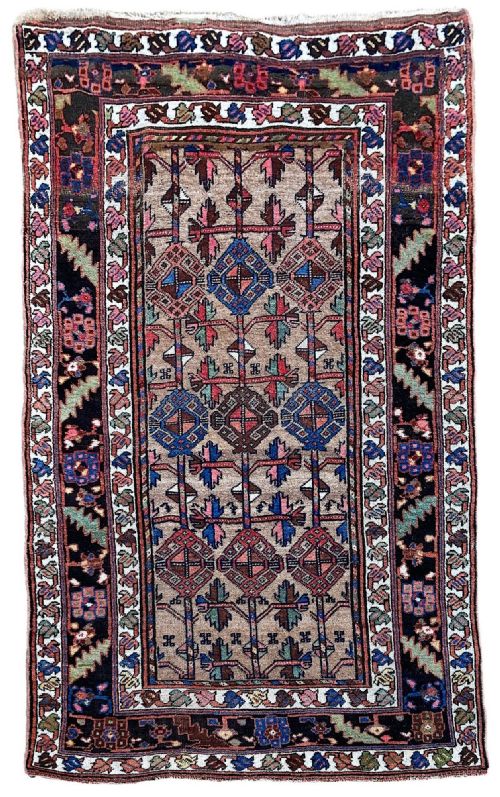


Blue and Beige Rug
A blue and beige rug anchors a room with muted tones, offering durable floor coverings woven in wool across Persian and Chinese traditions.
Blue and Beige Rug
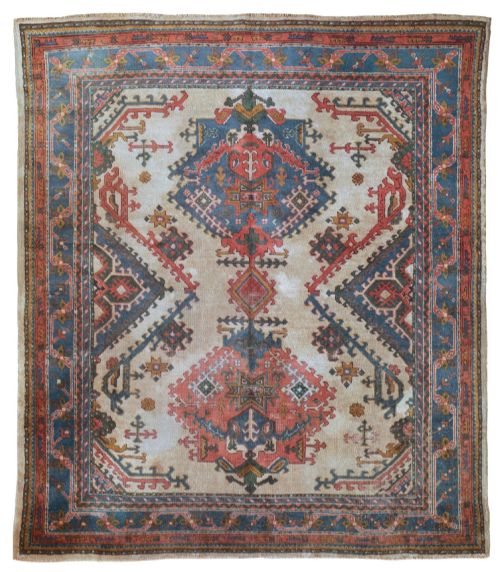
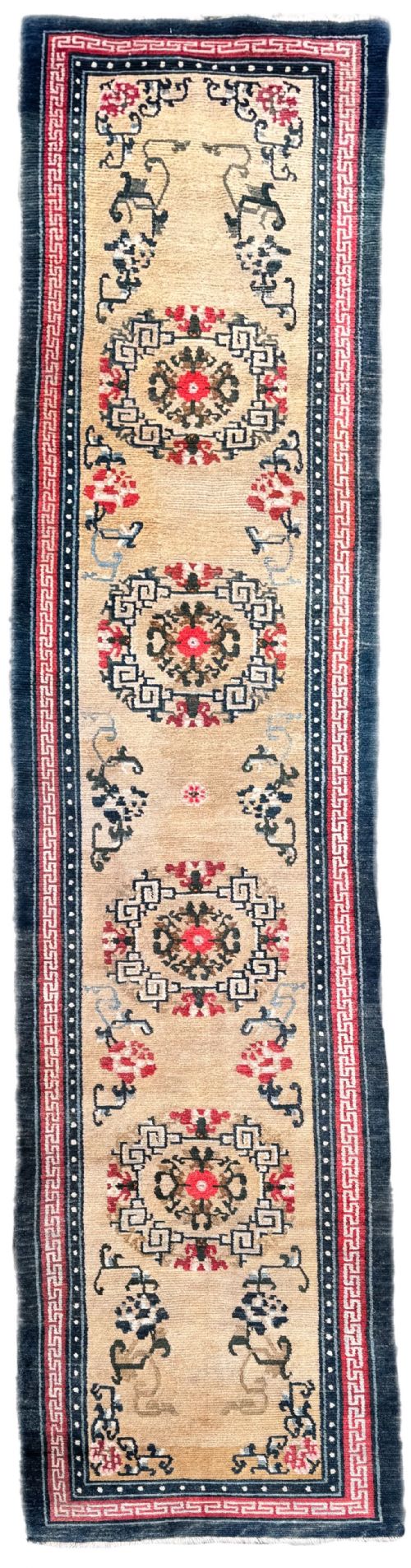
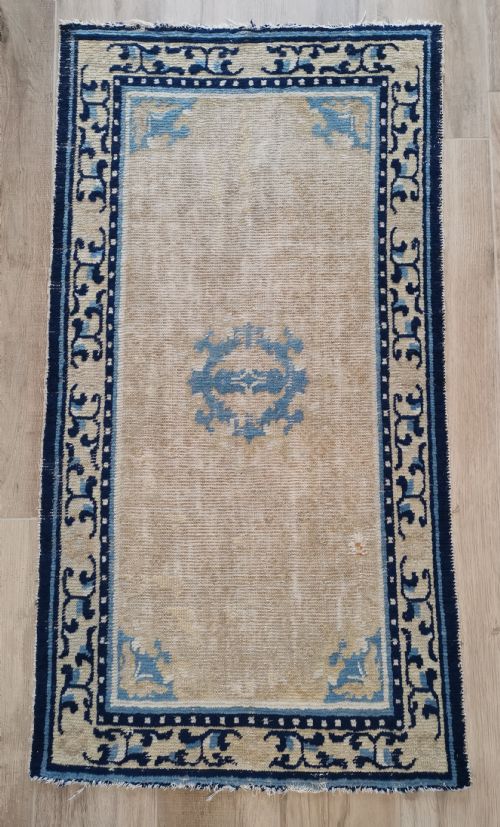
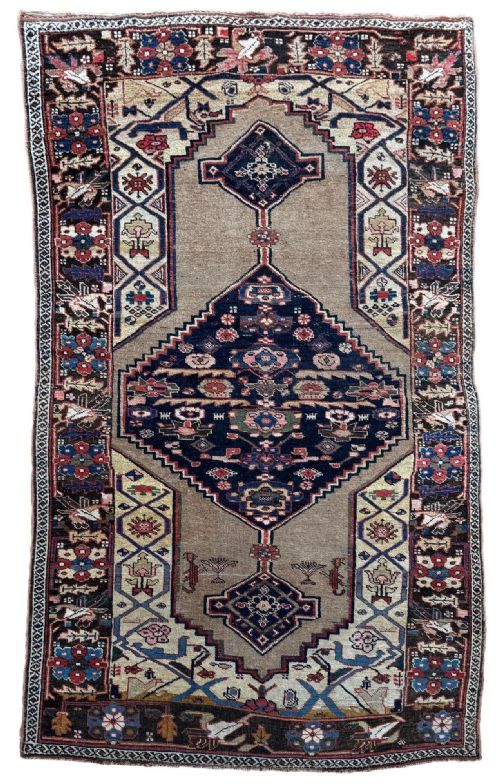
When searching for a blue and beige rug, buyers encounter floor coverings originating predominantly from Persian tribal workshops, Chinese art deco centres, and Tibetan weaving traditions. These pieces span periods from the mid-nineteenth century through the early twentieth century, encompassing formats from small room-size carpets down to narrow hallway runners.
The most common versions met on this page include room-size carpets and runners from Persian regions such as Kirman, Bidjar, Kurdish, Sarab, and Tabriz, alongside Chinese carpet production from the Qing dynasty and art deco periods. Each piece demonstrates regional knotting and design vocabularies developed over generations of local manufacture.
What varies in quality
Quality differences stem from the density of the knotting and the preparation of the wool fibres used in the pile. Tighter foundation weaves and evenly spun wool produce floor coverings that endure heavy foot traffic while retaining structural integrity.
Design execution and the nuance of the colour blending also separate standard village weaving from finer workshop production. The clarity of the pattern geometry and the handling of the wool pile dictate the overall calibre of each carpet.
Blue and Beige Rug Retail Price Guide 2026
Typical asking prices for blue and beige rug among the pieces listed under this phrase on Sellingantiques today, from the lower quarter to the upper quarter. They describe what is for sale here now, not the wider market.
Current listings feature pieces spanning the nineteenth century and early twentieth century, utilising wool, cotton, and hand-spun wool across Persian and Chinese styles.
The Blue and Beige Rug Glossary
- Pile
- The vertical or inclined loop of yarn that forms the textured surface of the carpet. This element absorbs the wear of daily use.
- Warp
- The stationary vertical threads stretched on the loom upon which the knots are tied. Cotton is frequently utilised for this structural component.
- Weft
- The horizontal threads passed across the warp threads between rows of knots to bind the structure together. It keeps the pile securely locked in place.
- Runner
- A long, narrow carpet format designed specifically for hallways and corridors. These pieces accommodate restricted floor spaces.
- Knot
- The individual loops of wool tied around warp threads to create the decorative pile. Different regions developed distinct knotting techniques.
Blue and Beige Rug: Frequently Asked Questions
How do I clean an old wool rug?
Vacuum gently without a rotating brush to remove surface grit without pulling the wool fibres. Professional specialist cleaning remains necessary for deeper washing.
Avoid chemical detergents and excessive water immersion to protect the natural dyes and cotton foundations. Proper maintenance preserves the structural integrity of the pile over time.
Where were these carpets originally woven?
Production centres include various regions across Persia, such as Bidjar, Kirman, and Tabriz, alongside workshops in China and Tibet. Each area utilised local materials and distinct weaving traditions.
Village weavers produced sturdier utility pieces, while city workshops often focused on detailed geometric or floral compositions. Geography dictates the specific knotting style and wool preparation observed in each rug.
Can I place a runner in a hallway?
Runners serve as ideal floor coverings for narrow hallways and corridors due to their elongated rectangular proportions. They protect high-traffic wooden floors while adding warmth to transitional spaces.
Ensure an appropriate underlay is utilised beneath the rug to prevent slipping and reduce friction against the floor surface.
What does a nineteenth century date mean?
A nineteenth-century attribution indicates the rug was manufactured between eighteen hundred and nineteen hundred using traditional hand-craft methods. These pieces reflect the prevailing aesthetic and material standards of that specific era.
Such carpets display age-related wear that demonstrates their historical use within domestic settings.