


Blown Glass Decanter
A blown glass decanter holds wine and spirits with the fluid grace of the glasshouse where it took shape.
Blown Glass Decanter
A blown glass decanter brings functional history to the dining room, designed originally to hold and serve wine or spirits from bulk vessels. You will encounter forms ranging from simple shaft and globe shapes of the eighteenth century to elaborate Victorian ewers and twentieth-century modernist carafes.
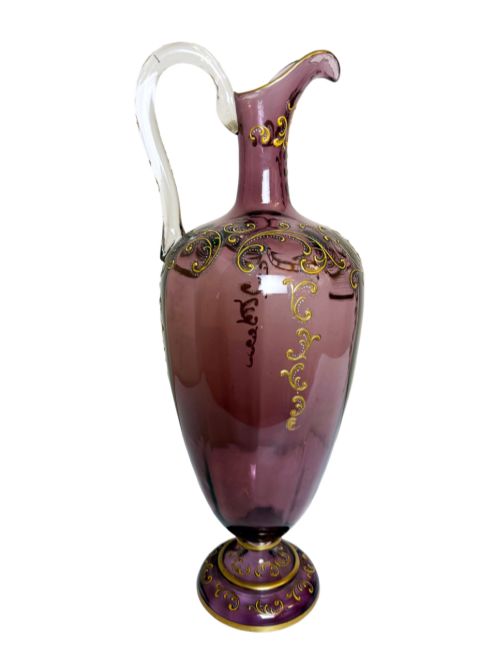
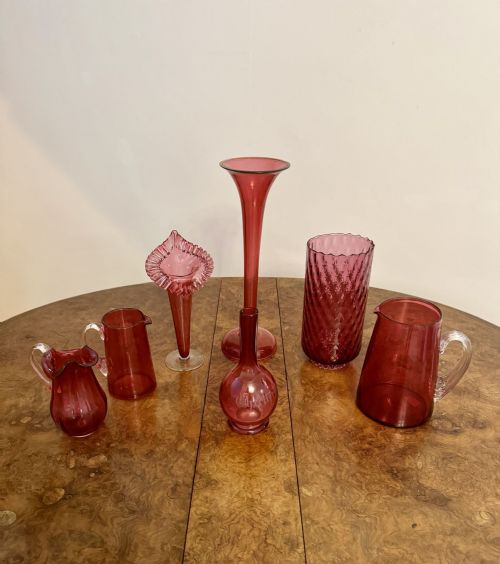
The pieces on this page span several centuries, with Victorian and nineteenth-century examples appearing most frequently alongside Georgian and Edwardian designs. Makers from England, Venice, Bohemia, and France contributed distinct regional styles, from cranberry glass to delicate latticinio bands.
Craft and material in the hot shop
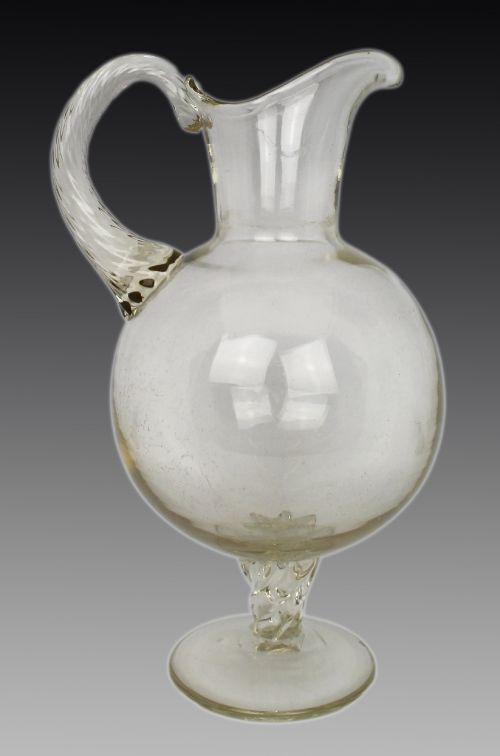
Molten metal gathered on the end of a blowpipe was shaped by hand using simple wooden blocks, jacks, and shears, often utilising optical moulds to create ribbed or swirled patterns in the body. Craftsmen then applied molten trails, handles, or feet while the vessel remained hot.
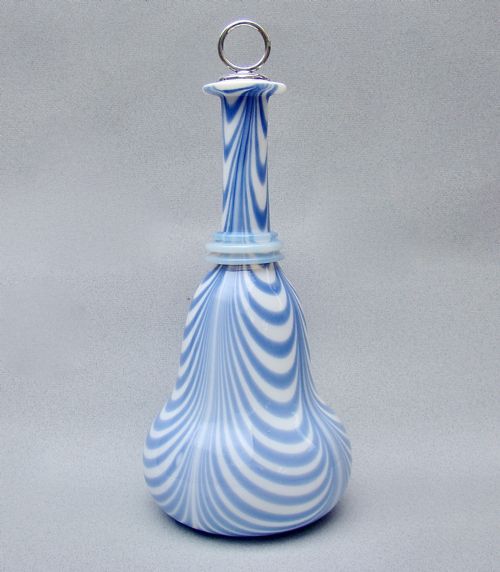
Clear, amber, cranberry, and green glass predominate, sometimes enhanced with enamel painting, gold leaf gilt applique, or opaque white latticinio glass threads fused into the vessel wall during expansion.
Listings feature clear glass, blown glass, cranberry glass, amber glass, and enamel, spanning the eighteenth, nineteenth, and twentieth centuries.
Judging a piece by its making
Quality rests upon the balance of the vessel, the thinness and even distribution of the blown metal, and the dexterity required for applied handles and collars. A superior piece shows crisp wheel-engraving or precise enamel work rather than hurried decoration.
The weight of the glass, the finish of the pontil scar on the base, and the integration of secondary materials like silver plate or metal mounts distinguish standard production from exceptional studio output.
Stevens and Williams·James Powell·Pauly and Co.·Baccarat·Archibald Knox for Liberty
The Blown Glass Decanter Glossary
- Pontil mark
- The rough scar left on the base of a vessel where the punty rod was detached after blowing. Older pieces generally exhibit a polished or rough pontil.
- Latticinio
- Opaque white or coloured glass threads embedded within clear glass in reticulated patterns. Venetian makers utilised this technique extensively.
- Cranberry glass
- Transparent pinkish-red glass created by adding gold chloride to the batch. It achieved widespread popularity during the Victorian period.
- Ewer
- A large jug with a wide spout and elaborate handle, often used for water or wine. Many Victorian examples function as decorative decanters.
- Shaft and globe
- An early decanter form featuring a long slender neck above a spherical body. This shape predominated during the eighteenth century.
Blown Glass Decanter: Frequently Asked Questions
Were these used for wine?
Georgian and Victorian examples served to decant wine from large casks to the dining table, removing sediment and aerating the spirit before consumption.
Many pieces also held cordials, brandy, whisky, or water, remaining central to domestic hospitality for centuries.
How do I date an antique decanter?
Examine the base for a pontil mark, tool marks, and wear patterns that indicate age, noting that eighteenth-century vessels often show deep kick-ups and heavier metal.
Compare the silhouette, stopper style, and decorative techniques such as Mary Gregory enamel or latticinio work against documented period examples.
Can I use these every day?
Antique glass withstands careful daily use, provided you wash items by hand and avoid dishwashers that ruin fragile gilding and enamel decoration.
Store them securely on stable surfaces away from direct sunlight and high-traffic edges.