





Blown Crystal Glass
Blown crystal glass carries the weight and clarity of centuries, bringing tactile brilliance and historic form to any room.
Blown Crystal Glass
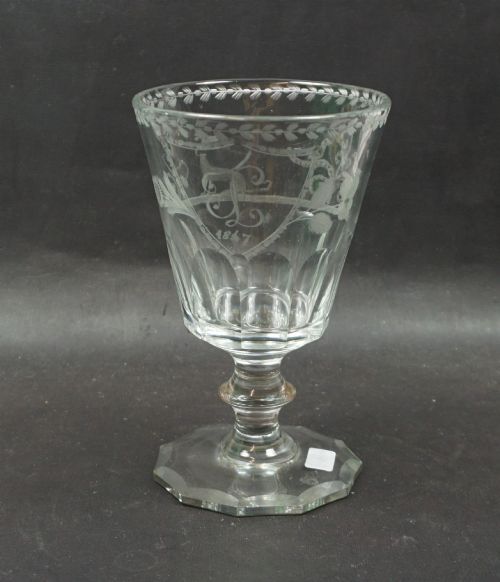
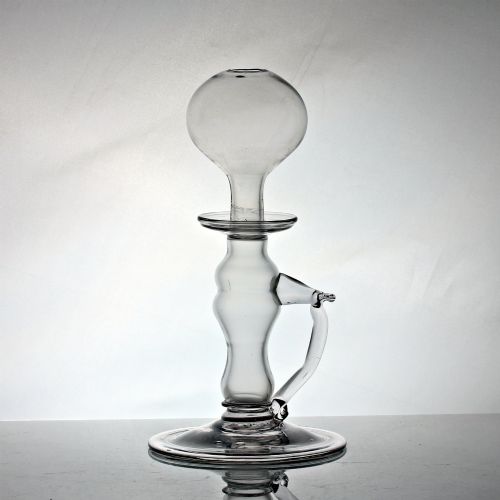
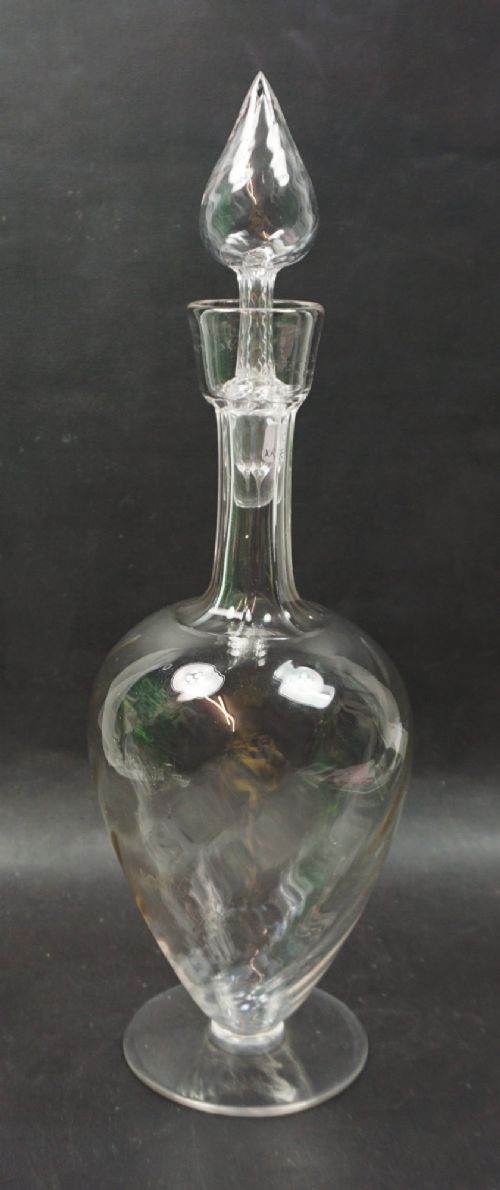
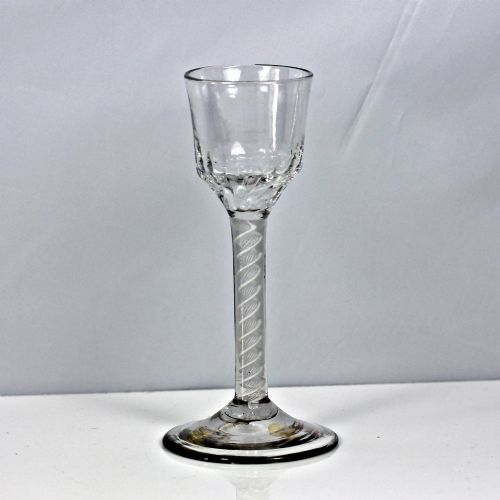
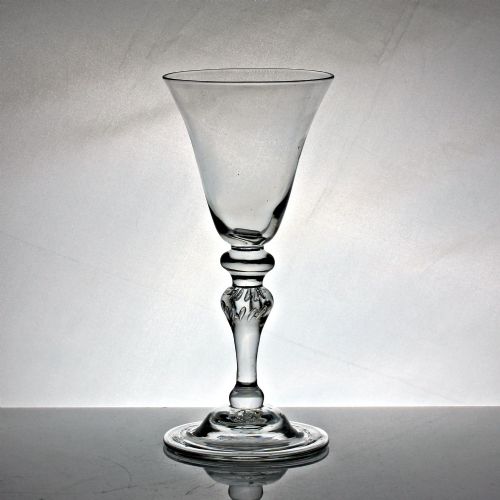
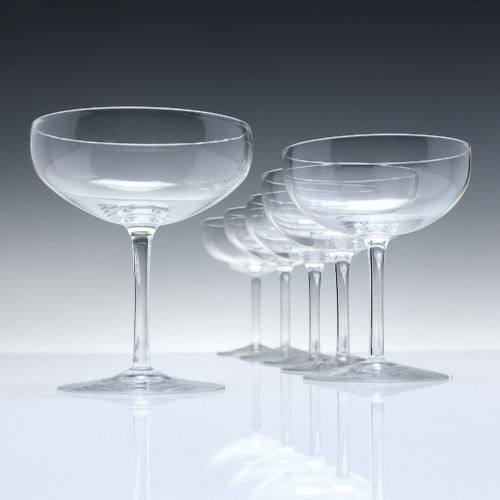
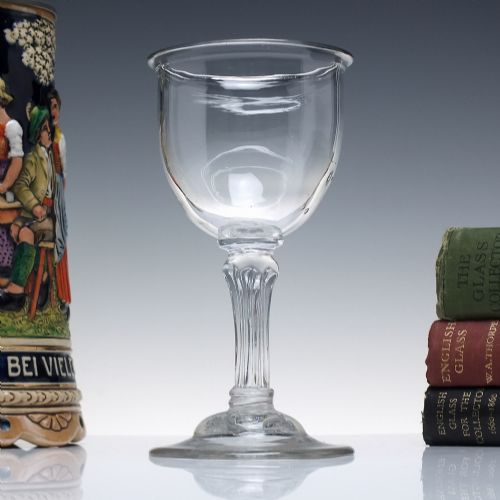
Blown crystal glass encompasses a rich variety of historic drinking vessels, tablewares and decorative objects spanning the eighteenth century through to the art deco period. When exploring blown crystal glass on this page, collectors encounter wine glasses, decanters, vases, comports and lighting fixtures shaped by hand across multiple eras.
Pieces originate from British, French and Venetian workshops, reflecting diverse regional techniques in cutting, engraving and colour application. These items survive from periods including the Georgian era, Victorian reign, Arts and Crafts movement and the early twentieth century.
Distinctions in quality
Quality rests upon the purity of the metal, the balance of the proportions and the crispness of the hand-formed details. Superior examples exhibit heavy lead content that generates resonance and light refraction, whereas lesser works show heavier walls without optical refinement.
The dexterity of the blower determines the symmetry of the bowl and the straightness of the stem, particularly in complex forms involving balusters or multiple twists. Engraved or cut ornamentation demonstrates mastery when lines remain sharp and evenly spaced across curved surfaces.
Blown Crystal Glass Retail Price Guide 2026
Typical asking prices for blown crystal glass among the pieces listed under this phrase on Sellingantiques today, from the lower quarter to the upper quarter. They describe what is for sale here now, not the wider market.
The listings span from 1700 through the 1920s, incorporating lead glass, clear glass, crystal, and coloured variations.
James Powell·Stuart for Liberty·Baccarat
The Blown Crystal Glass Glossary
- Air tear
- An elongated bubble trapped inside the stem or foot of a drinking glass during the manufacturing process. Makers sometimes formed them intentionally for decorative effect.
- Baluster
- A heavy, swelling stem shape found on Georgian wine goblets and glasses. This form draws inspiration from architectural supports of the period.
- Comport
- A shallow decorative bowl raised on a pedestal, used for serving fruit or sweetmeats on formal tables. These items frequently feature cut crystal bowls and spreading feet.
- Latticinio
- A decorative glassworking technique involving opaque white or coloured glass threads embedded within clear metal in spiral or reticulated patterns. The method originates from Venetian tradition.
- Ogee
- An S-shaped curved profile combining a concave arch flowing into a convex arch, commonly seen on eighteenth-century wine glass bowls.
- Wrythen
- A spiral moulded pattern twist running through the body of a glass vessel, produced by twisting the molten gather inside a ribbed mould.
Blown Crystal Glass: Frequently Asked Questions
How do I date an old glass?
Dating relies on examining the pontil mark on the underside, the form of the stem, and the composition of the metal. Eighteenth-century pieces often display a snapped pontil and heavier lead metal.
Later Victorian and Edwardian examples show polished pontils and more standardised moulding techniques. Comparing the piece to documented styles helps narrow the manufacturing decade.
What is lead crystal?
Lead crystal is glass containing a significant proportion of lead oxide, which increases the weight, refractive index and working time of the molten material. This composition allows artisans to cut deeper facets that scatter light effectively.
It differs from standard soda-lime glass through its higher density and distinctive musical ring when struck gently.
How should I clean antique glass?
Wash historic glassware by hand in warm water using a mild, non-abrasive detergent. Avoid sudden temperature changes to prevent thermal shock and cracking in fragile historic metal.
Dry the pieces immediately with a lint-free cloth to maintain clarity and prevent water spots on cut or engraved surfaces.
Why do some glasses have air bubbles?
Air bubbles occur naturally during the historic glassblowing process when gases become trapped within the molten batch. Early makers often accepted these minor imperfections as part of hand production.
In some instances, makers incorporated air tears intentionally as a decorative feature within the stem.