




Blonde Wood Circular Table
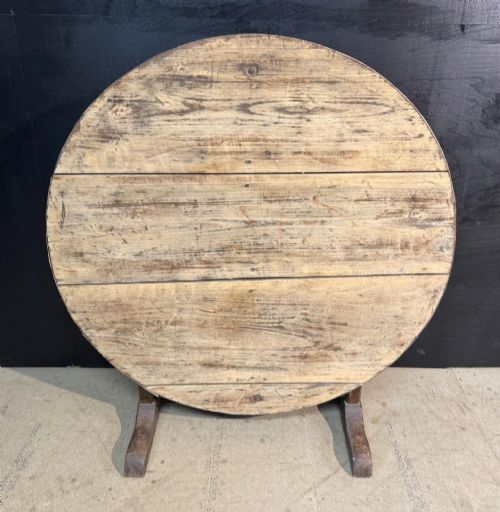
A blonde wood circular table brings pale warmth and strong grain movement into a room, offering both practical surface space and striking visual contrast.
Blonde Wood Circular Table
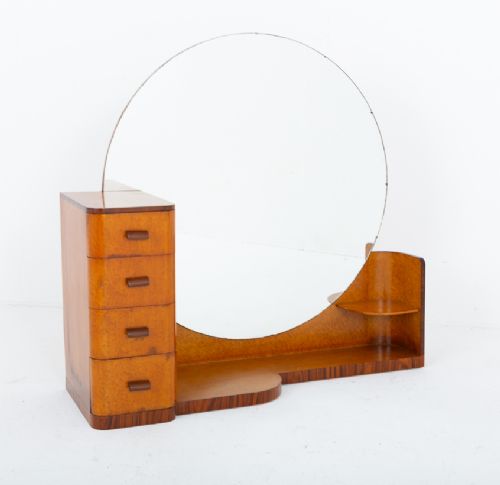
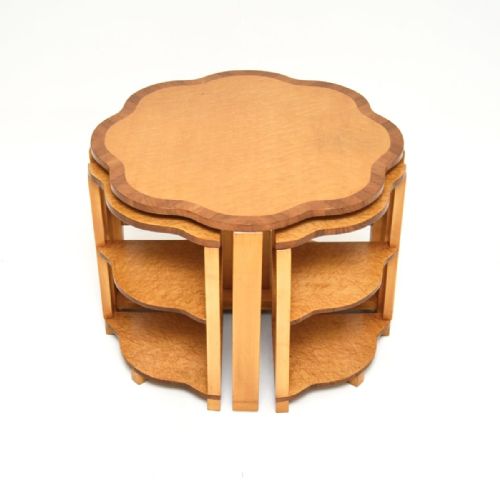
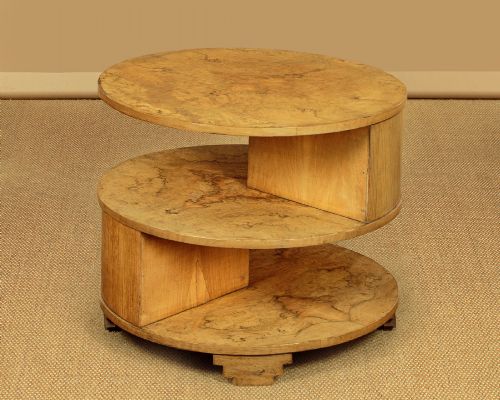
When you search for a blonde wood circular table, you encounter a selection of pale timber surfaces spanning the nineteenth century through the Art Deco period. These pieces encompass various forms including centre tables, coffee tables, drum tables, and occasional tables, all sharing a rounded top and light-toned figuring.
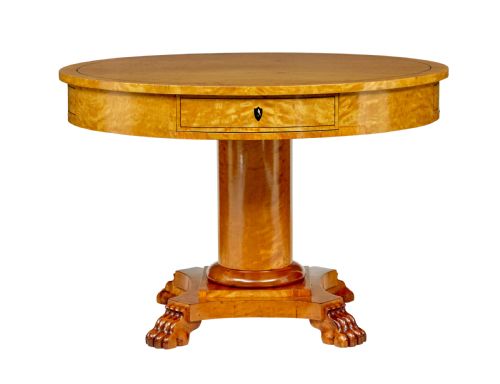
Swedish Biedermeier and Art Deco pieces dominate the selection, bringing light birch, satin birch, and birds eye maple into focus. Such tables often function as centrepieces or lamp tables, where the grain pattern of the wood can be fully appreciated from every angle.
Originating largely from Scandinavian and British workshops, these tables demonstrate how earlier makers valued pale timbers just as much as darker mahoagnies and walnuts. The round format highlights the natural concentric patterns and radial veneers peculiar to birch, maple, and elm.
Materials and construction methods
Construction relies heavily on native and Scandinavian timbers such as birch, satin birch, birds eye maple, and burr root maple. Cabinet makers selected these woods for their lively, reflective grain patterns rather than uniform colour.
Veneering techniques played a central role, particularly in radial designs where figured veneers are matched symmetrically across the circular top. Solid timber frames support these decorative surfaces, sometimes complemented by subtle brass details or classical pedestals.
Evaluating craftsmanship and condition
Quality rests primarily in the choice and matching of the timber figure, where superior tables display continuous, highly decorative grain across the circular surface. Expertly matched veneers and seamless radial patterns separate finer examples from simpler constructions.
The integrity of the underlying structure and the crispness of the turning on pedestals or legs dictate the overall refinement of the piece. Subtle details, such as well-executed brass mounts or carefully proportioned column supports, indicate a higher grade of manufacture.
Betty Joel
The Blonde Wood Circular Table Glossary
- Birch
- A pale, hard timber native to northern Europe and frequently utilised in Swedish furniture. It yields a smooth surface that takes a high polish while displaying delicate figuring.
- Birds Eye Maple
- A figure in maple wood resembling tiny swirling eyes caused by local depressions in the growing rings. Highly prized for decorative table tops.
- Centre Table
- A freestanding table designed to be viewed from all sides rather than pushed against a wall. These often occupy the middle of a principal room.
- Drum Table
- A circular library or occasional table with a deep skirt resembling a drum, frequently fitted with drawers. They rest upon a central pillar and tripod base.
- Radial Veneer
- A method of laying timber slices so the grain radiates outwards from a central point like spokes on a wheel. This creates a striking geometric pattern on round surfaces.
Blonde Wood Circular Table: Frequently Asked Questions
Where does a round blonde table work best?
A circular table breaks up the linear geometry of modern rooms and creates an inviting focal point. Centre tables suit large hallways or living spaces where people walk all around them.
Smaller occasional and coffee tables fit neatly beside seating groups. Their pale colour helps to brighten darker corners without overwhelming surrounding furnishings.
How can I tell Art Deco from earlier pieces?
Art Deco pieces from the 1930s favour streamlined silhouettes and minimalist geometry with dramatic birds eye maple or satin birch veneers. They often dispense with traditional carved ornament in favour of clean architectural lines.
Nineteenth-century examples, such as Swedish Biedermeier or Regency designs, typically incorporate more classical elements like column pedestals, turned pillars, and richer patination developed over decades.
Are these tables sturdy enough for daily use?
Most of these tables were built to serve functional roles as dining, dressing, or writing surfaces, meaning they feature robust timber construction. Proper joinery and solid pedestals ensure they withstand normal everyday activities.
Care should be taken with antique veneers and softer woods like birch or maple to avoid deep scratches. Using protective pads helps preserve the antique surface.