

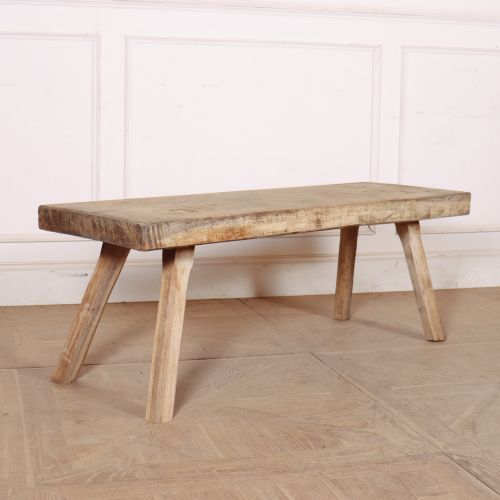
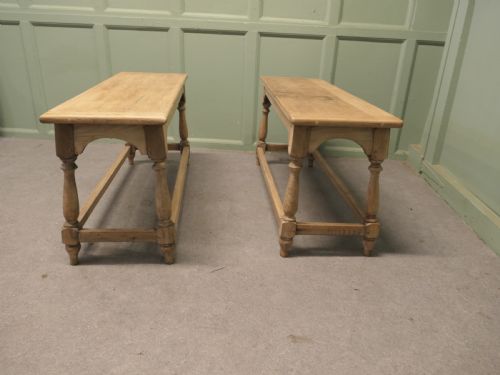


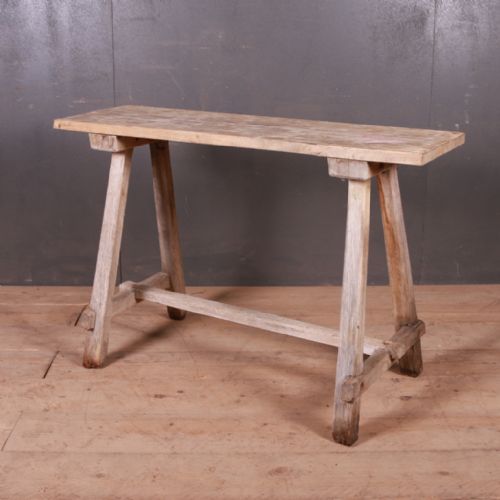


Bleached Oak Benches
Bleached oak benches bring pale wood grain and quiet utility into an interior, offering practical seating shaped by centuries of country craftsmanship.
Bleached Oak Benches
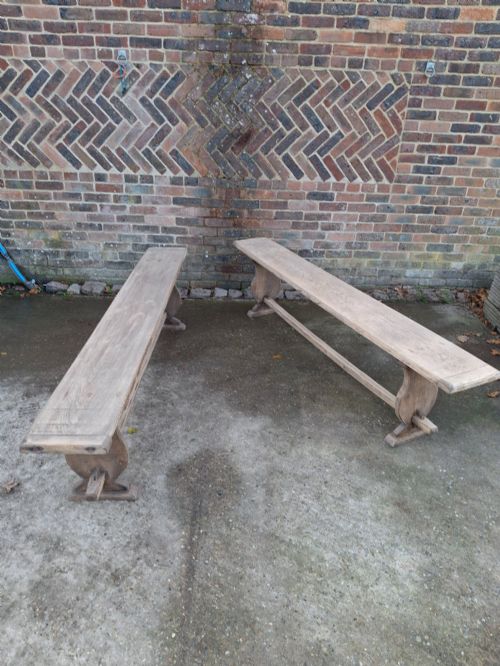
Bleached oak benches encompass a sturdy range of seating and low furniture suited to rustic and traditional spaces. When searching for bleached oak benches, buyers encounter long settles, joint benches, and dining benches shaped by country makers across Britain and France.
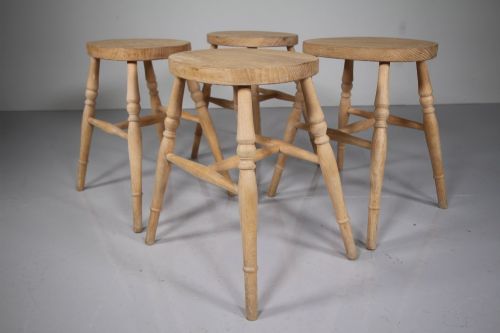
The pieces appearing here span from the eighteenth century through the Victorian and Edwardian eras, alongside related forms like settles and stools. French provincial and English country styles dominate the selection, bringing vernacular character and pale timber tones to modern rooms.
How they were made
Makers built these pieces primarily from solid oak, supplemented occasionally by sycamore, elm, chestnut, and leather. Craftsmen relied on traditional joinery methods, constructing sturdy frames and trestle supports designed to withstand daily use in domestic and commercial settings.
The characteristic pale finish on these surfaces results from historical liming or modern bleaching processes that lighten the timber while preserving the natural grain. This treatment highlights the tactile qualities of the wood, emphasising the knots and growth rings built into each piece.
Bleached Oak Benches Retail Price Guide 2026
Typical asking prices for bleached oak benches among the pieces listed under this phrase on Sellingantiques today, from the lower quarter to the upper quarter. They describe what is for sale here now, not the wider market.
What varies in quality
Quality in these pieces rests upon the integrity of the timber and the balance of the proportions. Superior examples display thoughtful grain selection and robust joinery that holds the structure firm without excessive reinforcement.
The refinement of the surface treatment also separates ordinary pieces from finer ones. Even bleaching that respects the natural texture of the wood reveals a deeper understanding of the material.
The Bleached Oak Benches Glossary
- Joint bench
- A sturdy timber bench constructed using traditional mortise and tenon joints, often associated with seventeenth century style joinery. These pieces rely on pegged frames for stability rather than metal fixings.
- Settle
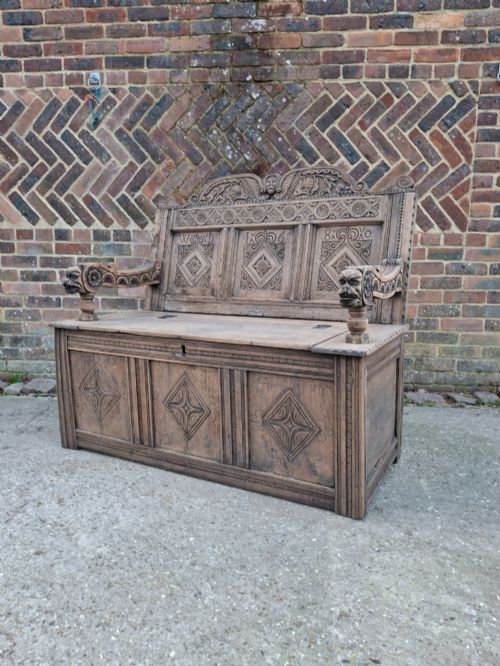
- A high-backed wooden bench designed to shield occupants from draughts in older homes. They frequently feature enclosed bases or storage compartments beneath the seat.
- Trestle table
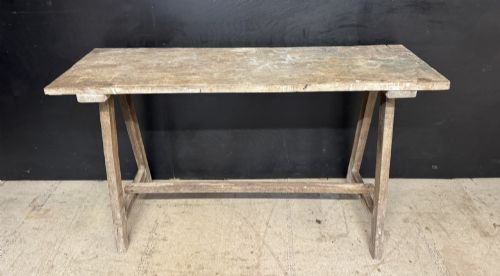
- A long table supported by two or more upright frames connected by a horizontal beam. This form provides maximum legroom and dates back to medieval dining arrangements.
- Limed oak
- Timber treated with a specialised paste or chemical wash to lighten the colour and highlight the open pores of the grain. The technique creates a pale, frosted appearance popular in period interiors.
Bleached Oak Benches: Frequently Asked Questions
Where should I put a bleached oak bench?
These benches sit comfortably in hallways, at the foot of a bed, or alongside a dining table where their pale wood brightens the floor plan.
Their narrow profile also makes them useful against a living room wall or beneath a window without overwhelming the space.
How do I care for bleached oak?
Dust the timber regularly with a soft, dry cloth and avoid placing the piece near direct heat sources or strong sunlight.
Spills should be blotted immediately to prevent staining the pale, untreated or lightly finished grain.
Are these benches comfortable for dining?
Many of these pieces were built for functional seating, though their comfort depends largely on the depth of the seat and the presence of a backrest.
Adding a loose cushion can easily soften the firmer wooden surface for longer meals.
How can I tell an older bench from a later copy?
Examine the underside and joints for hand-cut marks, pegged tenons, and natural wear patterns that reflect centuries of handling.
Older timber also develops a distinct dry patination that modern manufacturing methods cannot replicate.