
Blanket Box Coffer
When you look for a blanket box coffer, you are searching for centuries of sturdy domestic storage built from oak, pine, elm, and camphor wood.
Blanket Box Coffer
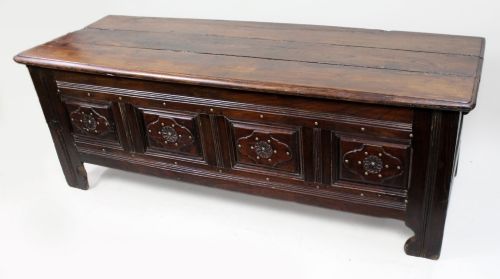
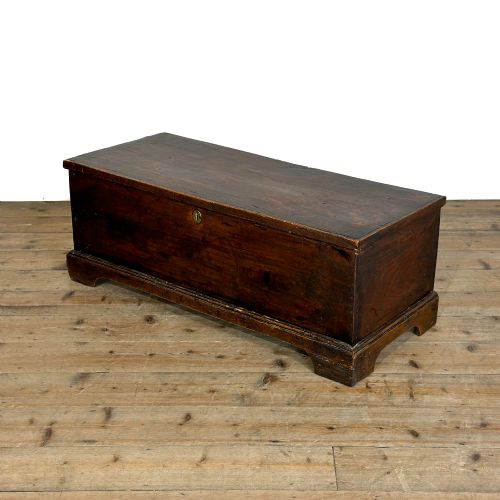
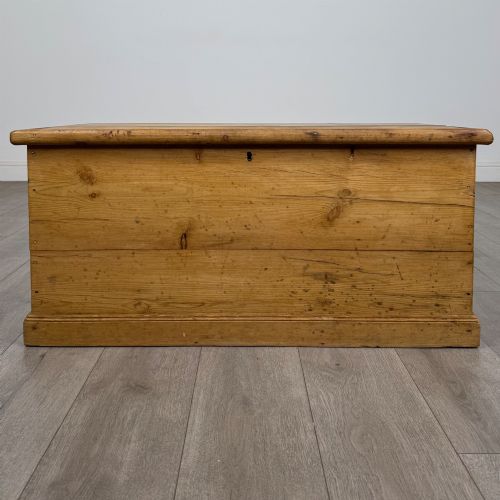
A blanket box coffer serves as a sturdy chest designed to hold linens, garments, and valuables within domestic interiors across multiple centuries. These practical forms range from simple utilitarian six-plank pine boxes to richly carved seventeenth-century oak panelled examples.
The versions you are most likely to meet on this page span from early seventeenth-century joined oak chests to nineteenth-century campaign trunks and stripped pine blanket boxes. Regional variants such as Welsh country coffers and Anglo-Indian camphor wood trunks also appear frequently among the listings.
How They Were Made
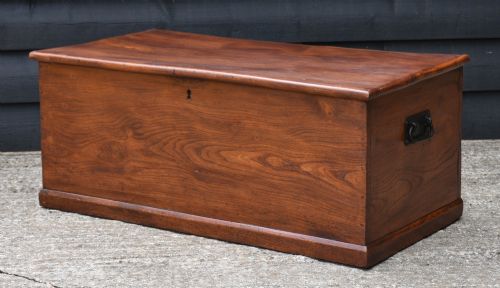
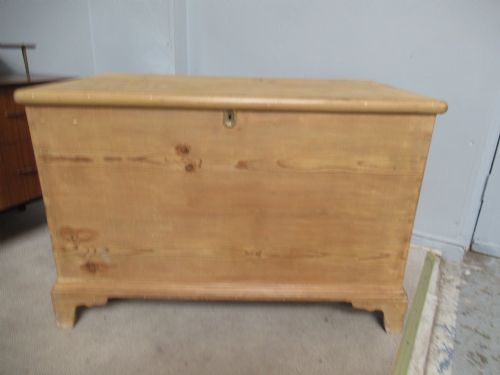
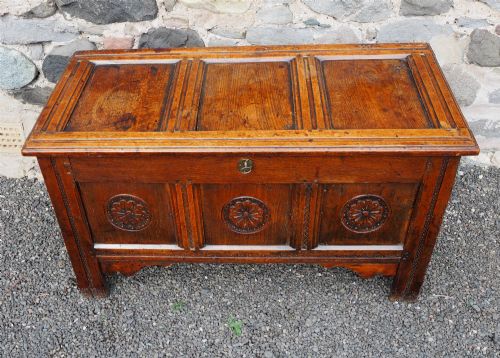
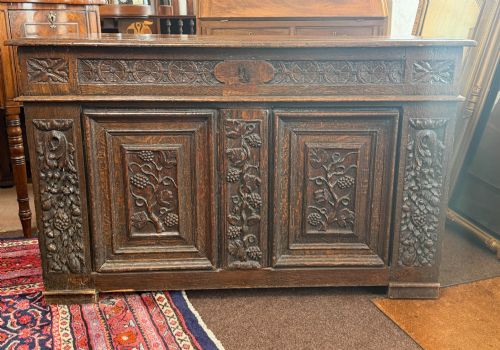
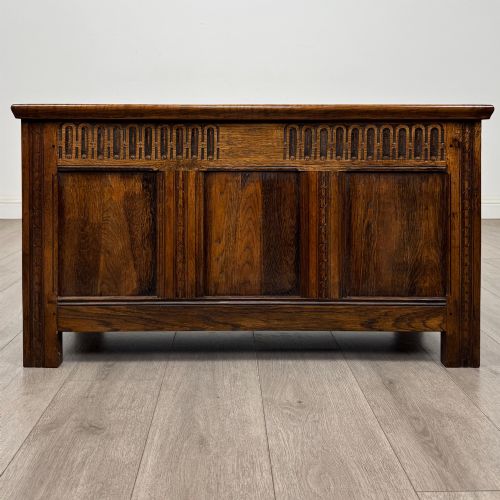
Traditional makers built these chests primarily in solid timber, relying heavily on durable oak, resilient elm, and straightforward pine for domestic pieces. Carpenters utilised frame-and-panel construction to accommodate the natural seasonal expansion and contraction of timber without warping the structure.
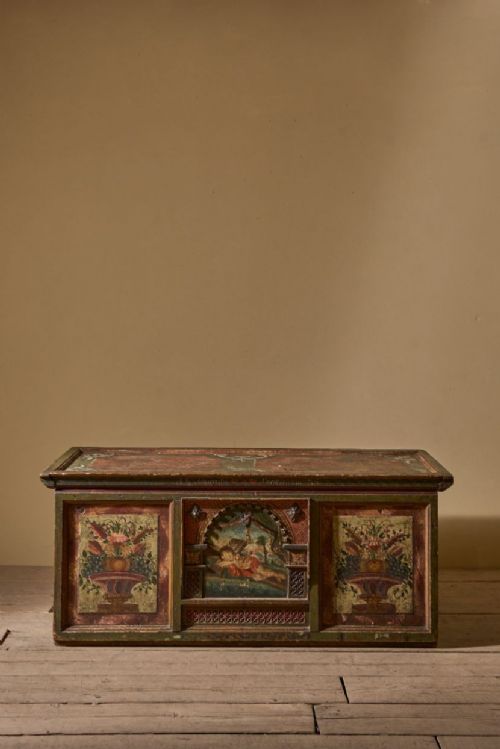
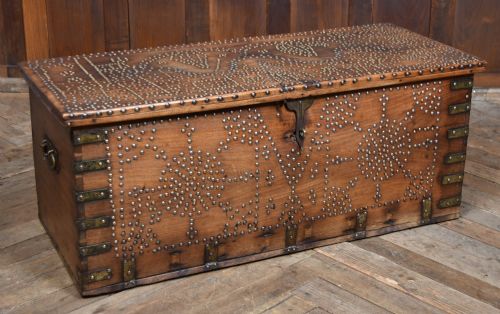
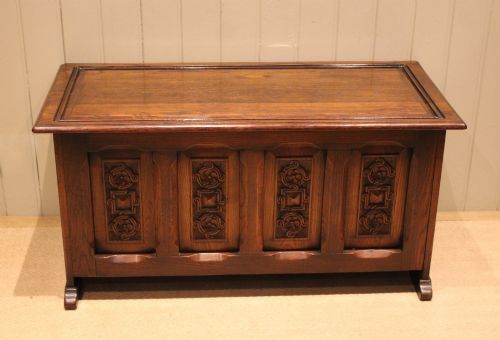
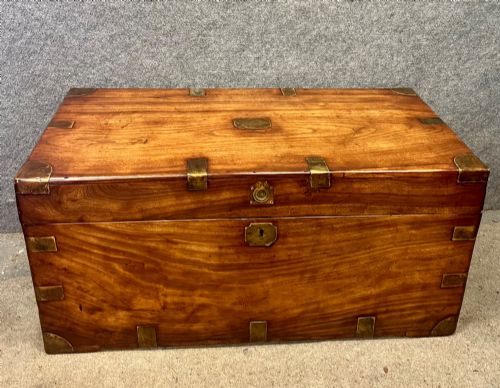
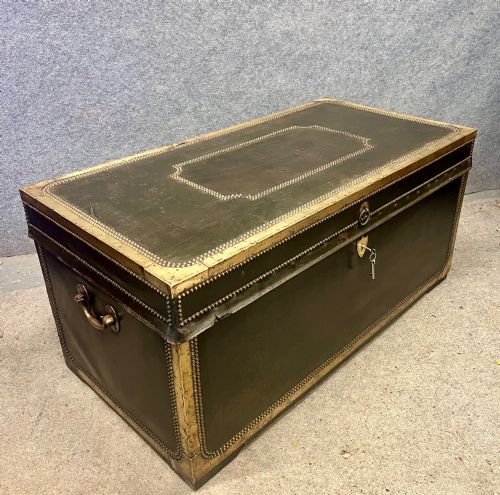
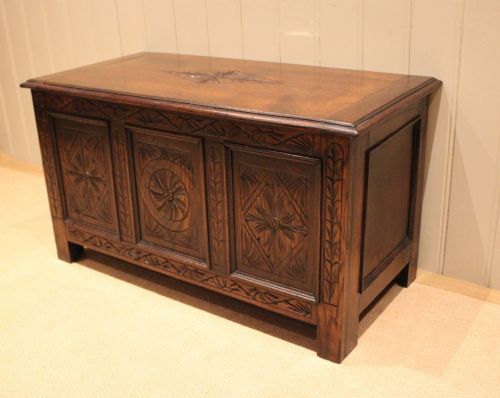
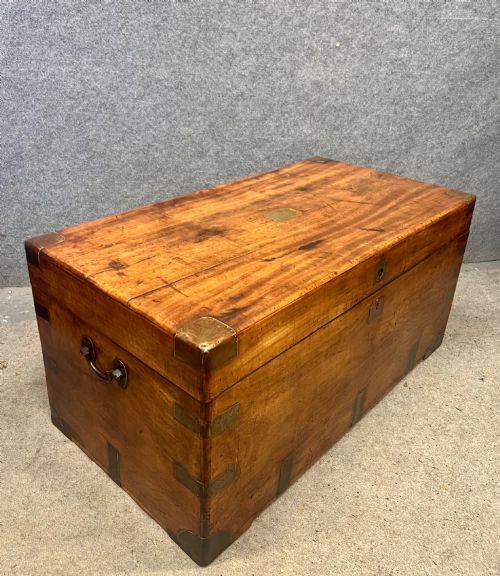
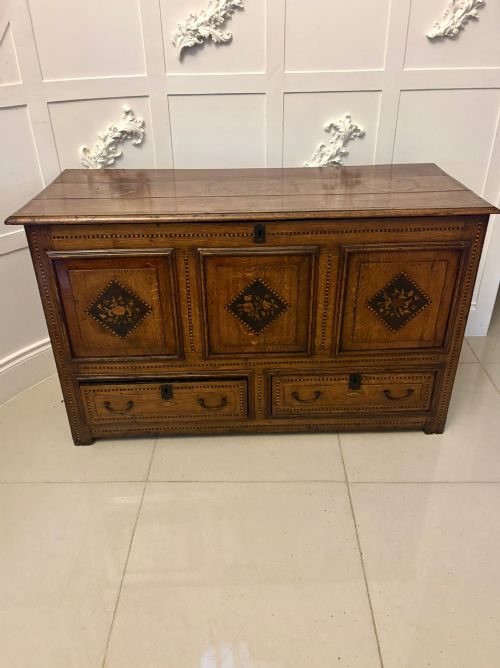
Travel pieces and campaign trunks incorporated protective brass binding, flush iron handles, and robust corner brackets to withstand long-distance transit. Exotic woods such as camphor wood and padouk appeared in trade trunks, while domestic coffers often featured applied mouldings, marquetry inlay, and hand-carved panels.
The inventory records regional forms including Welsh country coffers alongside imported Anglo-Indian campaign trunks.
What Varies in Quality
The integrity of the original construction separates basic utility boxes from exceptional examples, particularly in the survival of original hinges, lids, and floor boards. Finer pieces demonstrate careful selection of figured timber and precise joinery rather than purely functional assembly.
Decorative execution marks another clear distinction, where deeply carved panels, intricate marquetry inlay, and well-executed brass mounts reflect the skill of the original workshop. Lesser items often show later alterations, replaced hardware, or simplified secondary woods.
Samuel Pratt
The Blanket Box Coffer Glossary
- Coffer
- A large wooden chest traditionally used for storing valuables, documents, or household goods. These heavy receptacles typically feature a hinged lid and solid timber construction.
- Mule chest
- A traditional storage chest featuring one or more drawers built beneath the main compartment. They bridge the functional gap between a standard coffer and a chest of drawers.
- Campaign trunk
- A portable storage chest designed for military officers or travellers during the eighteenth and nineteenth centuries. They usually incorporate brass corners, recessed carrying handles, and durable secondary timbers like camphor wood.
- Six-plank
- A simple construction method utilising six individual boards joined directly at the edges to form a box. This elementary technique characterises early and utilitarian storage chests.
- Marquetry
- Decorative veneer work arranged in geometric or pictorial patterns on the surface of furniture. Craftsmen used contrasting woods to create elaborate designs on panels and lids.
Blanket Box Coffer: Frequently Asked Questions
What is a coffer?
A coffer is a traditional heavy wooden chest with a hinged lid, built primarily for domestic storage of textiles and valuables. Early examples form the foundation of vernacular furniture design.
Over the centuries, these storage pieces evolved from simple boarded boxes into panelled masterpieces of carpentry. They served as primary furniture in homes long before fitted wardrobes existed.
How were campaign trunks used?
Campaign trunks travelled with military officers, colonial administrators, and merchants across distant trade routes and military deployments. Their robust construction protected contents from moisture and rough handling.
Fitted with brass bindings and recessed handles, these chests allowed easy transport on ships and pack animals. Camphor wood variants also deterred insects during tropical journeys.
How do I date an oak coffer?
Dating an oak coffer relies on examining construction techniques, joinery marks, and stylistic ornament such as carved panels. Early pieces from the seventeenth century often display peg joinery and hand-riven timber.
Later Victorian and revival pieces generally show machine-sawn components and different fastening methods. Changes in moulding profiles and hardware further help narrow down the period of manufacture.
Where should I place a blanket box?
These sturdy chests function well at the foot of a bed for storing spare blankets, pillows, and seasonal linens. Their flat lids also provide a convenient surface in hallways or living rooms.
Keeping wooden chests away from direct heat sources and severe humidity prevents the timber from splitting. Proper placement ensures the antique wood remains stable over time.