



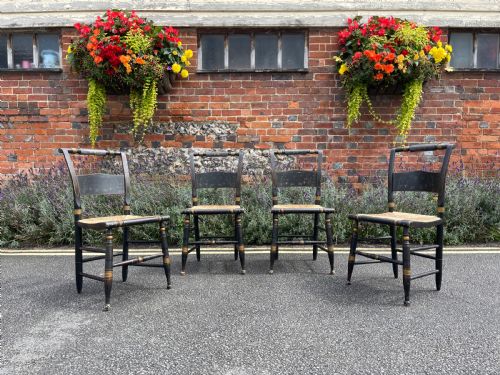


Black Wooden Dining Chairs
Black wooden dining chairs bring dark, formal weight and distinct regional styles into a room, drawn from eras ranging from the eighteenth century to the Edwardian period.
Black Wooden Dining Chairs
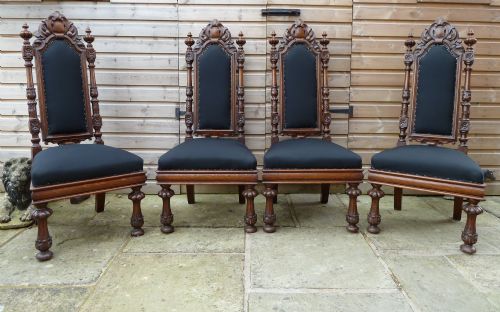
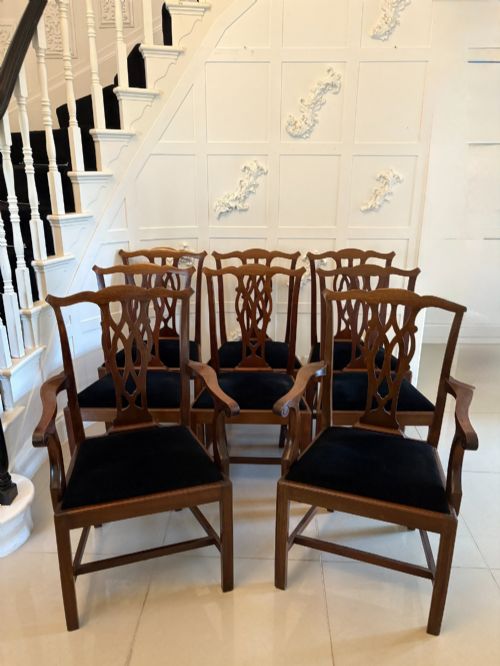
Black wooden dining chairs comprise side chairs, armchairs, and salon seating fashioned from woods like ebonised wood, oak, mahogany, and walnut. These pieces span historical periods including the Regency era, Victorian times, and the Edwardian years.
The versions most commonly met on this page range from nineteenth-century ebonised oak and mahogany forms to Edwardian revivals and Aesthetic Movement designs. Makers and regions represented include specific traditional British and continental workshops.
How they were made
Construction relies on solid timbers such as mahogany, oak, and walnut, often finished with ebonised surfaces to achieve a dark, uniform tone. Workshops employed traditional joinery and detailed carving to shape frames and structural supports.
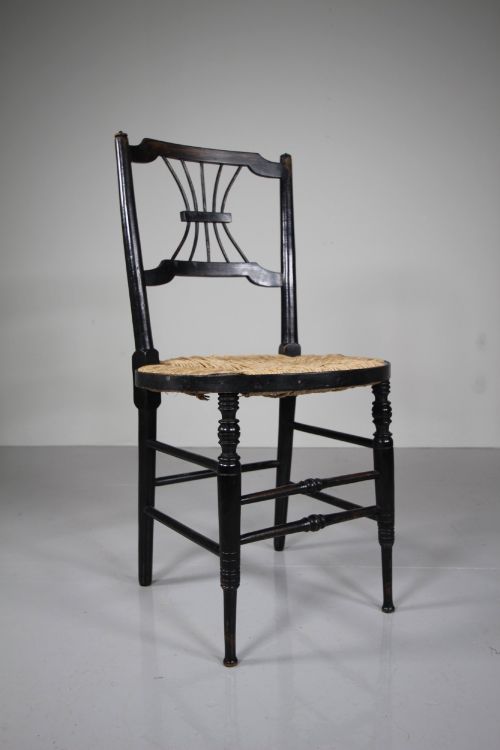
Seating areas frequently incorporate materials like original cane, leather, fabric, and brass accents to complement the dark wooden frames. Marquetry inlay and applied carved details add texture and visual depth to specific regional styles.
Black Wooden Dining Chairs Retail Price Guide 2026
Typical asking prices for black wooden dining chairs among the pieces listed under this phrase on Sellingantiques today, from the lower quarter to the upper quarter. They describe what is for sale here now, not the wider market.
What varies in quality
Quality rests upon the crispness of the carved details, the integrity of the timber frame, and the survival of original components such as cane seats or brass mounts. Pieces displaying specific period design movements or attributed to known makers demonstrate higher refinement.
Construction methods and the choice of primary timber distinguish utilitarian seating from pieces designed for principal rooms. The depth of the ebonised finish and the condition of the underlying wood dictate the overall visual strength of each chair.
William Morris·Rossetti·Bruce J. Talbert·Hitchcock
The Black Wooden Dining Chairs Glossary
- Ebonised Wood
- Timber treated to resemble ebony by staining or painting the surface black. This technique was popular in Victorian and Aesthetic Movement furniture to create a dramatic contrast.
- Cane
- Woven material made from rattan strips used for chair seats and backs. Original cane surfaces add considerable interest for collectors of period seating.
- Sabre Leg
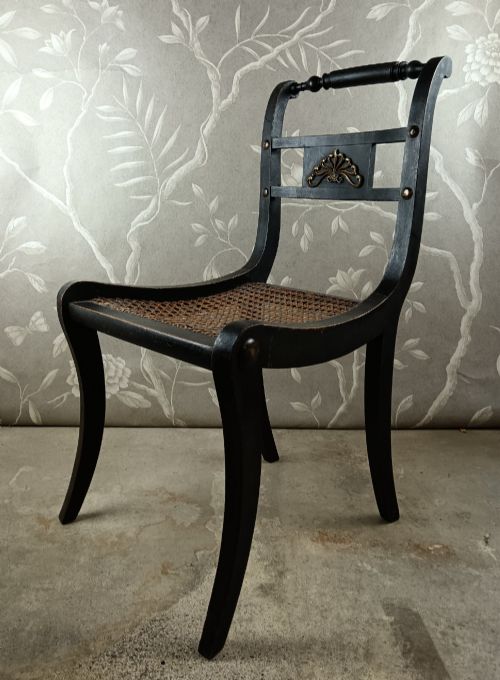
- A concave curving chair leg that tapers toward the foot, reminiscent of a cavalry sabre. This form appears frequently on Regency dining chairs.
- Marquetry
- Inlay technique using decorative pieces of wood veneer to form intricate pictures or patterns on a surface. It appears on continental and nineteenth-century walnut pieces.
Black Wooden Dining Chairs: Frequently Asked Questions
Can I mix different styles around a table?
Combining various periods, such as Regency sabre leg chairs with Victorian ebonized seats, adds character to a dining room. Maintaining a consistent dark wood tone or black finish helps unify disparate designs.
Ensure seat heights align comfortably for dining purposes when pairing different types together. Armchairs work well placed at the head of the table while side chairs line the sides.
What is the difference between a side chair and a salon chair?
Side chairs are typically sturdy dining or occasional chairs designed without arms for placement around a table or against a wall. Salon chairs are generally lighter, more decorative seating meant for drawing rooms and formal sitting areas.
Salon chairs often feature more elaborate carving, ebonized finishes, or upholstered components suited for lighter social use. Dining side chairs prioritise structural durability for regular daily sitting.
How do I identify a Regency period chair?
Regency chairs often display classical architectural influences, featuring elements like sabre legs, curved top rails, and reeded frames. The proportions tend to be neat and balanced, reflecting early nineteenth-century neoclassical tastes.
Look for dark ebonised finishes paired with original cane work or brass details. These characteristics help distinguish Regency examples from later Victorian revivals.