





Black Wooden Column
A black wooden column brings immediate architectural gravity to a room, acting as a sturdy stage for sculpture, clocks and trailing plants.
Black Wooden Column
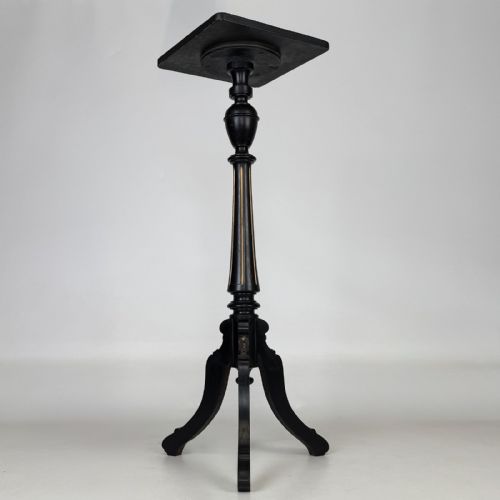
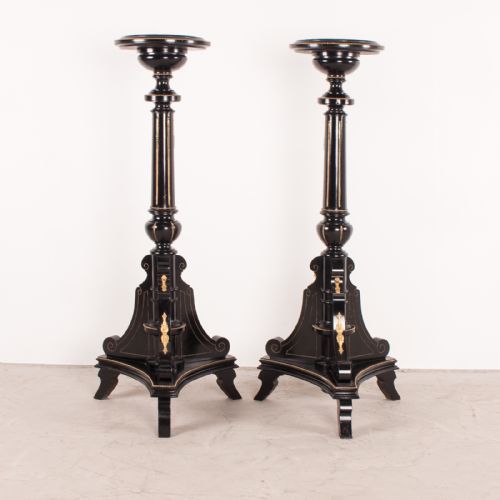
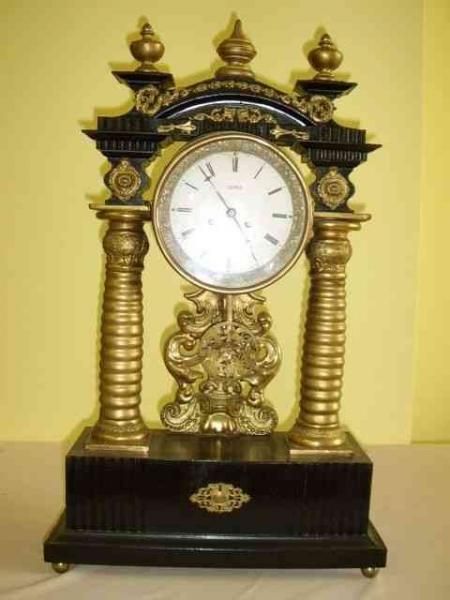
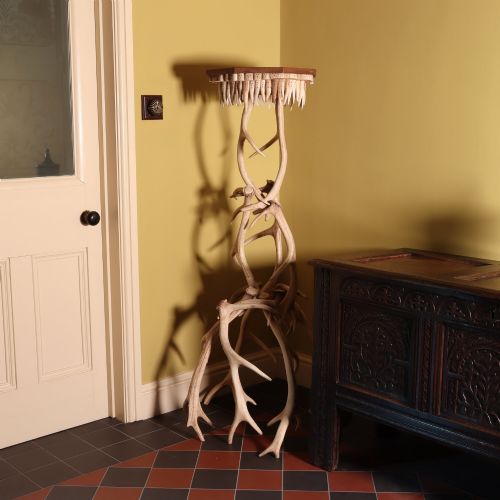
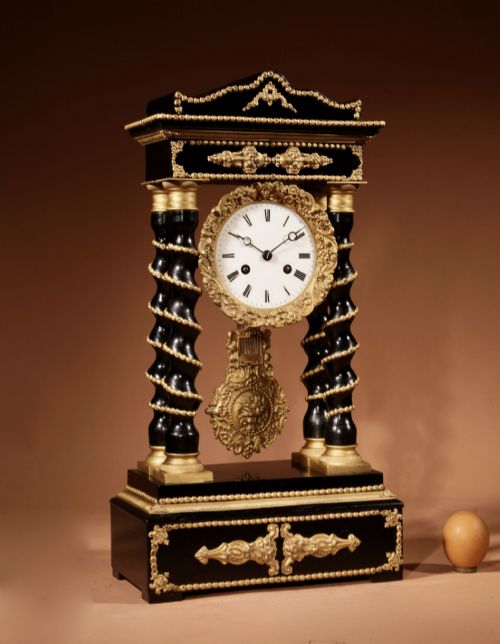
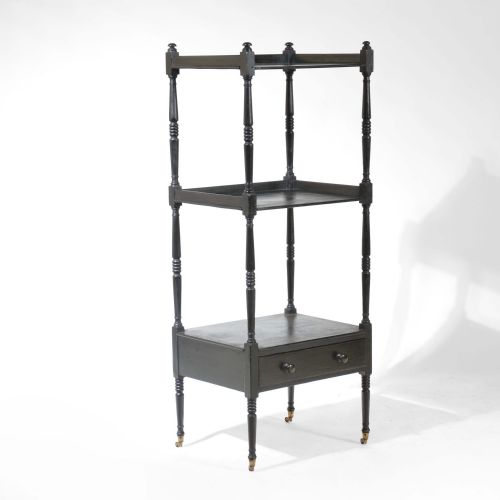
A black wooden column serves primarily as a display pedestal, torchiere, plant stand or structural support for mantel clocks. These vertical pieces elevate objects to eye level, introducing a strong silhouette into domestic interiors through architectural forms.
Most examples found here date from the nineteenth century and the Georgian era, spanning revivalist movements such as Victorian Neoclassical, Jacobean Revival and the Aesthetic Movement. Makers often employed ebonising techniques to transform ordinary timbers into dramatic dark supports.
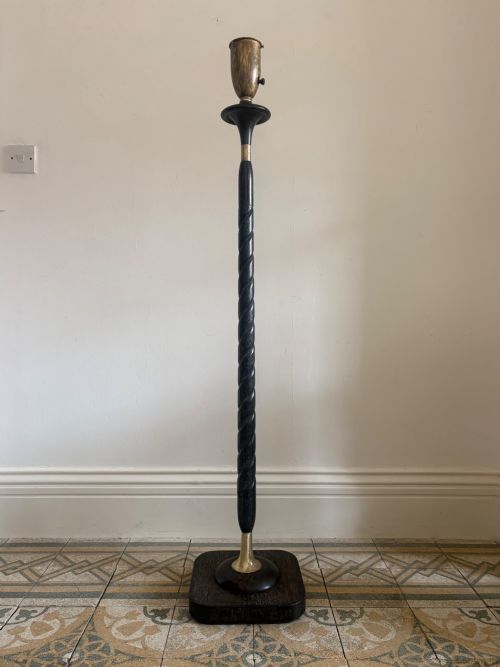
The selection ranges from simple tripod plant stands and barley twist floor lamps to grand scale decorative columns paired with gilt or lacquered surfaces. French Empire and Napoleon III influences appear frequently, alongside Anglo-Indian and Spanish interpretations of dark wood forms.
Materials and construction
Makers achieved the characteristic dark finish through ebonising wood or utilising naturally dense timbers like ebony, applying black lacquer, or enriching surfaces with gold leaf, gilt, and ormolu mounts. Brass fittings and glass components occasionally provide structural contrast and decorative detail.
Turning on a lathe produced slender barley twist floor lamps and circular pedestals, while joinery and carving shaped tripod bases, crouching figure stands, and portico clock housings. Surface decoration frequently combined matte black finishes with parcel gilt highlights to catch the light.
Black Wooden Column Retail Price Guide 2026
Typical asking prices for black wooden column among the pieces listed under this phrase on Sellingantiques today, from the lower quarter to the upper quarter. They describe what is for sale here now, not the wider market.
Materials recorded across the inventory include ebonised wood, solid ebony, brass, ormolu, lacquer, and gold leaf.
Distinguishing quality
Quality rests upon the crispness of the turning, the depth of the ebonised finish or lacquer work, and the integration of secondary materials such as ormolu and brass. Finer pieces demonstrate careful proportioning in their column shafts and stability in their tripod or plinth bases.
The distinction between standard utility stands and high decorative pieces lies in hand-carved detailing, original gilding, and substantial scale. Superior items retain their structural integrity while supporting heavy mantel clocks or large planters without wobble.
The Black Wooden Column Glossary
- Ebonised Wood
- Timber treated with stain, dye or polish to imitate the deep, dark appearance of ebony. This treatment was widely utilised across the nineteenth century.
- Torchere
- A tall stand or floor lamp designed to hold a light source or display an object at height. Many feature slender columns and supportive tripod bases.
- Ormolu
- Gilt bronze mounted onto furniture and decorative objects as ornamentation. It provides metallic contrast against dark ebonised surfaces.
- Portico Clock
- A mantel clock housed within a architectural frame supported by columns. These architectural clocks often utilise ebonised wood and musical movements.
- Parcel Gilt
- Wood or metal partially covered with gold leaf or gilt paint to highlight specific carved details. This technique accentuates mouldings and figures.
Black Wooden Column: Frequently Asked Questions
What were black wooden columns used for?
These pieces functioned primarily as elevated stands to display decorative items, indoor plants, taxidermy, and heavy mantel clocks. They raised objects above floor level to improve visibility within period rooms.
Taller versions served as torcheres to hold candles or lamps, while plinths and columns anchored sculptures or urns in domestic interiors.
How do I style a column in a modern room?
A black wooden column works effectively as a standalone focal point or as a base for a single sculptural object, trailing plant, or ceramic vessel. The neutral dark finish allows it to anchor bright or textured items placed on top.
Placing a tall torchere or pedestal in an empty corner introduces vertical interest without cluttering the floor space.
How do I date a black wooden column?
Dating relies on identifying stylistic markers such as French Empire or Victorian neoclassical motifs, alongside construction methods and material choices. Turning styles, such as barley twists, often align with specific revival periods.
Examining the base fixings, timber grain beneath the ebonising, and any remnants of original lacquer provides further clues to the manufacturing era.
Are these columns stable enough for heavy items?
Most columns and pedestals with wide tripod bases or heavy plinths are engineered to bear significant weight, including large mantel clocks and heavy planters. Balance depends heavily on the footprint of the base relative to the height of the shaft.
Inspect the joints where the column meets the base to ensure the structure remains rigid before placing valuable objects on top.