






Black Wooden Bear
These black wooden bear carvings bring the rustic charm of Swiss and Black Forest workshops straight into your hallway.
Black Wooden Bear
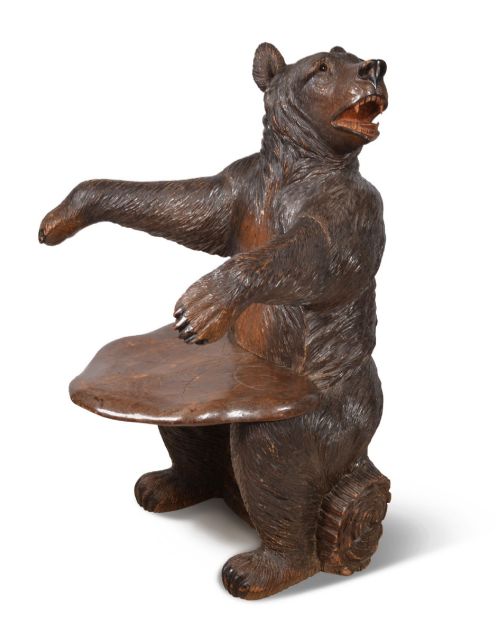
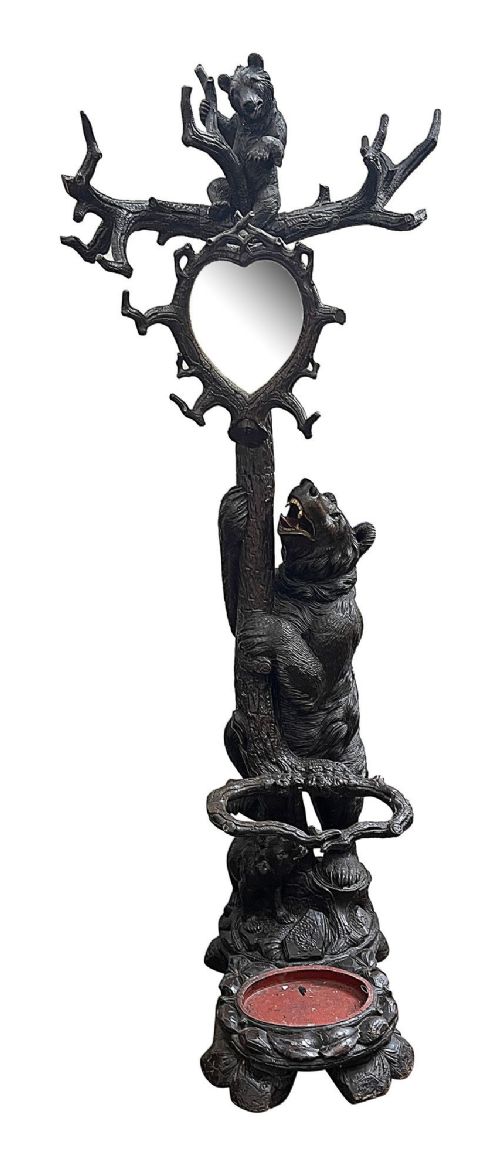
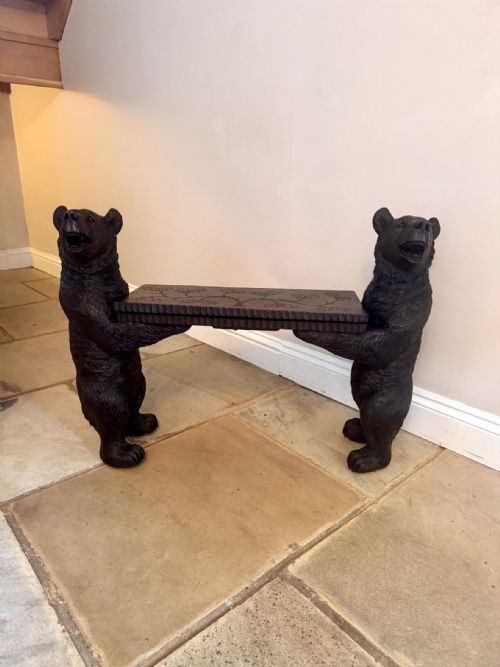
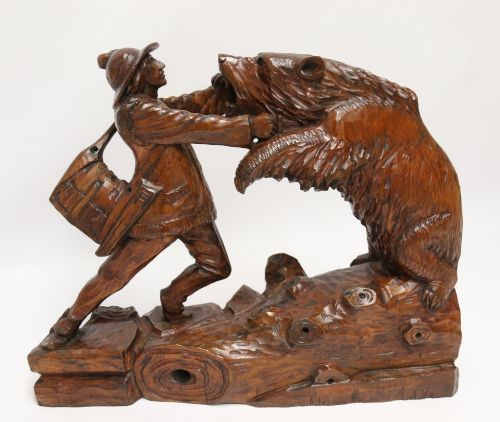
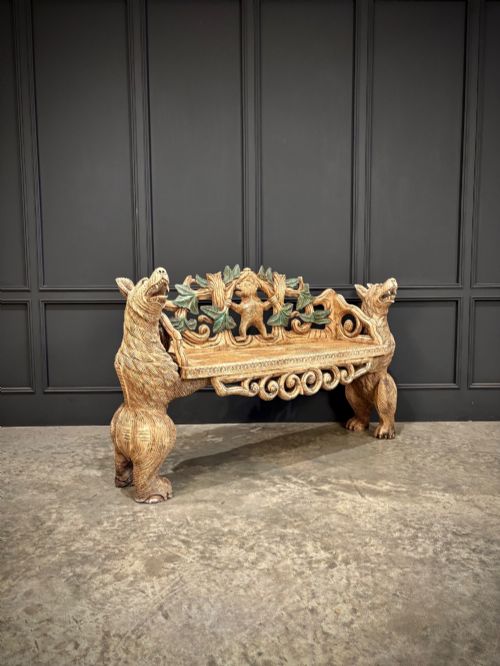
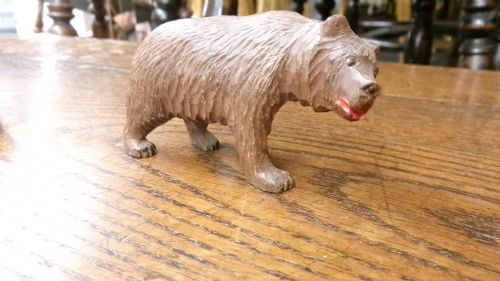
A black wooden bear is a carved wooden sculpture or functional piece of furniture originating primarily from nineteenth-century European folk art traditions. You will most frequently encounter hall stands, benches, and small decorative sculptures fashioned in the Black Forest style.
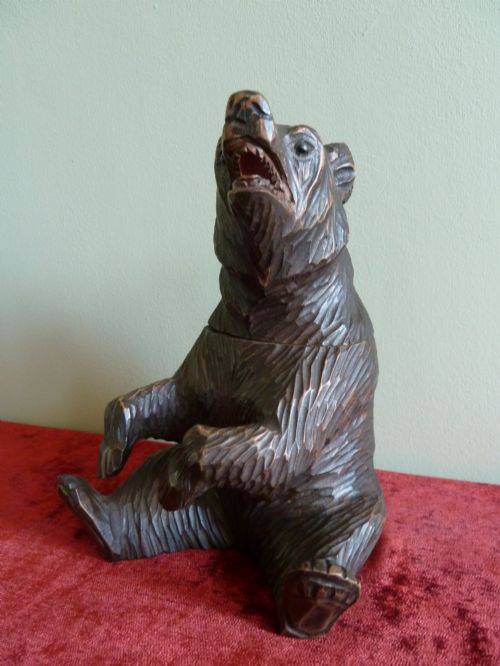
The objects range from modest inkwells and bookends to large furniture items like stick stands and hall seats. Most examples date from the nineteenth century through the early twentieth century, spanning periods such as the Victorian and Edwardian eras.
Makers utilised various timber species to create these animals, capturing them in both naturalistic poses and anthropomorphic roles. The tradition extends beyond European workshops to include Japanese folk art examples like the Kibori Kuma.
How They Were Made
Carvers shaped these figures predominantly from softwoods like linden wood, as well as denser timbers such as walnut. Artisans employed hand-carving techniques to texture the fur, often adding glass or metal components for eyes and hardware.
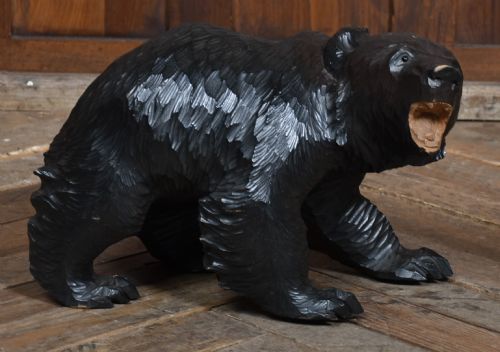
Many items received a dark surface treatment or paint finish to achieve the characteristic black appearance associated with Black Forest carvings. Details such as facial expressions and claws were meticulously incised by hand into the wood.
Black Wooden Bear Retail Price Guide 2026
Typical asking prices for black wooden bear among the pieces listed under this phrase on Sellingantiques today, from the lower quarter to the upper quarter. They describe what is for sale here now, not the wider market.
Listings feature items from the Victorian and Edwardian periods, including dated examples from 1860, 1880, 1890, 1900, 1910, and 1920.
What Varies in Quality
The success of a carving lies in the anatomical accuracy and expression captured by the artisan. Superior pieces demonstrate depth in the fur texture and lifelike proportions rather than rigid, blocky forms.
Functional items show distinction in how seamlessly the bear figure integrates with the object, whether it is a tobacco jar, a bench, or an umbrella stand. Finer examples retain their original surface finishes and complete glass or stud eyes without clumsy replacements.
The Black Wooden Bear Glossary
- Black Forest
- A style of wood carving originating from the mountainous regions of central Europe, particularly Switzerland and Germany. Pieces typically depict woodland animals in domestic or functional roles.
- Linden wood
- A pale, fine-grained timber favored by carvers for its even texture and ease of cutting. It accepts intricate detail work without splitting.
- Humidor
- A specialised box or jar designed to keep tobacco moist, frequently carved in the form of a seated bear holding a log or barrel in these collections.
- Kibori Kuma
- A traditional style of Japanese wooden carved bear originating from Hokkaido folk art. These pieces share a similar rustic appeal to European animal carvings.
- Stick stand
- A piece of hallway furniture designed to hold walking sticks and umbrellas. In this tradition, the carved bear often stands guard beside the receptacle.
Black Wooden Bear: Frequently Asked Questions
Where were these carved?
The majority of these pieces originate from European folk art traditions, particularly the Black Forest region spanning Germany and Switzerland. Additional examples reflect distinct regional carving traditions such as Japanese folk art.
Workshop production flourished throughout the nineteenth and early twentieth centuries, driven by demand from tourists and domestic buyers. Artisans in forested mountain communities utilised local timber to supply these carved animal figures.
How were hall stands used?
Hall stands served a practical purpose in the entranceways of nineteenth-century homes for storing coats, hats, umbrellas, and walking sticks. The carved bear often acted as a figurative support or decorative guardian for the furniture.
These large pieces combined seating or storage compartments with utility hooks and umbrella wells. They welcomed visitors with a striking display of rustic animal craftsmanship right at the front door.
How do I care for carved wood?
Keep carved wooden sculptures away from direct heat sources and strong sunlight to prevent the timber from drying out and splitting. Dust the intricate fur details gently with a soft brush.
Avoid using harsh chemical polishes or excessive moisture on antique wooden surfaces. A microfibre cloth is usually sufficient to maintain the finish safely over time.