


Black Travel Trunk
A black travel trunk is a sturdy piece of luggage built for transit, offering practical storage with historic character.
Black Travel Trunk
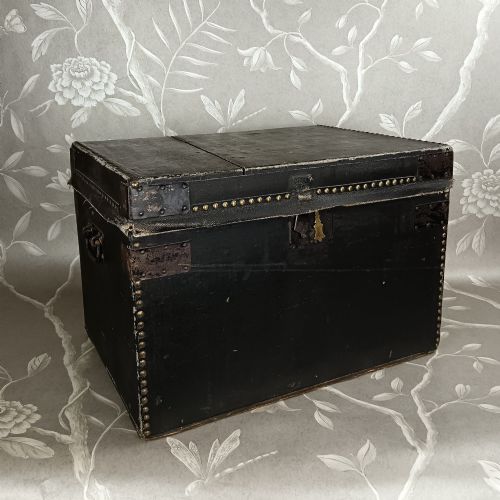
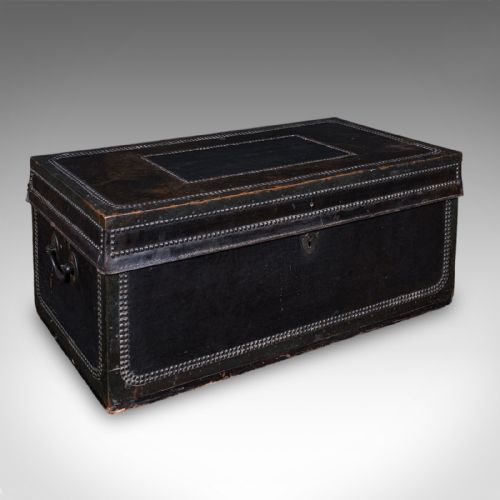
When you search for a black travel trunk, you are looking at substantial luggage designed for journeys by coach, ship or train across the nineteenth and early twentieth centuries. These pieces provided robust protection for belongings during transit and now serve as characterful storage solutions in contemporary interiors.
The selections on this page span the Victorian era, the nineteenth century and the early twentieth century, alongside specific forms such as hat boxes and vanity cases. You will encounter variants fashioned from wood, pine, leather and canvas, often equipped with original hardware.
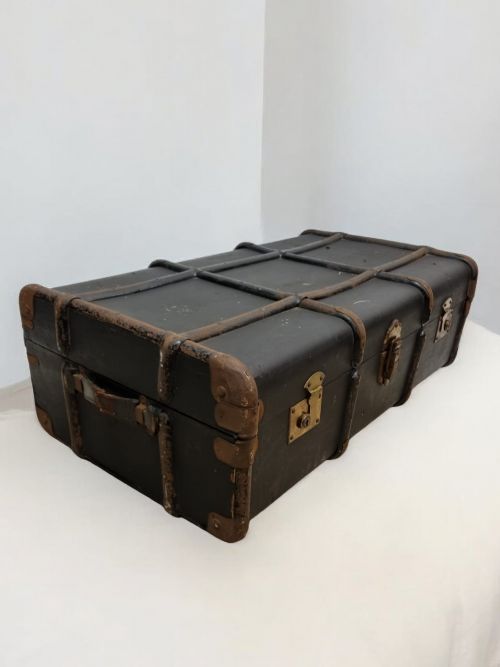
Common forms include campaign trunks, coaching trunks and steamer trunks, reflecting the shifting modes of travel of their periods. English and French workshops produced these items, employing durable materials suited to rigorous movement.
How they were made
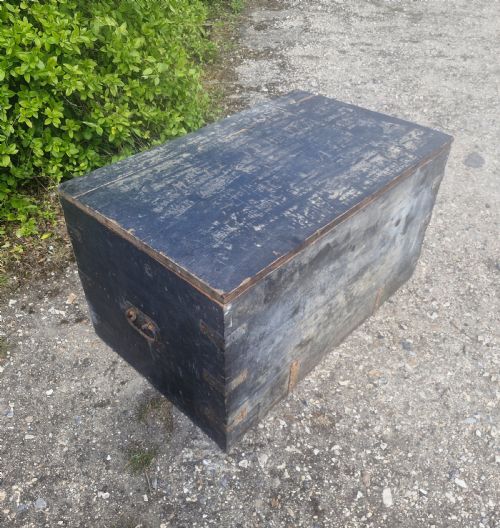
Maker construction relies on a combination of wood or pine carcases covered in leather, canvas, pig skin or painted finishes. This outer layer protected the core structure from the elements during travel.
Brass fittings, iron hardware and metal bindings reinforce the corners, edges and lids of these pieces. Original locks, latches and handles complete the construction, securing the contents for transit.
Listings feature items spanning the nineteenth century up to the 1920s, incorporating materials such as brass, canvas, iron, leather, paint, pine and wood.
What varies in quality
Quality rests upon the selection of materials and the integrity of the original hardware, such as brass bindings and working locks. Pieces featuring specialised internal fittings, like camphorwood linings or fitted dressing table trays, demonstrate higher grade workmanship.
The preservation of original surfaces, including leather, canvas and paint, distinguishes finer examples from heavily altered pieces. Intact maker markings or stamps further elevate the standing of an individual item.
Wm. Insall of Bristol·Goyard
The Black Travel Trunk Glossary
- Campaign trunk
- A portable chest made for military officers or travellers, typically designed with recessed brass handles and reinforced corners for rough transit.
- Steamer trunk
- A lower-profile luggage chest introduced to fit beneath the berth of a passenger ship during early twentieth-century ocean travel.
- Coaching trunk
- A heavy-duty storage box built to withstand the rigours of being strapped to the roof of a horse-drawn stagecoach.
- Camphorwood
- An aromatic timber frequently utilised for the interior linings of trunks to deter insects and keep stored garments fresh.
- Hat box
- A specialised rigid container shaped specifically to transport and protect headwear without crushing the brim or crown.
Black Travel Trunk: Frequently Asked Questions
How do I date a black travel trunk?
Dating relies on observing construction methods, materials, and hardware styles associated with periods like the Victorian era or the early twentieth century. Maker marks and labels can also provide specific chronological clues.
Changes in transport technology, such as the shift from horse-drawn coaching to steamships and railways, influenced the size and design of luggage over time.
Can I use a travel trunk for coffee table storage?
These robust chests function effectively as coffee tables while offering concealed storage space for blankets, books or seasonal items in a living room. Their flat tops and sturdy wooden carcases accommodate everyday objects easily.
Placing a protective glass top over the trunk can safeguard historic leather or painted surfaces from daily wear and spills.
What is the difference between a campaign trunk and a steamer trunk?
Campaign trunks date primarily to the nineteenth century, built with heavy brass bindings and recessed handles for military officers on the move. They prioritised rugged durability on land journeys.
Steamer trunks emerged later, around the early twentieth century, featuring a shallower profile specifically designed to slide underneath cabin berths on ocean liners.
How should I clean antique leather on a trunk?
Maintenance involves gentle dusting with a soft, dry cloth to remove surface particles without damaging the historic finish. Avoid harsh chemical cleaners or modern detergents that can strip the aged surface.
Applying a specialist leather conditioner can help preserve suppleness on sturdy nineteenth-century hides, provided the material is tested on a small hidden area first.