






Black Powder Handgun
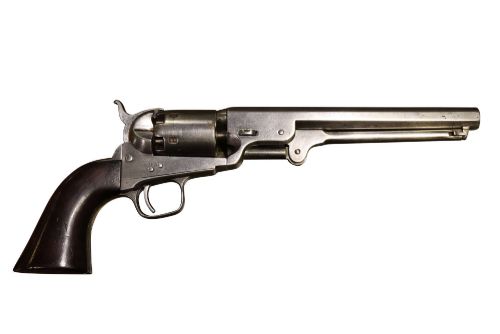
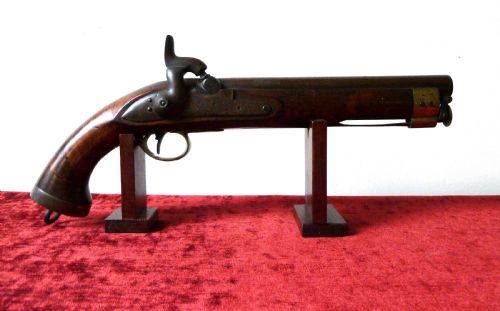
These black powder handgun examples range from Georgian flintlocks to mid-nineteenth century percussion revolvers, offering collectors functional mechanical heritage.
Black Powder Handgun
A black powder handgun represents a firearm mechanism utilising loose propellant, lead projectile and external ignition before self-contained cartridges dominated warfare and civilian defence. Buyers searching for a black powder handgun encounter flintlock and percussion systems originating from British military contracts, European workshops and American martial issues.
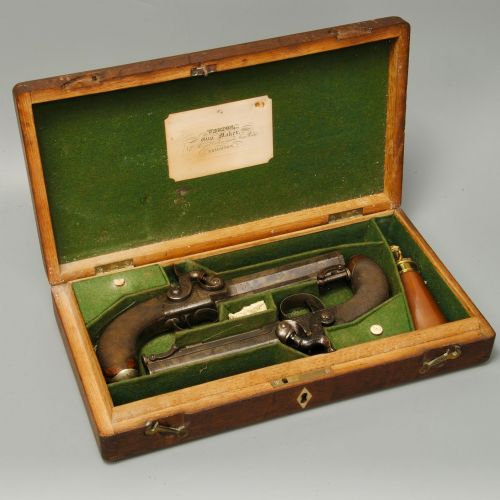
The selections on this page span the eighteenth and nineteenth centuries, featuring pocket pistols, heavy cavalry arms and officers' duelling pieces. Military percussion models and boxed Colt revolvers dominate the current inventory, reflecting both service use and nineteenth-century civilian ownership.
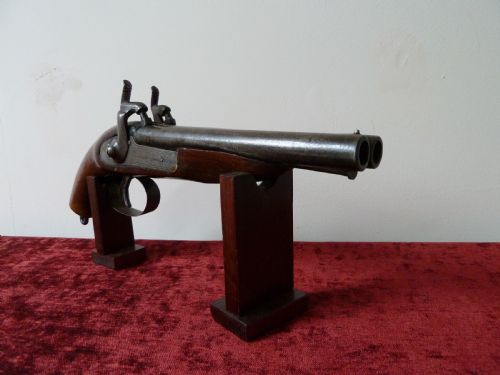
Forms vary from single-barrel smoothbores to double-barrel configurations and revolving cylinders. Collectors often acquire these objects to study historical engineering, military logistics and the transition from flint to percussion ignition.
Materials and construction
Gunmakers built these arms using forged steel barrels, iron lock plates and brass furniture such as trigger guards and butt caps. Stocks are predominantly shaped from walnut, oak or mahogany, exhibiting the dense grain required to withstand mechanical shock.
Lock mechanisms rely on tempered steel springs, hammers and cocks to strike flint against steel or percussion caps onto nipples. Accessories housed within fitted boxes often include paper cartridges, velvet linings and iron tools for maintenance.
Black Powder Handgun Retail Price Guide 2026
Typical asking prices for black powder handgun among the pieces listed under this phrase on Sellingantiques today, from the lower quarter to the upper quarter. They describe what is for sale here now, not the wider market.
Some pocket pistols hide their triggers inside folding frames, snapping out only when the hammer is pulled back.
Assessing quality and condition
Quality in a black powder handgun rests upon the crispness of the lock action, the originality of components and legible maker stamps or government inspection marks. Matching serial numbers across frames, cylinders and loading levers elevate a piece significantly.
Fine examples retain distinct engraving on locks and brass furniture, alongside sound timber stocks free from extensive structural repair. The presence of original fitted wooden presentation boxes and accessories also separates standard service arms from superior collector specimens.
Thomas Anelli·Brasher·Barber of Newark·Wilson·Colt
The Black Powder Handgun Glossary
- Flintlock
- An ignition system utilising a piece of flint held in a cock to strike a steel frizzen, creating sparks to ignite priming powder. This mechanism preceded percussion caps through the eighteenth and early nineteenth centuries.
- Percussion
- A later ignition method where a hammer strikes a small fulminate-filled copper cap placed on a nipple, channelling flame into the charge. This system proved more reliable in damp weather than flintlock mechanisms.
- Smoothbore
- A barrel lacking internal rifling grooves, designed to fire lead balls without spin. Many military service pistols and early pocket arms utilised this bore type.
- Calibre
- The internal diameter of the barrel bore, determining the size of the projectile used. Measurements such as thirty-six or forty-four define nineteenth-century revolving arms.
- Martial issue
- Arms officially contracted and issued to government military forces. These pieces often bear regimental stamps, crown inspection marks or inspector initials.
Black Powder Handgun: Frequently Asked Questions
How do I clean a black powder handgun?
Cleaning requires specialist knowledge to remove corrosive black powder residue without damaging historical metal and wood surfaces. Many collectors choose to preserve the patina rather than scrub internal bores.
Professional conservators use specific solvents designed for antique firearms to halt active oxidation. Improper cleaning techniques can destroy valuable finish and maker stamps.
Are these pistols legal to own?
Ownership regulations depend on the specific ignition system and jurisdiction. Many antique muzzle-loading firearms held as curiosities or ornaments fall outside standard modern licensing controls.
Buyers must verify local legislation regarding antique obsolete calibre firearms before purchase. Sellers provide descriptions detailing the mechanical era of each piece.
What is the difference between flintlock and percussion?
Flintlock pistols rely on a flint striking a steel plate to generate sparks into an open priming pan. This technology was standard throughout the eighteenth and early Napoleonic eras.
Percussion pistols use an enclosed nipple and an external hammer striking a priming cap. Adopted widely around eighteen-forty, this system offered vastly superior reliability in wet conditions.
Did these guns see actual combat?
Many pieces bearing military stamps or martial issue marks participated in major conflicts including the American Civil War and Napoleonic campaigns. Officer sidearms often accompanied individuals on active service.
Private purchase pocket pistols served primarily for personal defence during travel. Wear patterns and inspector marks help indicate whether an arm saw active military deployment.