




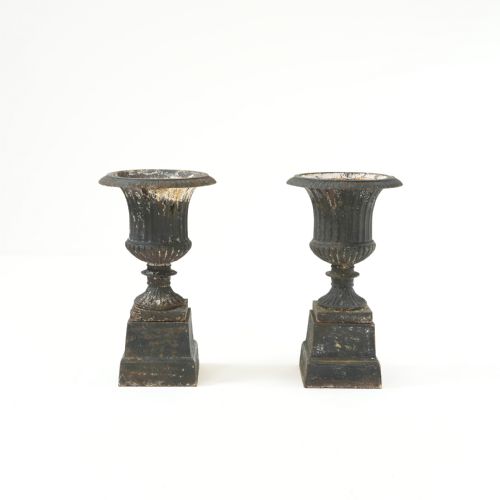
Black Pedestal Stand
A black pedestal stand elevates plants, urns, or lamps with dark, striking presence.
Black Pedestal Stand
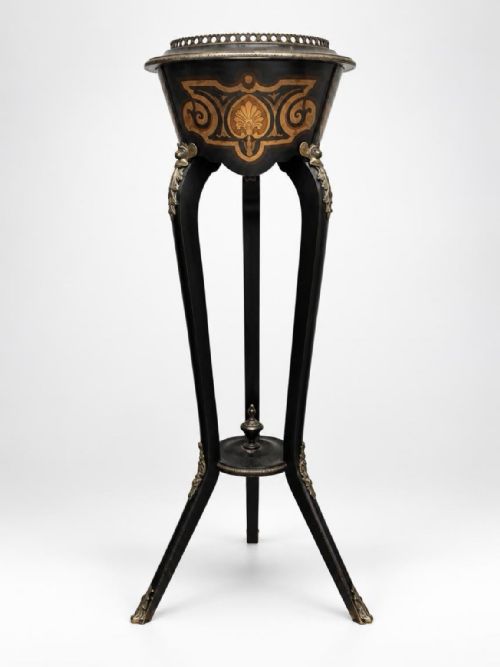
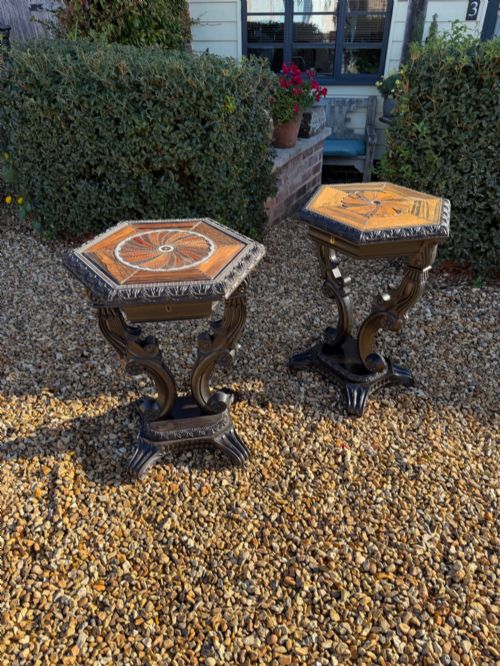
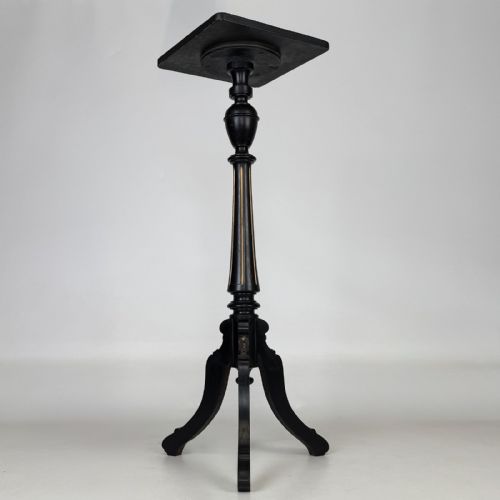
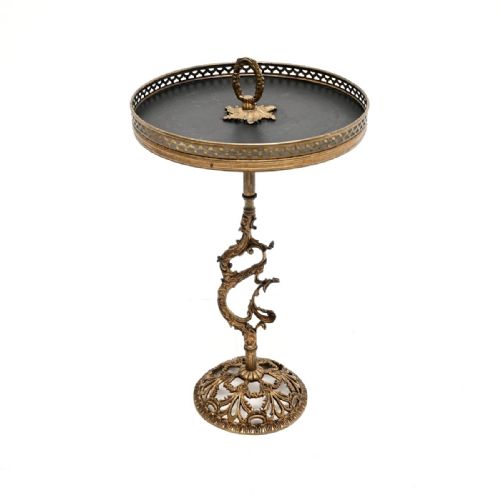
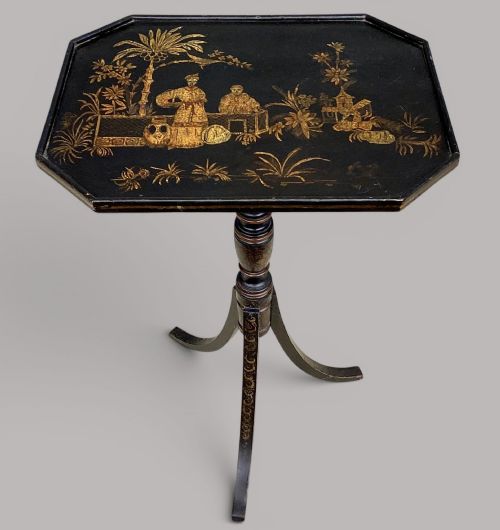
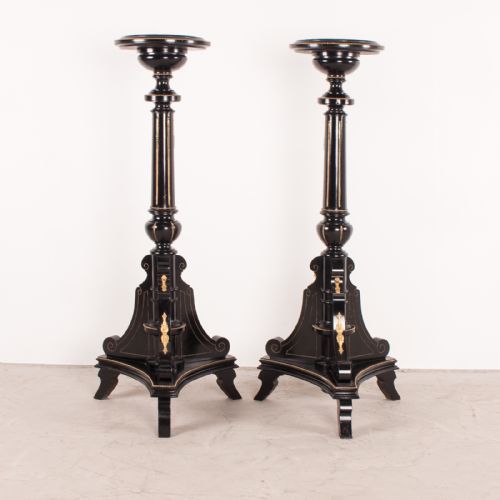
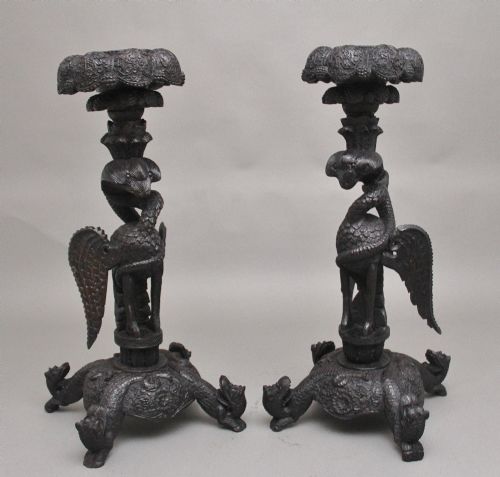
A black pedestal stand serves to elevate decorative objects, plants, and lighting within a room, appearing in forms such as torcheres, plant stands, columns, and occasional tables. The pieces found here span the nineteenth century into the early twentieth century, encompassing Victorian, Regency, and Art Deco eras alongside specific regional traditions like Anglo-Indian and Chinese export work.
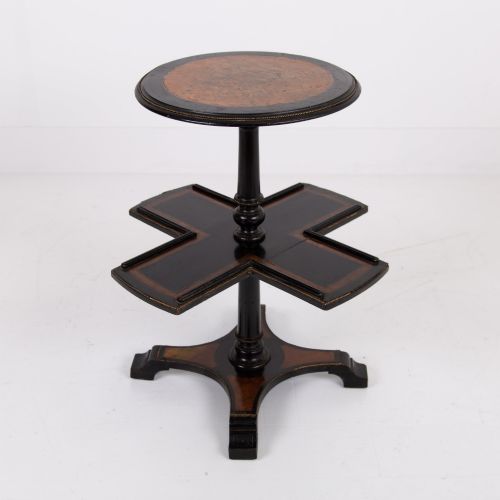
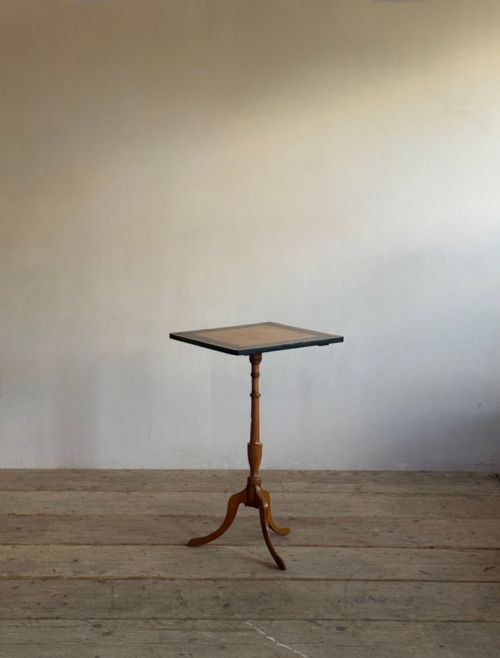
Buyers seeking this phrase most commonly encounter ebonised wood surfaces, dark hardwoods like ebony, and lacquer finishes paired with varied supports. Forms range from simple tripod tables and carved wooden columns to architectural marble-topped plant stands and elaborately decorated display tables.
How they were made
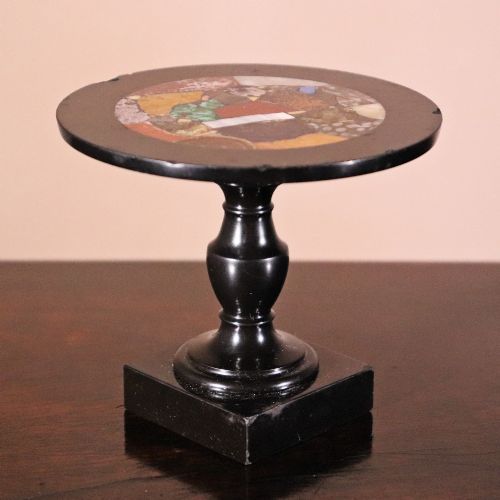
Maker's workshops utilised dense timbers such as ebony, elm, and general hardwoods, frequently applying ebonisation techniques to create deep black surfaces that mimic costly exotic woods. These dark structures often combine with contrasting materials, incorporating inset marble tops, scagliola, brass scroll bases, or intricate bone inlay.
Surface ornamentation relies heavily on traditional craftsmanship, including hand-carved wood, Chinoiserie lacquer, penwork decoration, and marquetry. Tripod bases, column shafts, and iron framing provide structural support for heavier stone tops and display vessels.
Black Pedestal Stand Retail Price Guide 2026
Typical asking prices for black pedestal stand among the pieces listed under this phrase on Sellingantiques today, from the lower quarter to the upper quarter. They describe what is for sale here now, not the wider market.
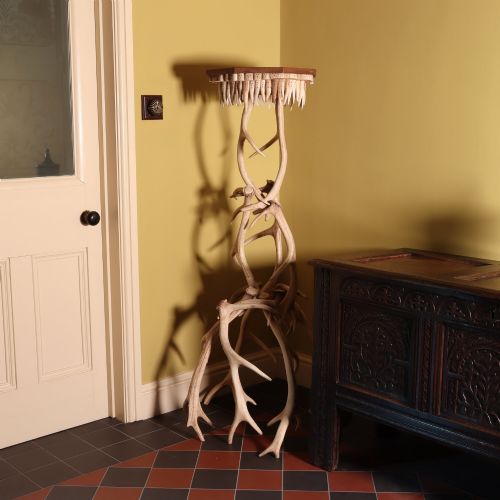
Taxidermy antlers occasionally substitute for traditional wooden columns, supporting displays with unexpected forest charm.
What varies in quality
Quality rests in the crispness of the carving, the depth and durability of the ebonisation or lacquer work, and the structural integrity of the base. Pieces exhibiting finely detailed figural carving, precise marquetry, or specialised inlays demonstrate superior workshop execution compared to plainer utility items.
The choice of top material also defines the tier of the piece, with solid marbles, scagliola, or heavy hardwoods representing higher standards of manufacture than simpler veneered surfaces.
Liberty
The Black Pedestal Stand Glossary
- Ebonised
- Wood treated with a chemical stain or pigment to imitate genuine ebony, producing a dense black finish. This technique became widely popular during the Victorian and Aesthetic Movement periods.
- Torchere
- A tall, slender stand designed to hold a lamp or candle, often featuring a circular top supported by a single column or tripod base. These pieces frequently incorporate detailed carving.
- Scagliola
- A composite material made from selenite, glue, and pigments, embedded to mimic marbles and other fine stones. Craftsmen apply this technique to create decorative tabletops and columns.
- Jardiniere
- An ornamental pot or stand intended for holding plants or floral arrangements, often elevated on a dedicated pedestal or portico frame.
Black Pedestal Stand: Frequently Asked Questions
Where should I place a pedestal stand?
These stands suit corners, hallways, or beside seating where an elevated surface is required for display.
They work effectively to showcase table lamps, heavy vases, or potted plants.
How were these stands used historically?
Historically, households utilised these stands to display imported ceramics, art objects, or indoor plants.
Tall torcheres specifically held candles or oil lamps to illuminate dark corners of reception rooms.
How do I care for ebonised wood?
Maintain the dark finish by dusting regularly with a soft, dry cloth to prevent surface scratching.
Avoid placing these pieces in direct sunlight or near heat sources to protect the lacquer and wood.
What periods do these stands represent?
The available selection primarily dates from the nineteenth century, covering Victorian, Regency, and Aesthetic Movement designs.
Later examples extend into the Art Deco period and the early twentieth century, showing diverse global influences.