




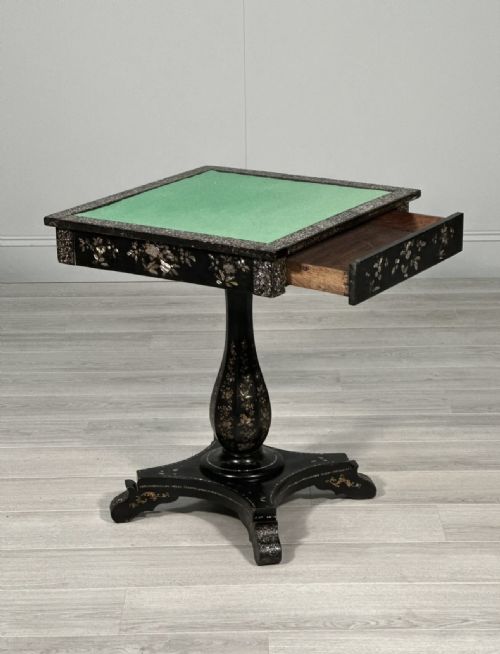
Black Papier Mache Furniture
Black papier mache furniture brings deep lacquer and shimmering mother-of-pearl to nineteenth-century interiors, offering both durability and brilliant visual texture.
Black Papier Mache Furniture
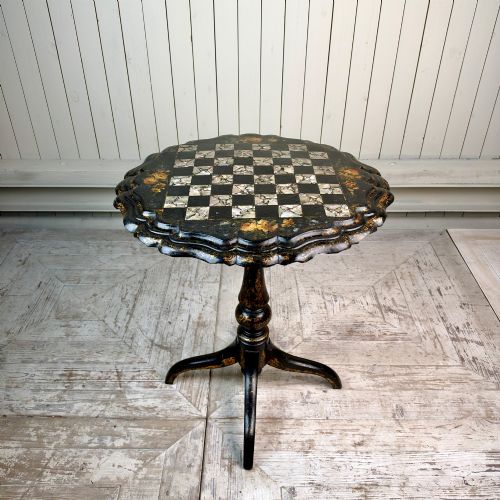
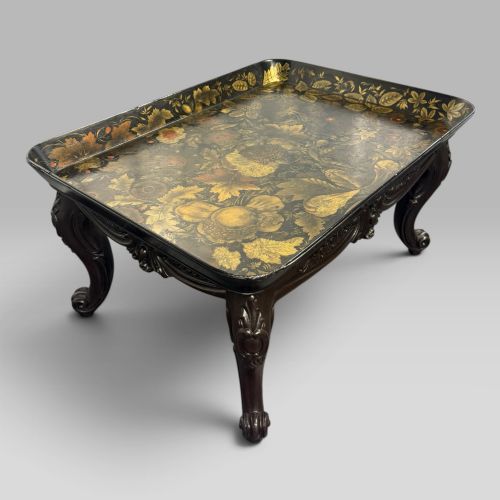
Black papier mache furniture encompasses practical tables and seating produced predominantly during the nineteenth century, including the Victorian era. These pieces range from occasional tables and tray tables to work tables, games tables, and side chairs.
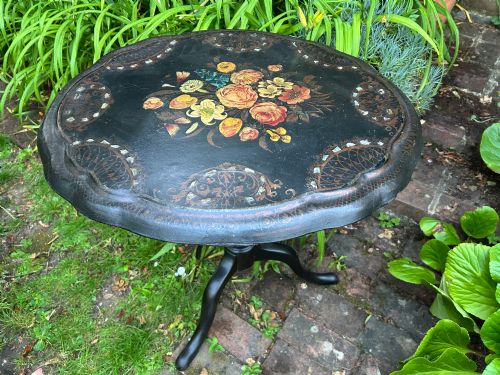
Buyers encountering this material on the page will frequently find occasional tables, tilt-top tables, and trays mounted on stands. Many examples incorporate distinct stylistic influences such as Chinoiserie designs and Regency style elements.
How they were made
The construction relies on sturdy papier-mache treated with lacquer to achieve a smooth, dark surface foundation. Artisans built these sturdy structural forms to support daily household use while maintaining a sleek finish.
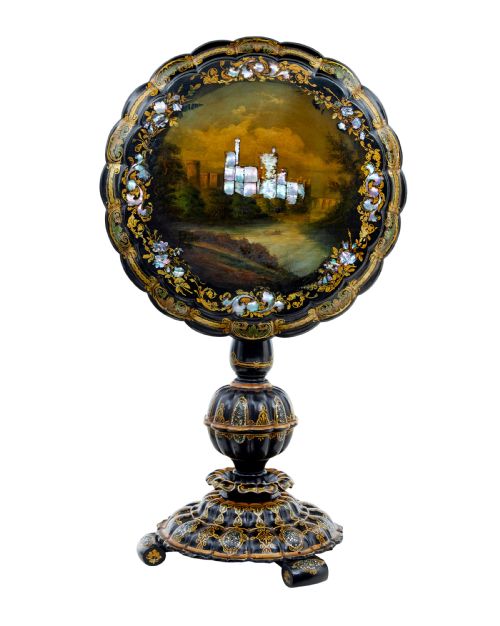
Decoration often involved painting and mother-of-pearl inlay embedded directly into the lacquered body. Brass elements sometimes supplemented the wooden or papier-mache structures, particularly on stands and tables.
Black Papier Mache Furniture Retail Price Guide 2026
Typical asking prices for black papier mache furniture among the pieces listed under this phrase on Sellingantiques today, from the lower quarter to the upper quarter. They describe what is for sale here now, not the wider market.
Some nineteenth-century makers turned papier-mache into children's chairs, proving that even toddlers deserved a touch of glossy parlour elegance.
What varies in quality
The refinement of the painted decoration and the precision of the mother-of-pearl inlay distinguish finer items from simpler production. Superior examples display intricate Chinoiserie scenes and meticulous hand-painting that remain crisp across the surface.
The integrity of the underlying papier-mache and the stability of any supporting stand or tilt-top mechanism dictate the overall standard. Original stands and unaltered surfaces hold greater interest for those studying the full scope of nineteenth-century manufacturing.
The Black Papier Mache Furniture Glossary
- Papier-mache
- A composite material made from paper pulp or layers of paper reinforced with glue, then pressed and dried into rigid forms. It provided a lightweight yet durable base for nineteenth-century decorative objects.
- Mother-of-Pearl
- The iridescent inner layer of mollusc shells, cut into thin pieces and embedded into lacquered surfaces. This material caught the candlelight and added shimmering contrast to dark furniture.
- Chinoiserie
- A European artistic style reflecting Chinese aesthetic motifs, popular in furniture decoration. It typically featured painted landscapes, figures, and architectural elements rendered in gold and colour.
- Tilt-top table
- A table featuring a mechanism that allows the table top to pivot to a vertical position when not in use. This clever design saved valuable floor space in Victorian parlours.
- Pole-screen
- A vertical screen mounted on a freestanding pole designed to protect a person's face from the direct heat of a fireplace. The adjustable screen panel often displayed decorative paintings or needlework.
Black Papier Mache Furniture: Frequently Asked Questions
How do I clean black papier mache furniture?
Dust the surface gently with a soft, dry cloth to prevent scratching the delicate lacquer finish. Avoid using liquid cleaners, polishes, or damp cloths, as moisture can penetrate and damage the papier-mache base.
Keep these pieces out of direct sunlight and away from heat sources to protect the painted details and mother-of-pearl inlay from fading or cracking over time.
Can I use these tables for daily dining?
These tables were originally intended for light domestic tasks such as serving tea, writing letters, or playing games rather than heavy daily dining use. Their structural frames are surprisingly sturdy, but the lacquered surfaces remain susceptible to scratches from heavy crockery or cutlery.
Using coasters and placemats helps preserve the antique finish if you choose to place items on the surface during everyday use.
How do I identify Victorian pieces?
Victorian examples frequently showcase deep black lacquer finishes combined with elaborate mother-of-pearl inlay and painted Chinoiserie motifs. Look for typical nineteenth-century forms such as tilt-top occasional tables, work tables fitted with internal compartments, and matching pairs of chairs.
Construction details such as traditional joinery on supporting wooden stands and period-appropriate hardware also point towards nineteenth-century origins.
Are these items waterproof?
Papier-mache and traditional lacquer finishes are not waterproof and can be permanently damaged by standing water or excessive humidity. Spills should be blotted up immediately with a dry cloth to prevent moisture from lifting the lacquer or softening the paper composite beneath.
Maintaining a stable indoor climate helps protect both the structural integrity and the decorative surface layers of the furniture.