




Black Painted Accent Chair
A black painted accent chair brings immediate graphic punch to a room, offering functional seating rooted in centuries of decorative tradition.
Black Painted Accent Chair
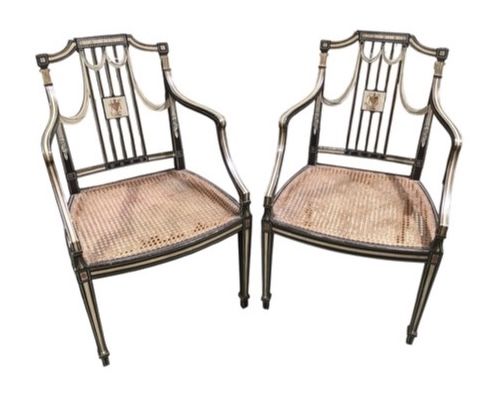
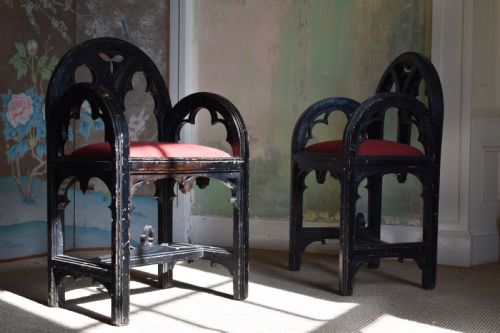
When searching for a black painted accent chair, buyers encounter seating spanning from the eighteenth century through to the early twentieth century. These pieces appear in forms such as open-arm armchairs, side chairs, rocking chairs, and bedroom chairs.
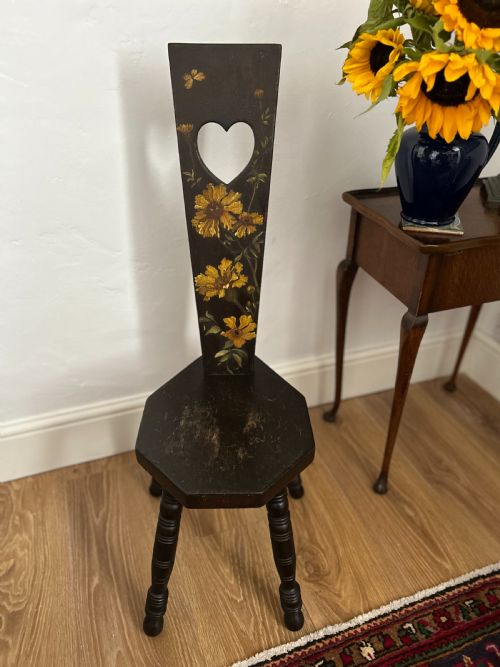
The selection on this page demonstrates various historical revivals and regional traditions. Pieces include Regency style designs, Gothic Revival armchairs, George III examples with block feet, Welsh spinning chairs, and Chinoiserie japanned models.
The most common formats on this page are pairs and single chairs finished with paint, lacquer, or ebonisation. They range from formal drawing-room seating to country-made vernacular examples.
How they were made
Construction relies upon traditional timber frames fashioned from beech and general wood, occasionally incorporating materials like cane for seats or upholstery in fabric and velvet.
Surface decoration defines the group, utilising hand-applied paint, ebonised finishes, gilding, and japanning. Certain late nineteenth-century examples employ lacquered papier-mâché to achieve smooth, durable decorative surfaces.
A Welsh spinning chair offers a low, compact seat designed long ago for domestic textile work by the hearth.
What varies in quality
Quality rests upon the integrity of the original surface finish and the crispness of the underlying woodwork. Original paint or japanning holds significantly more interest than later overpainting.
The sophistication of the decorative detail separates standard production from finer examples. Hand-painted motifs, gilding, and specialised techniques like lacquering demonstrate greater artisan skill than plain monochrome coats.
The Black Painted Accent Chair Glossary
- Ebonised wood
- Timber stained or painted black to imitate costly ebony. This finish gained popularity during various nineteenth-century revival periods.
- Japanning
- European imitation of East Asian lacquering techniques. Artisans built up layers of varnish and paint to create glossy, decorated surfaces.
- Cockpen chair
- A Chinese Chippendale style chair featuring an open lattice-work back. These typically incorporate square legs and straight stretchers.
- Shield back
- A chair back shaped in the outline of a heraldic shield. This silhouette became prominent during the late eighteenth century.
- Papier-mâché
- A composite material made from paper pulp or layers of paper bound with glue. When reinforced and lacquered, it formed sturdy chair frames during the nineteenth century.
Black Painted Accent Chair: Frequently Asked Questions
Where should I place a black painted accent chair?
These chairs work effectively in corners, bedrooms, or alongside larger upholstery to anchor a room visually. Their dark finish creates a strong silhouette against pale walls.
Because many examples originate as bedroom chairs or side chairs, they suit spaces where deep lounging furniture overwhelms the floor plan.
How do I care for original painted surfaces?
Dust regularly with a soft, dry cloth and keep pieces away from direct sunlight or damp environments. Avoid modern chemical polishes that can lift historic paint.
Gentle cleaning preserves the integrity of nineteenth-century japanning, ebonisation, and hand-applied pigments.
Are these chairs comfortable for daily use?
Comfort varies depending on the specific form, as pieces range from upright George III armchairs to low bedroom chairs and rocking chairs. Many historical examples prioritize formal posture over deep lounging.
Adding a loose cushion can improve comfort for modern seating habits without altering the historic frame.
How can I tell a reproduction from an antique?
Examine the wear patterns on the painted finish and the construction joints used in the timber frame. Genuine older pieces show natural ageing beneath the black paint, lacquer, or ebonisation.
Tool marks, timber shrinkage, and traditional joinery methods help confirm whether a chair dates to the eighteenth, nineteenth, or early twentieth century.