


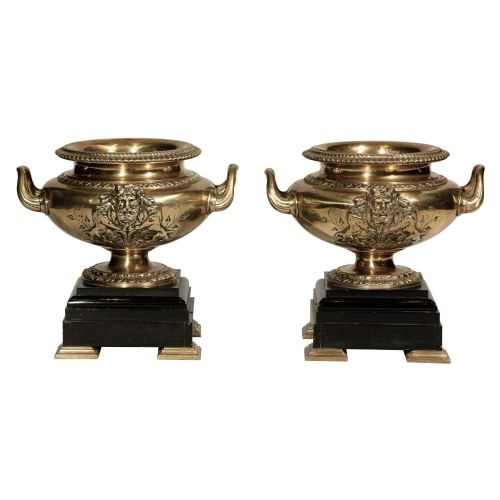
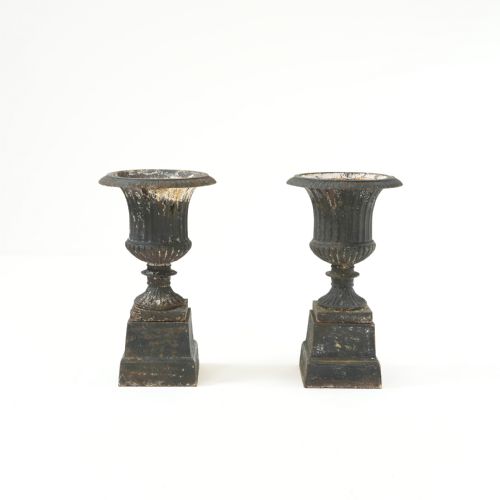


Black Metal Vase
These black metal vase options bring classical and eastern ornament to a room, offering heavy cast forms and patinated surfaces from the nineteenth century.
Black Metal Vase
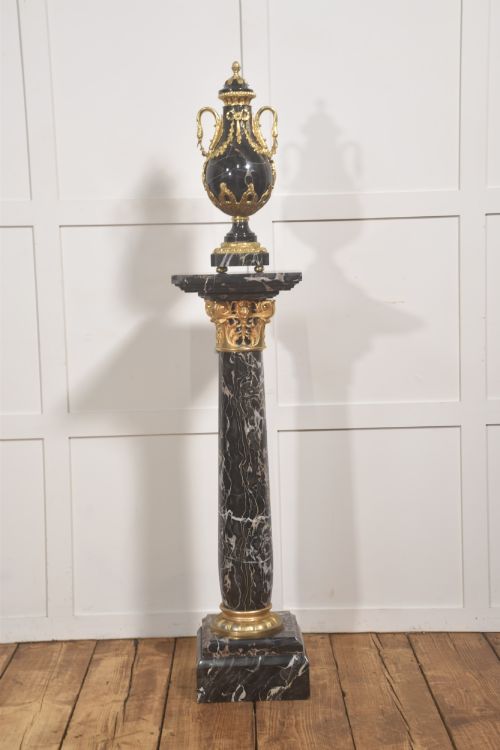
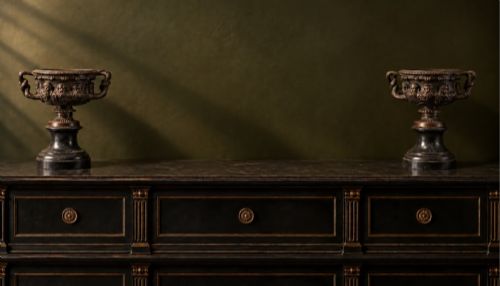
A black metal vase search reveals nineteenth-century decorative vessels, often taking the form of campana urns, Warwick urns, or Japanese cloisonne pieces adapted into lamps or left as display objects. Buyers encounter paired items mounted on marble bases or patinated to resemble aged bronze, alongside cast iron garden ornaments and painted metal toleware.
The objects span Grand Tour neoclassical taste, French empire designs, and Meiji period Japanese metalwork, reflecting a nineteenth-century fascination with antiquity and distant trade. Most examples serve as mantel garnitures, table centrepieces, or large floor-standing decorative urns rather than simple flower holders.
Materials and construction
The construction relies on heavy casting techniques in bronze, cast iron, and brass, supplemented by applied ormolu mounts and marble plinths. Surfaces achieve their dark tones through chemical patination or black paint on toleware, creating durable bodies designed to imitate classical antiquity.
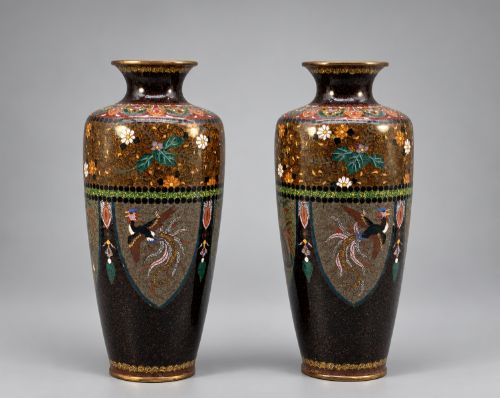
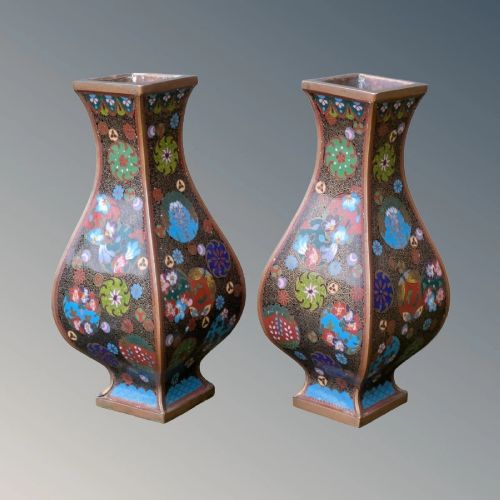
Japanese examples utilise copper bases decorated with silver wire cloisonne enamel, enclosing vibrant bird and floral motifs within cells of coloured glass paste. French and English workshops finish their cast pieces with precise toolwork, chiselling details into the metal before applying dark finishes.
Black Metal Vase Retail Price Guide 2026
Typical asking prices for black metal vase among the pieces listed under this phrase on Sellingantiques today, from the lower quarter to the upper quarter. They describe what is for sale here now, not the wider market.
Measures of quality
Quality rests upon the crispness of the casting and the depth of the metal finish, distinguishing sharply cast campana or Warwick urns from softer commercial output. Hand-chased details on bronze and ormolu mounts show an artisan's direct hand, whereas lesser pieces rely solely on the initial mould without secondary finishing.
In cloisonne work, the fineness of the silver wire and the perfection of the enamel fill determine the standard, separating miniature or standard vases from massive pieces bearing signature marks like those of Ando Jubei. The inclusion of original matched marble bases and intact lidded elements elevates the integrity of any pair.
Ando Jubei
The Black Metal Vase Glossary
- Campana urn
- A bell-shaped vessel with flared rims and handles, originating in classical antiquity and revived extensively during the nineteenth century. These objects function primarily as ornamental garden or interior urns.
- Cloisonne
- A decorative metalwork technique where thin wire creates partitioned cells on a copper body, which are then filled with enamel paste and fired. Japanese Meiji period examples frequently depict birds and flowers.
- Ormolu
- Gilt bronze mounted onto furniture, clocks, and decorative urns, providing a contrasting golden highlight against dark patinated metal surfaces. It involves applying a mercury and gold amalgam to bronze.
- Patination
- The surface alteration of metal resulting from age, chemical treatment, or handling, producing a deep dark tone on bronze and iron pieces. This finish protects the metal while defining its visual character.
Black Metal Vase: Frequently Asked Questions
How do I clean a bronze urn?
Dust the patinated surface gently with a soft dry cloth to preserve the historic finish.
Avoid using water, metal polishes, or chemical cleaners that strip the dark patina.
Were these vessels used for flowers?
Nineteenth-century decorative urns and toleware pieces served primarily as architectural ornaments, garnitures, or mantel displays rather than functional vases.
Some include metal liners, but most remain dry decorative objects due to their material composition.
What is a Grand Tour piece?
Grand Tour objects are souvenirs purchased by wealthy travellers visiting classical antiquities in Italy and France during the nineteenth century.
These bronze and cast iron reproductions capture ancient Greek and Roman designs for European homes.
How do I date a toleware urn?
Early nineteenth-century Regency and Empire pieces exhibit hand-formed sheet iron construction with distinct seam work beneath the painted surface.
Weight, paint ageing, and classical proportions separate these genuine antique examples from later reproductions.