



Black Library Chair
A black library chair anchors a serious study, bringing dark wood, ebonised surfaces and sturdy leather together for long hours at the desk.
Black Library Chair
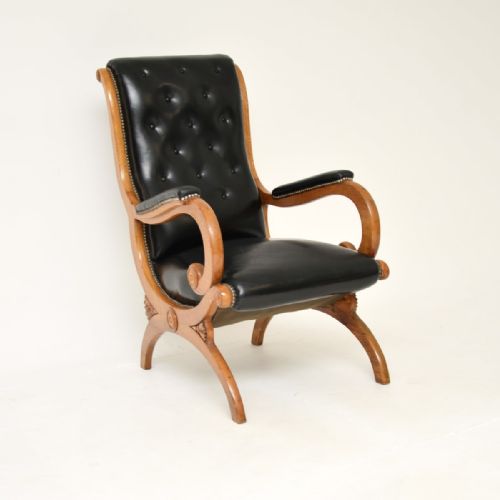
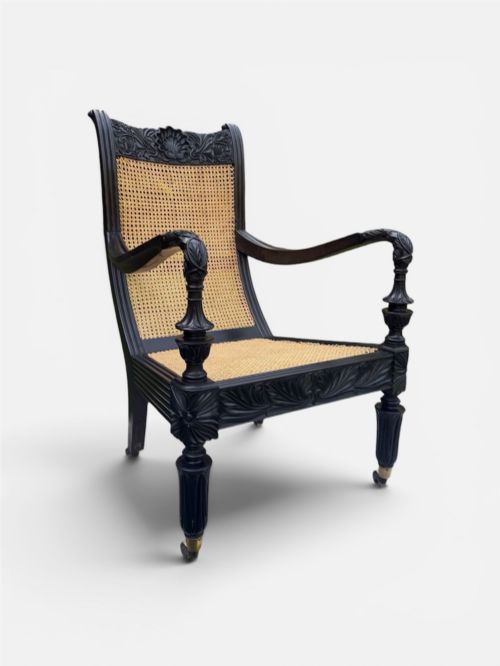
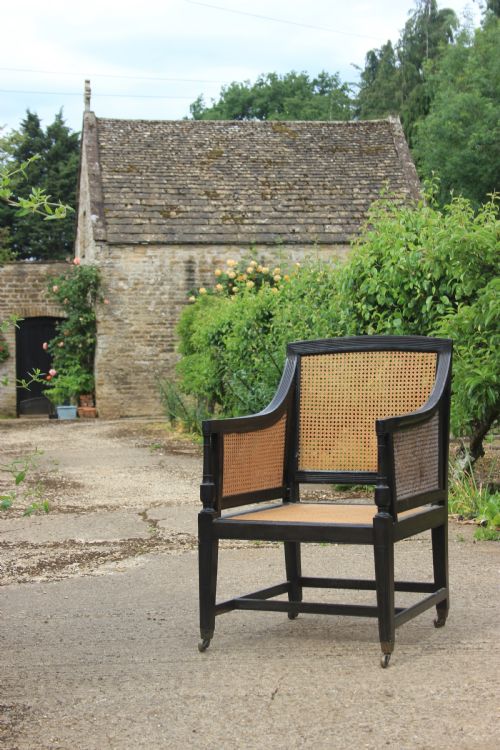
A black library chair serves as a substantial seat for reading, writing and working within a home study or library. These pieces appear across several periods, drawing on Regency, Victorian and William IV design traditions.
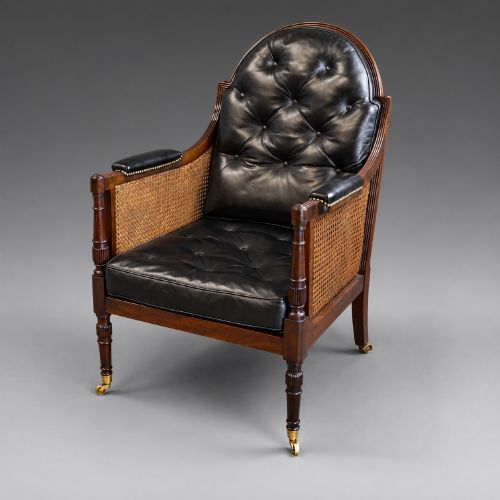
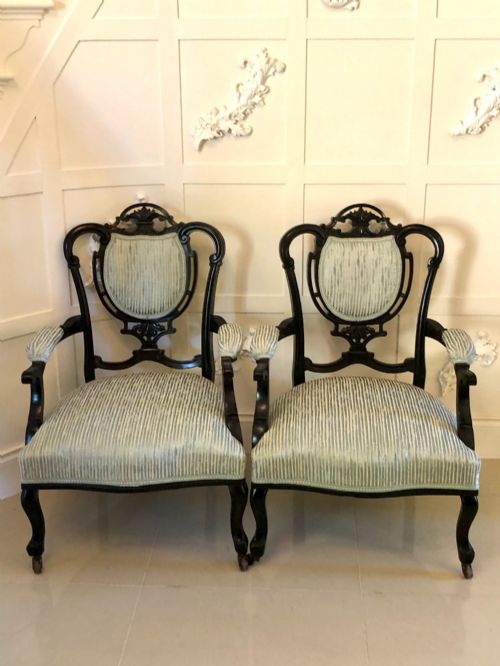
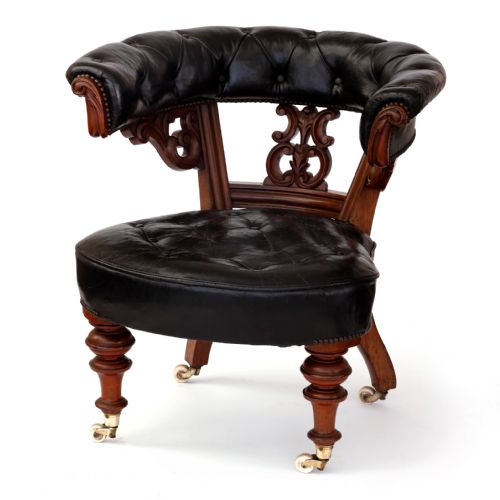
The selection includes desk chairs, open armchairs and heavy bergères designed for comfort and sustained use. Dark finishes dominate, utilising ebonised wood, black lacquering and solid ebony alongside traditional mahogany and oak frames.
Makers and workshops of the nineteenth century built these seats to withstand daily study use while maintaining a formal presence. Regional variations span English cabinet-making traditions, French Empire forms and Anglo-Indian interpretations.
Materials and construction methods
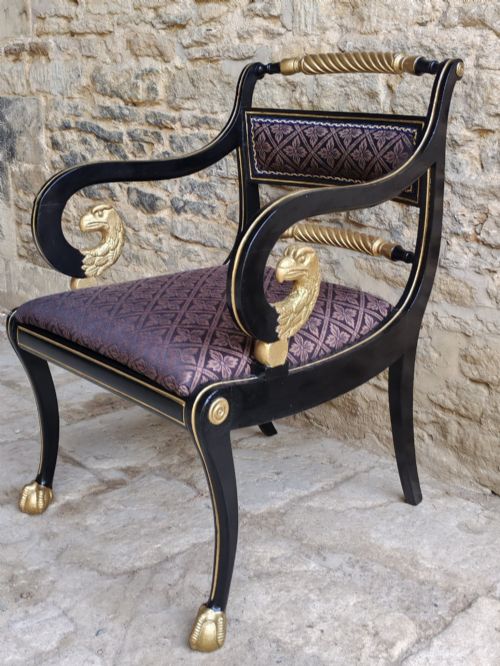
Cabinet-makers relied on dense timbers such as mahogany, oak and walnut as structural frames, often applying ebonisation or black lacquer to achieve a dark surface. Solid ebony appears in specific examples, providing a heavy and uniform dark tone throughout.
Upholstery forms a vital component, with original or replacement leather, cane, fabric and calico fitted over webbing and horsehair stuffing. Brass accents, including castors, studs and mounts, frequently finish the legs and arm terminals of nineteenth-century pieces.
Black Library Chair Retail Price Guide 2026
Typical asking prices for black library chair among the pieces listed under this phrase on Sellingantiques today, from the lower quarter to the upper quarter. They describe what is for sale here now, not the wider market.
Judging quality in dark study seating
The integrity of the wooden frame and the precision of hand-carved details dictate the baseline standard of a piece. Crisp mouldings, sturdy joinery at the arm supports and intact structural members separate standard seating from exceptional examples.
Surface finish condition remains significant, whether dealing with original ebonised polish, aged lacquer or polished mahogany. The retention of period upholstery materials, maker stamps or identifiable workshop numbers elevates the standing of an armchair.
Hindley & Sons·W Williamson & Sons·Gillows
The Black Library Chair Glossary
- Bergere
- An enclosed upholstered armchair with wooden framing, often featuring cane panels to the back and sides. This French form became popular in English Regency and nineteenth-century libraries.
- Ebonised
- Wood treated with stain, paint or polish to imitate the deep black appearance of ebony. Cabinet-makers utilised beech, mahogany and fruitwood for this process.
- Fauteuil du bureau
- An open-armed desk chair originating in France, designed for administrative or study use. These chairs often feature rounded backs and upholstered seats.
- Carver
- A traditional term for an armchair that matches a set of smaller dining or desk chairs. They provide wider proportions and armrests for primary seating.
- Lambrequin
- A decorative motif resembling drapery or fabric pelmets, carved onto the back splats of Regency chairs. It adds a sculptural element to the upper frame.
Black Library Chair: Frequently Asked Questions
What defines a library chair?
A library chair is a sturdy, comfortable armchair designed for reading and desk work, typically featuring upholstered seats and supportive arms.
These chairs prioritize physical support during long hours of study, setting them apart from purely decorative parlor seating.
How do I care for leather upholstery?
Leather upholstery requires conditioning to prevent drying and cracking over time. Regular dusting and avoiding direct sunlight help preserve the material.
Original leather should be handled with care to maintain its historical patina and soft texture.
Are these chairs suitable for daily use?
Nineteenth-century library chairs were built for heavy daily use with solid timber frames and durable joints. Modern placement at a desk or reading table remains entirely practical.
Checking the stability of the legs and arm joints ensures the chair can support regular sitting.
How can I date a black wooden chair?
Dating relies on stylistic clues such as carved splats, leg shapes, and construction methods characteristic of the Regency or Victorian periods. Material choices like ebonised wood or solid ebony also point to specific nineteenth-century decades.
Maker stamps, stamps on the wood, or numbers written under the frame can provide further chronological context.