


Black Gold Standard Lamp
These black gold standard lamps combine dark lacquer or ebonised wood with rich gilding, bringing vertical presence and warm illumination to any interior.
Black Gold Standard Lamp
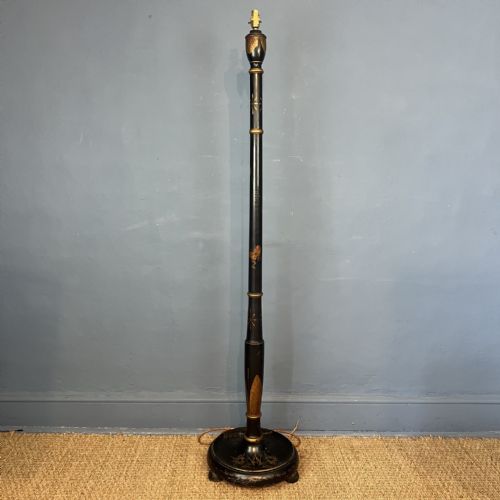
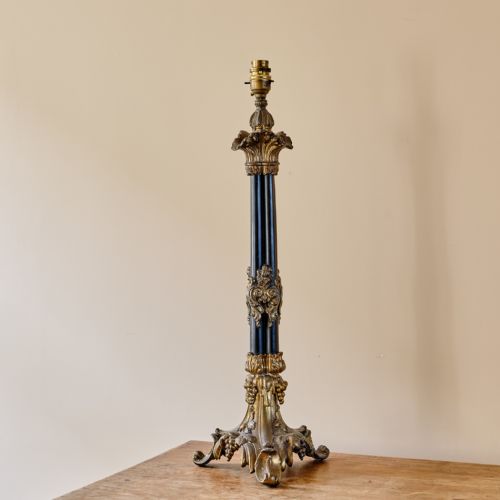
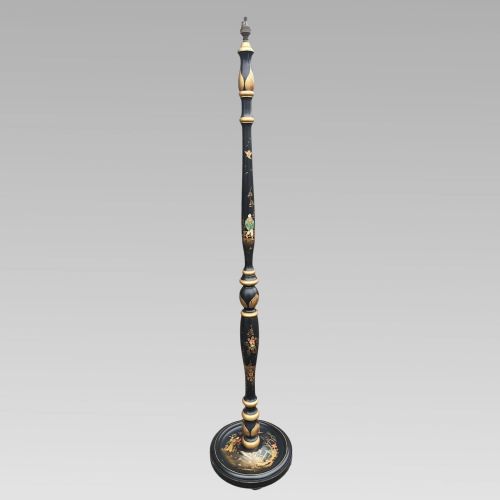
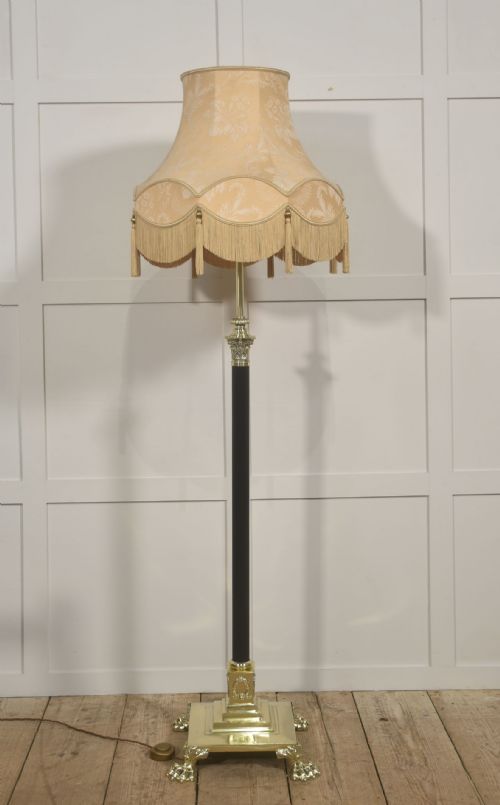
A black gold standard lamp is a tall floor standing lighting fixture finished in black lacquer, ebonised wood, or dark paint enriched with gilt details. When searching for a black gold standard lamp, buyers encounter pieces spanning several eras from the eighteenth century through to the interwar period.
The dominant aesthetic draws heavily on Chinoiserie decoration, Neoclassical column forms, and Regency or Rococo revival styles. Standard lamps and floor lamps appear alongside occasional table lamps, offering substantial height for room illumination.
Origins range from English Edwardian interpretations to French nineteenth century designs and Spanish Baroque woodwork. This variety ensures that each lamp carries distinct regional characteristics while maintaining the signature dark and metallic palette.
Materials and Construction
Makers utilised wood, brass, and ebonised timber as the primary structural foundations for these tall lighting pieces. Lacquer surfaces received meticulous application to achieve deep, reflective black finishes.
Gilt bronze, parcel gilt, and applied gold leaf highlight carved details, fluted columns, and oriental motifs. Fabric elements complete the fixtures, providing soft diffusion for the light source atop the standard.
Some tall lamps include adjustable stems, allowing the height to shift when someone needs to redirect light over an armchair.
Assessing Quality and Execution
The refinement of the surface finish dictates the visual impact of the piece, distinguishing deeply layered lacquer and hand-applied leaf from simpler painted alternatives. Superior examples display crisp carving on wooden standards and precise metalwork on adjustable brass stems.
Proportion and structural stability separate standard lamps of higher merit from simpler utilitarian versions. The integration of decorative styles, such as hand-painted Chinoiserie scenes or balanced Neoclassical proportions, demonstrates the skill of the original workshop.
The Black Gold Standard Lamp Glossary
- Chinoiserie
- European decorative style reflecting Chinese artistic influences, frequently featuring hand-painted motifs on black lacquer grounds. This aesthetic defines many of the tall lamps found in this category.
- Ebonised wood
- Timber treated to resemble ebony, providing a dense black finish that contrasts sharply with applied gilt details. This technique imparts a formal, architectural quality to the standard lamp.
- Gilt bronze
- Copper alloy finished with a layer of gold leaf or mercury gilding, offering durable metallic enrichment. It frequently appears on Neoclassical and nineteenth century lighting components.
- Parcel gilt
- Decoration method where only specific carved elements or raised details receive gold leaf while the primary surface remains dark. This technique creates a subtle interplay between the black body and golden highlights.
- Neoclassical
- Design movement drawing inspiration from classical antiquity, characterised by symmetrical columns, urn motifs, and restrained ornamentation. Standards from this style often incorporate brass and ebonised elements.
Black Gold Standard Lamp: Frequently Asked Questions
How do I identify a Chinoiserie lamp?
Chinoiserie examples feature black lacquer grounds decorated with oriental motifs, figures, or landscapes rendered in gold paint or raised relief.
These decorative elements reflect early twentieth century and Edwardian interpretations of Asian art.
Are these lamps electrically safe to use?
Most antique lighting pieces require professional rewiring by a qualified electrician to meet modern safety standards before regular daily use.
Original brass fittings and adjustable stems should be checked during this process.
How do I date a black gold standard lamp?
Dating relies on examining the construction materials, joinery techniques, and stylistic markers such as Neoclassical columns or Spanish Baroque carving.
Stylistic cues link pieces to specific periods ranging from the eighteenth century to the 1930s.