

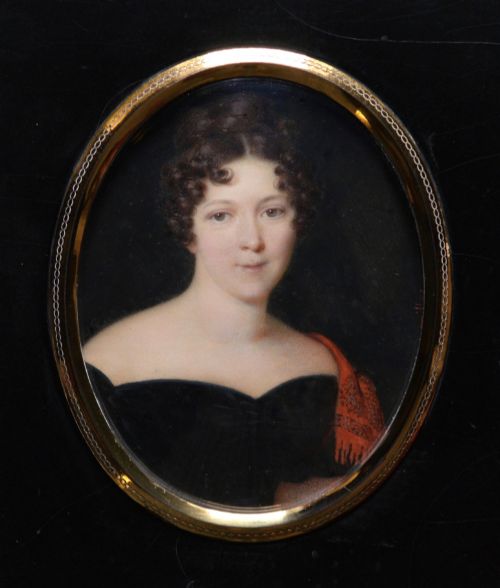
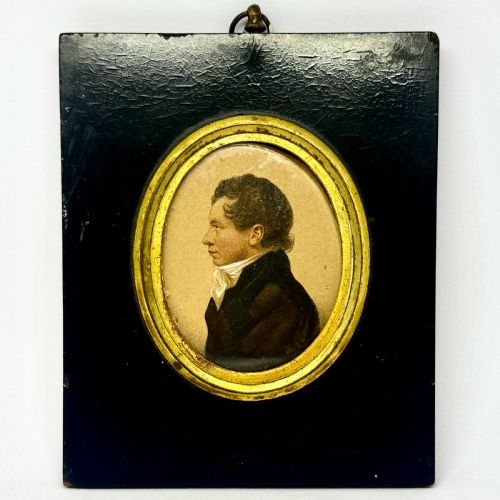


Black Gilt Miniature Portrait
These black gilt miniature portrait pieces capture faces in shadow and watercolour, offering a small window into Georgian and Victorian lives.
Black Gilt Miniature Portrait
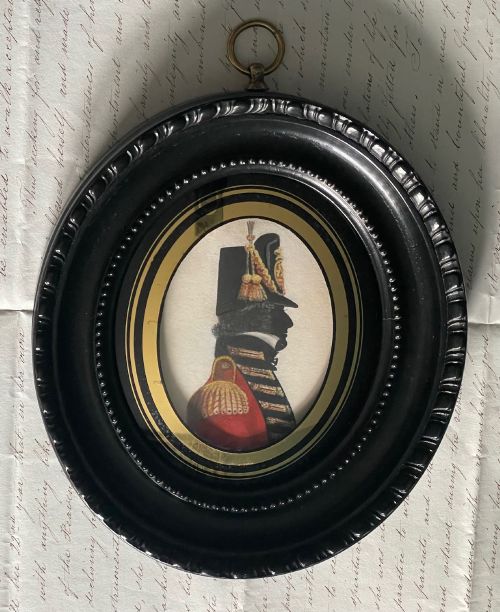
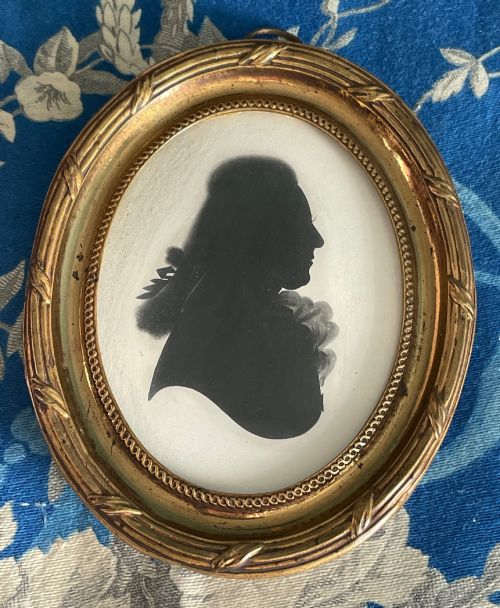
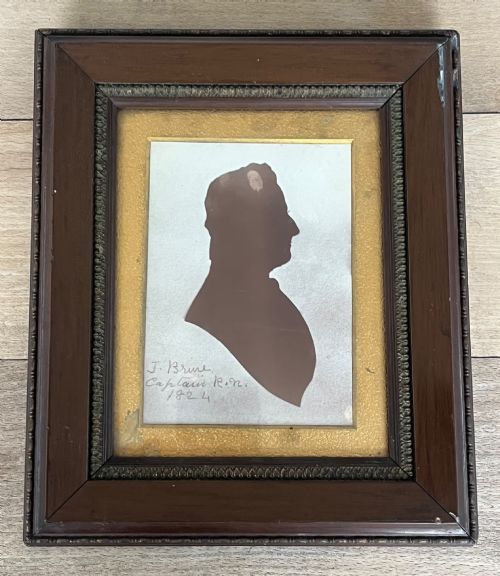
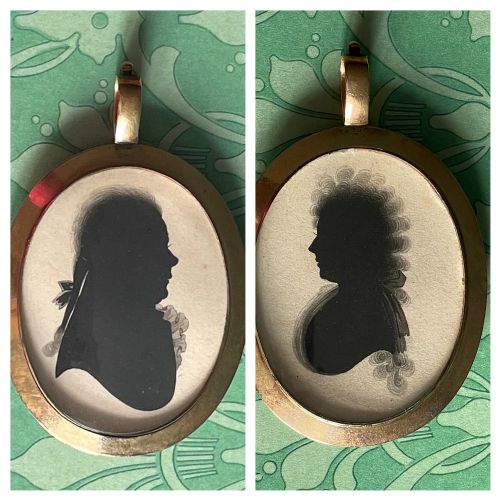
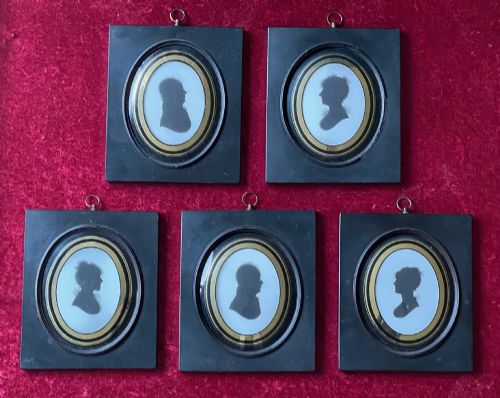
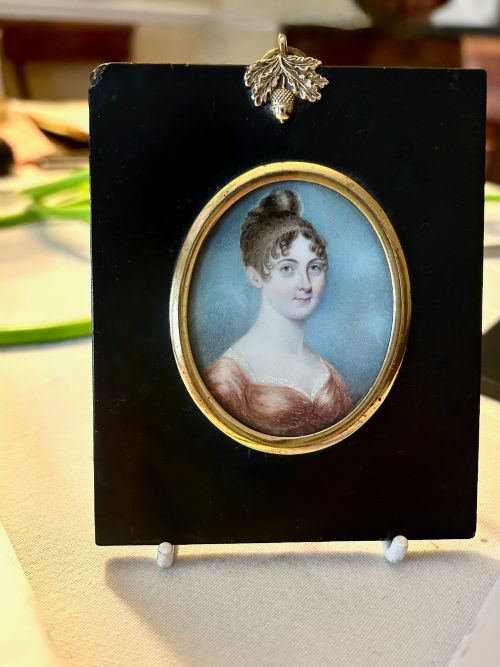
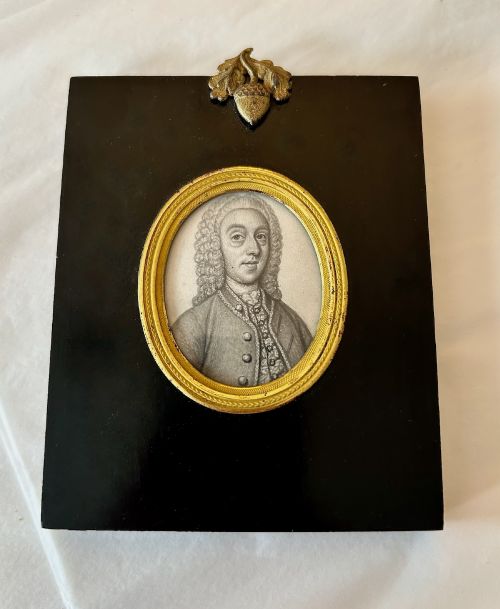
A black gilt miniature portrait brings together small-scale likenesses set in frames of ebonised wood, rosewood, or brass, spanning the eighteenth and nineteenth centuries. You encounter silhouettes cut from paper, painted profiles on plaster or glass, and delicate watercolours on card or paper.
The pieces on this page stem from the Georgian, Regency, and Victorian eras, alongside French Restoration examples. These take the form of wall art, framed silhouettes, and pendant pieces, often showing naval officers, gentlemen, ladies, and children.
Most items you meet balance ink, watercolour, and cut paper with gilt highlights or brass mountings. The selection ranges from single family members to double-sided silhouette pendants and group silhouettes bearing trade labels.
Materials and construction
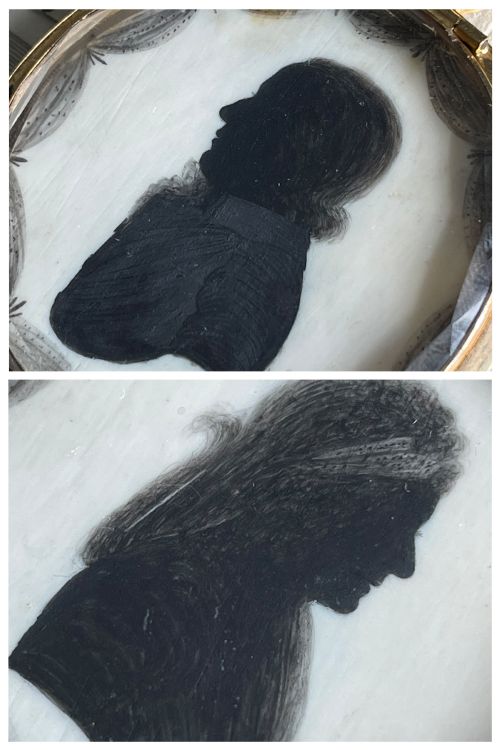
Maker techniques rely on delicate brushwork in watercolour and ink, combined with paper cut-outs mounted on card, glass, or plaster. Artists shaped profiles by hand, applying dark pigments or cutting paper with precision before sealing them behind protective glass.
Frames play a structural role, utilising ebonised wood, rosewood, and gilt wood to enclose the miniature securely. Brass fittings, trade labels on reverses, and pendant loops complete the construction of these pocket-sized and wall-hung artworks.
Black Gilt Miniature Portrait Retail Price Guide 2026
Typical asking prices for black gilt miniature portrait among the pieces listed under this phrase on Sellingantiques today, from the lower quarter to the upper quarter. They describe what is for sale here now, not the wider market.
Listings feature works from the eighteenth and nineteenth centuries, utilising glass, paper, ebonised wood, brass, watercolour, ink, and gilt wood.
Quality and execution
Distinction in these works lies in the precision of the silhouette cutter or watercolourist, where fine brush detail in hair and lace separates standard output from master work. The crispness of a paper cut or the subtlety of facial shading determines the piece's artistic merit.
The integrity and originality of the surrounding frame, whether ebonised wood or rosewood with brass accents, influence the overall character. Surviving trade labels, double-sided preservation, and well-documented subjects add historical weight to the physical object.
John Buncombe·Mrs Mary Lightfoot·John Miers·Houghton and Bruce·J Thomason of Dublin·James Ferguson·Archibald Skirving·John Smith of Edinburgh·N Millett·Bartolozzi
The Black Gilt Miniature Portrait Glossary
- Silhouette
- A solid black profile likeness, usually cut from paper or painted on plaster, glass, or card. This form captures the subject's outline with stark contrast.
- Ebonised wood
- Timber treated to resemble ebony, providing a deep black finish commonly used for nineteenth-century picture frames. It offers a dark, uniform border that makes the portrait stand out.
- Plaster
- A fine composite material used as a solid base for painted profiles by prominent makers like John Miers. It provides a smooth, durable surface for delicate ink work.
- Pendant
- A small framed portrait designed to be worn or carried rather than hung on a wall. These pieces often feature suspension loops and double-sided glass.
Black Gilt Miniature Portrait: Frequently Asked Questions
What is a black gilt miniature portrait?
These are small-scale artworks depicting human profiles through silhouettes, ink, or watercolour, typically framed in dark wood with gilt accents. They record the likenesses of individuals from the Georgian, Regency, and Victorian periods.
Created as personal keepsakes, they use media such as cut paper, glass, plaster, and card. Their compact dimensions made them easy to carry, display on walls, or wear as pendants.
How do I care for antique miniatures?
Keep these pieces away from direct sunlight to prevent the fading of watercolours, paper, and ink. Maintaining a stable indoor humidity protects the delicate organic materials used in their construction.
Avoid opening sealed frames, as older glass and paper can be easily damaged by modern air exposure. Dust the exterior wood and glass gently with a soft, dry cloth.
How can I tell the period of a portrait?
Clothing styles, hairstyles, and framing materials provide the clearest clues to dating a miniature portrait. Georgian sitters often wear powdered wigs or high collars, while Regency and Victorian subjects show evolving fashions of the nineteenth century.
Backings, handwriting on labels, and framing techniques like rosewood veneer or ebonised wood also align with specific manufacturing decades.