




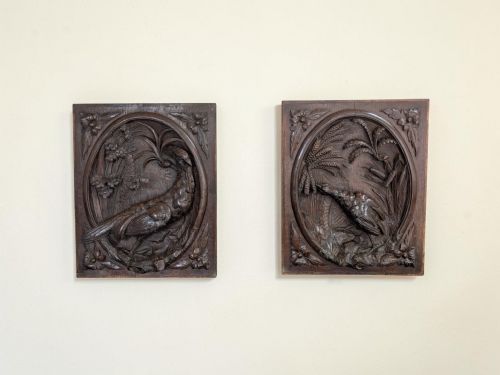


Black Forest Plaque
These black forest plaque examples bring the dramatic carvings of nineteenth century European hunting lodges directly onto your walls.
Black Forest Plaque
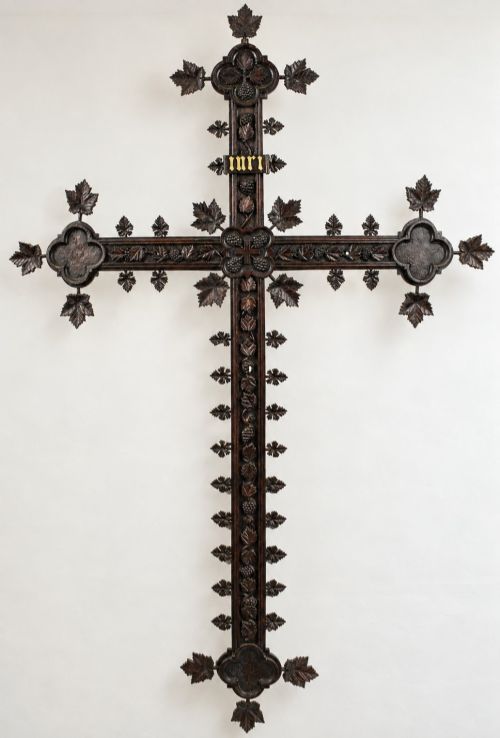
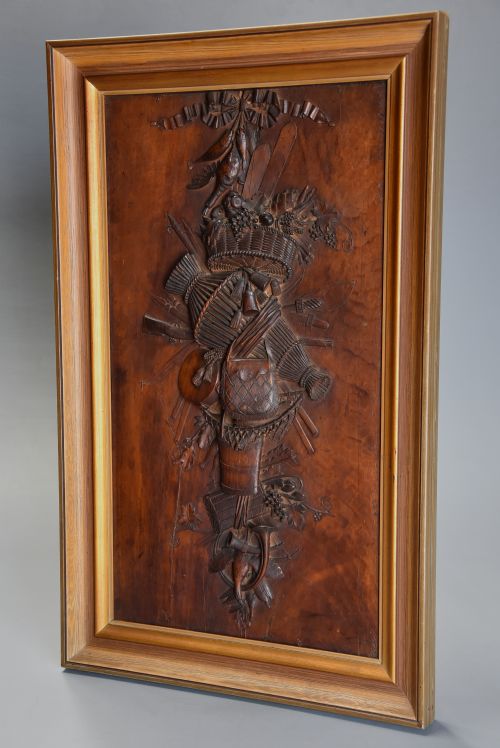
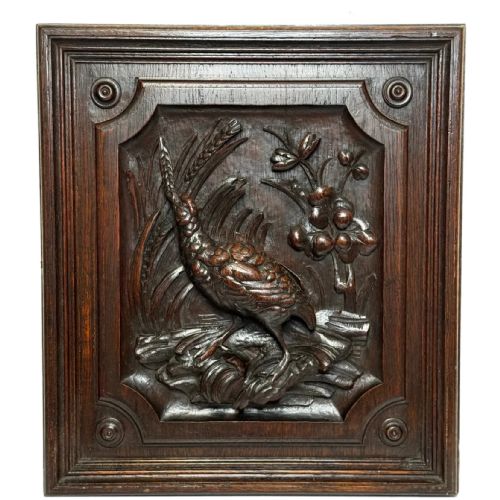
A black forest plaque represents the remarkable woodcarving tradition of nineteenth century European workshops, primarily taking the form of wall plaques, panels, and crosses. You will regularly encounter detailed depictions of wildlife, including deer, foxes, birds of prey, and horses, often integrated with natural foliage or hunting trophies.
The objects span periods from the early nineteenth century through the Victorian era, showcasing regional variations like German hunting scenes and Gothic Revival influences. Many pieces function as wall mirrors, relief carvings, or dimensional sculptures designed to command attention in a room.
When you examine this selection, expect to find timber shields mounted with antlers, fruitwood trophy carvings, and robust walnut panels. These wall decorations capture the rustic yet sophisticated aesthetic of highland hunting lodges and exhibition pieces.
Materials and carving techniques
Carvers utilised dense timbers such as walnut, oak, fruitwood, and lindenwood to achieve deep, high-relief dimensional forms. These woods allowed artisans to render intricate textures like fur feathers and oak leaves with striking naturalism.
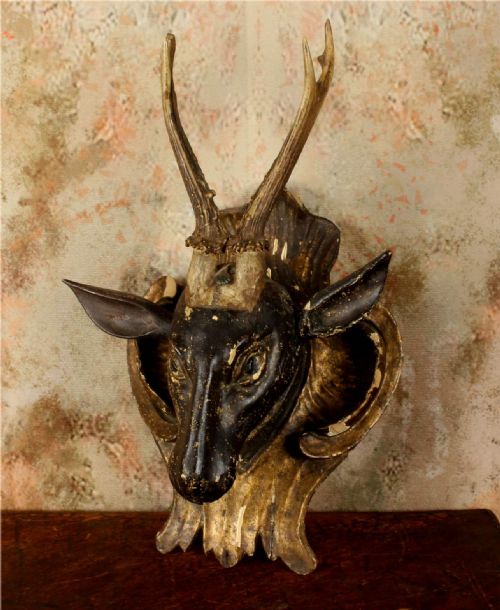
Many compositions incorporate real animal antlers mounted securely onto carved wooden shields and plaques. Selected pieces also feature subtle gilding highlights to accentuate the depth of the relief carving.
Black Forest Plaque Retail Price Guide 2026
Typical asking prices for black forest plaque among the pieces listed under this phrase on Sellingantiques today, from the lower quarter to the upper quarter. They describe what is for sale here now, not the wider market.
Recorded forms span across wall mirrors, crosses, relief panels, and dimensional animal head sculptures.
Distinctions in craftsmanship
The summit of quality in these carvings rests upon the anatomical precision of the animals and the vitality of the composition. Master carvers rendered muscle structure, fur texture, and glass-like expression with a lifelike intensity that lesser hands missed.
Depth of relief and the ambition of the subject matter separate standard decorative items from exhibition quality works. A superior piece displays undercut foliage and complex spatial layering rather than flat, surface-level scraping.
The Black Forest Plaque Glossary
- Relief carving
- A sculptural technique where figures project from a flat background timber. High relief allows elements to stand almost completely free of the panel.
- Hunting trophy
- A carved or taxidermy representation of game animals displayed to celebrate the hunt. In wood, these often combine game birds, stags, or hounds with harvested fruits and foliage.
- Lindenwood
- A pale, fine-grained wood favoured by European carvers for its cooperative nature under chisel work. It permits exceptionally sharp detail without splitting along the grain.
- Gothic Revival
- An architectural and decorative style drawing inspiration from medieval forms. In these carvings, it manifests through pointed arches, tracery, and solemn structural framing.
- Tiger oak
- Oak timber quartersawn to reveal prominent medullary rays creating distinctive tiger-stripe figuring. It provides a robust, highly figured foundation for heavy Victorian wall sculptures.
Black Forest Plaque: Frequently Asked Questions
How were these wall carvings displayed?
These carvings were traditionally hung in hallways, studies, and dining rooms of large country houses and hunting lodges. They served as decorative focal points that celebrated the natural world and the sport of hunting.
Today, they suit similar interior roles, adding texture and historical character to modern or traditional walls. Their sturdy timber construction and built-in hanging points make them straightforward to mount securely.
How do I identify a Victorian piece?
Victorian pieces often display heavier proportions and may incorporate specific revival styles such as Gothic Revival or Pugin designs. The use of robust tiger oak and dense walnut is common in British and continental workshops of this era.
Examining the depth of the carving and the tools marks on the reverse can also help determine age. Nineteenth-century examples typically show hand-chiselled details rather than modern mechanical routing.
Are the antlers real on these plaques?
Many wall plaques and shields incorporate genuine natural antlers mounted directly onto carved wooden backings. Artisans combined taxidermy elements with skilled woodwork to create convincing hunting trophies.
When handling these pieces, the junction where the antler meets the wood reveals the method of attachment. This combination of carved timber and natural horn is a defining characteristic of the genre.