



Black Forest Clock
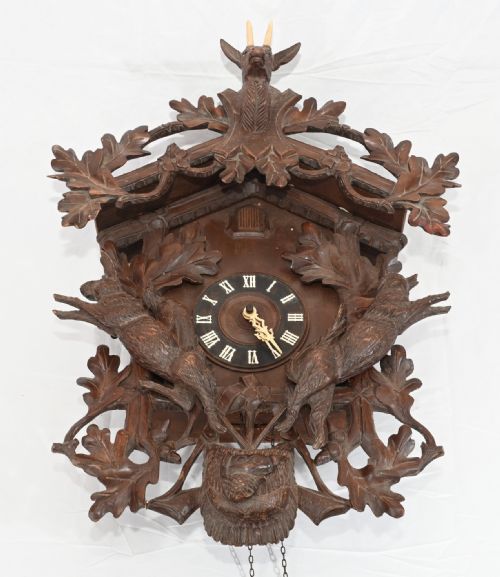
A black forest clock brings lively mechanical theatre and intricate carving into a room, making them sought after by collectors of horology and folk art.
Black Forest Clock
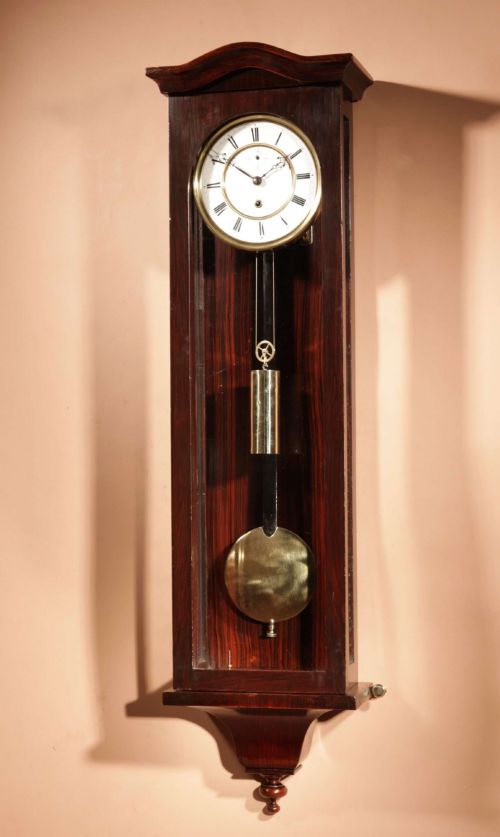
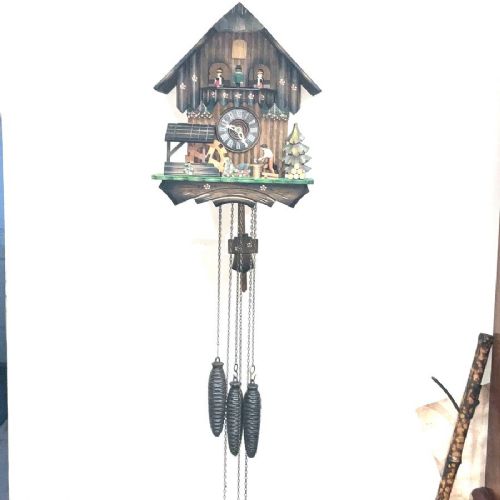
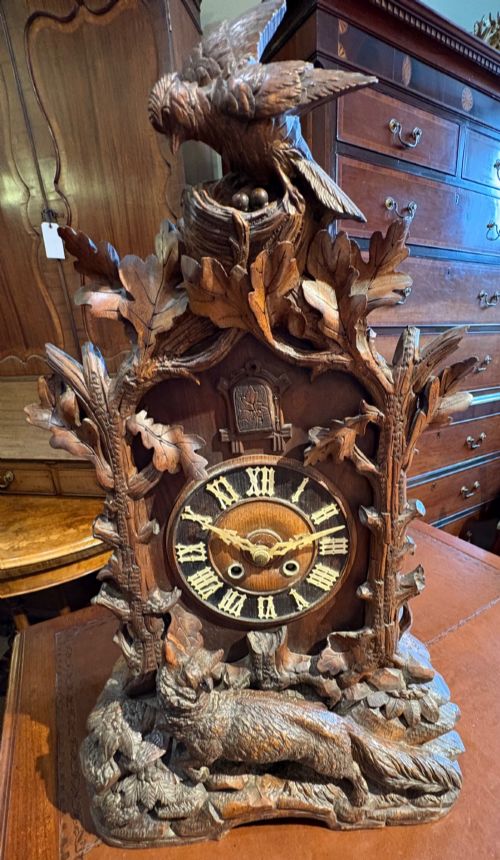
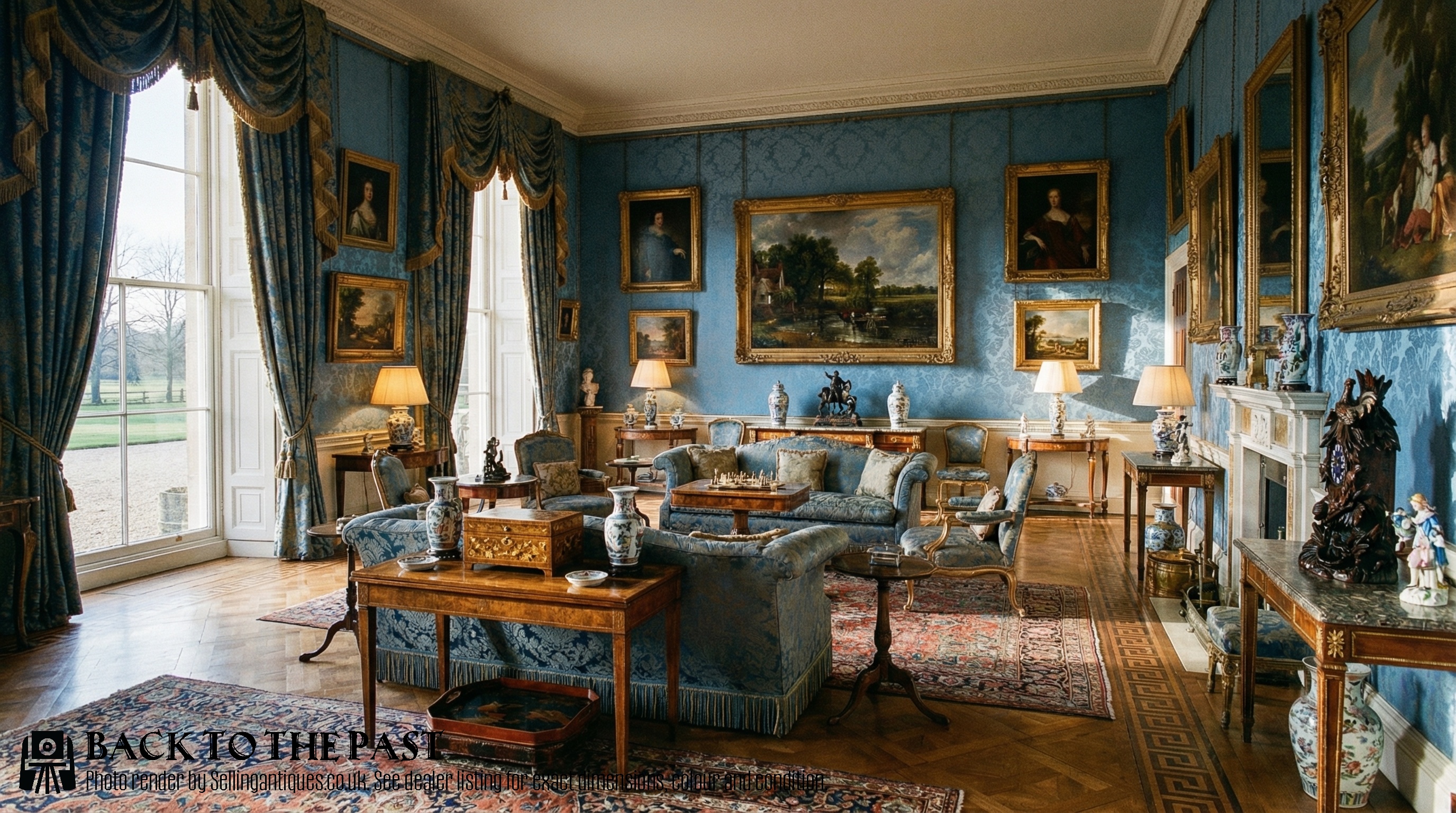
A black forest clock unites precise timekeeping with exuberant regional woodcarving, originating from the mountainous forested borderlands of Germany and Switzerland. These timepieces range from elaborate architectural chalet designs to sculptural animal motifs featuring bears, birds and foliage.
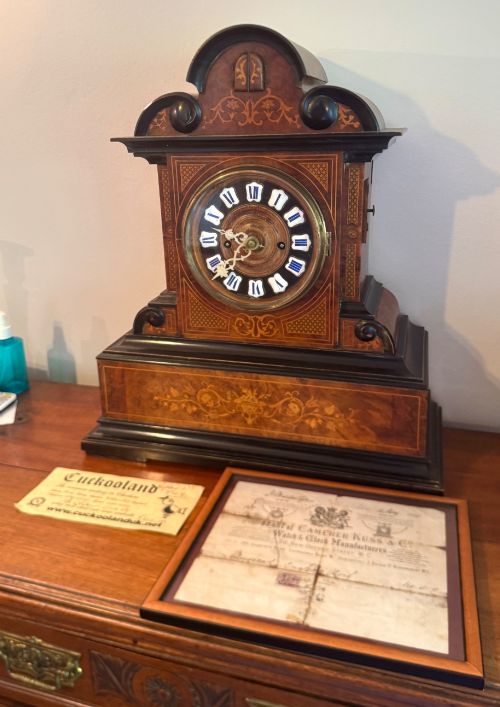
Buyers browsing this selection will frequently encounter carved wooden wall clocks and cuckoo clocks alongside substantial walnut mantel clocks. The majority date from the nineteenth century, reflecting the peak era of regional craftsmanship.
Formats vary from domestic shelf models to large bracket clocks and occasional longcase pieces. Stylistic influences span traditional rustic carving, French Rococo curves, Gothic revivalism and later Art Nouveau lines.
Materials and construction
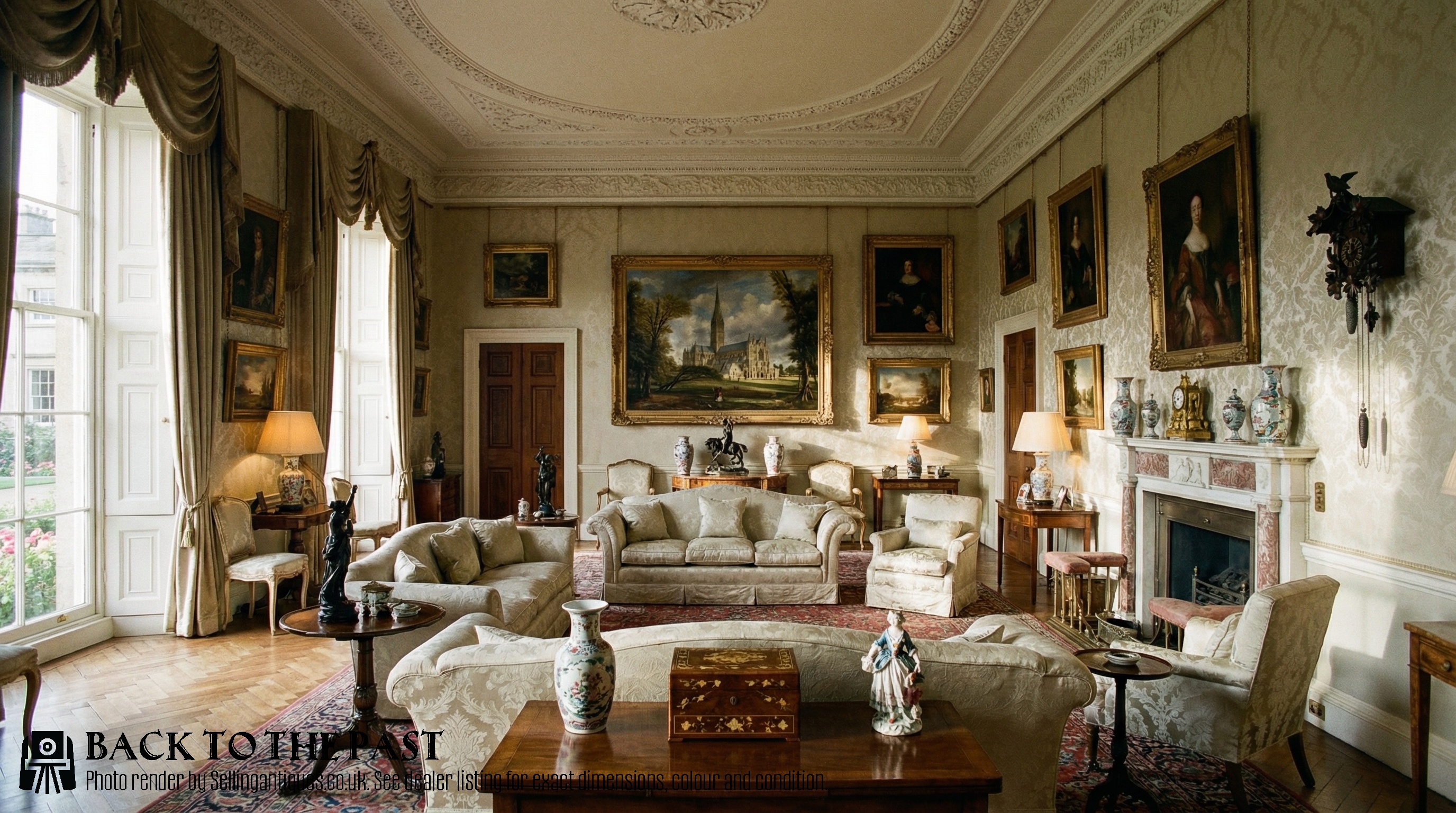
Local timber forms the primary structure, utilising carved wood, linden wood, oak, walnut and occasional rosewood or mahogany. Artisans shaped these materials by hand into high-relief naturalistic scenes depicting fauna and forest botanicals.
Movements combine brass components and iron wheel trains driven by weights or springs. Dial faces often integrate painted enamel numbers, brass bezels and delicate carved hands to complement the wooden casework.
Retail Price Guide 2026
Typical UK retail prices for black forest clock, calculated from the Sellingantiques database of over a million retail prices indexed since 2003. This retail price guide relies exclusively on Sellingantiques data; no external sources or auction records are used, so the figures do not describe the wider market.
Mountain goats peer out from alpine woodwork while brass cuckoos prepare to chime.
Variations in craftsmanship
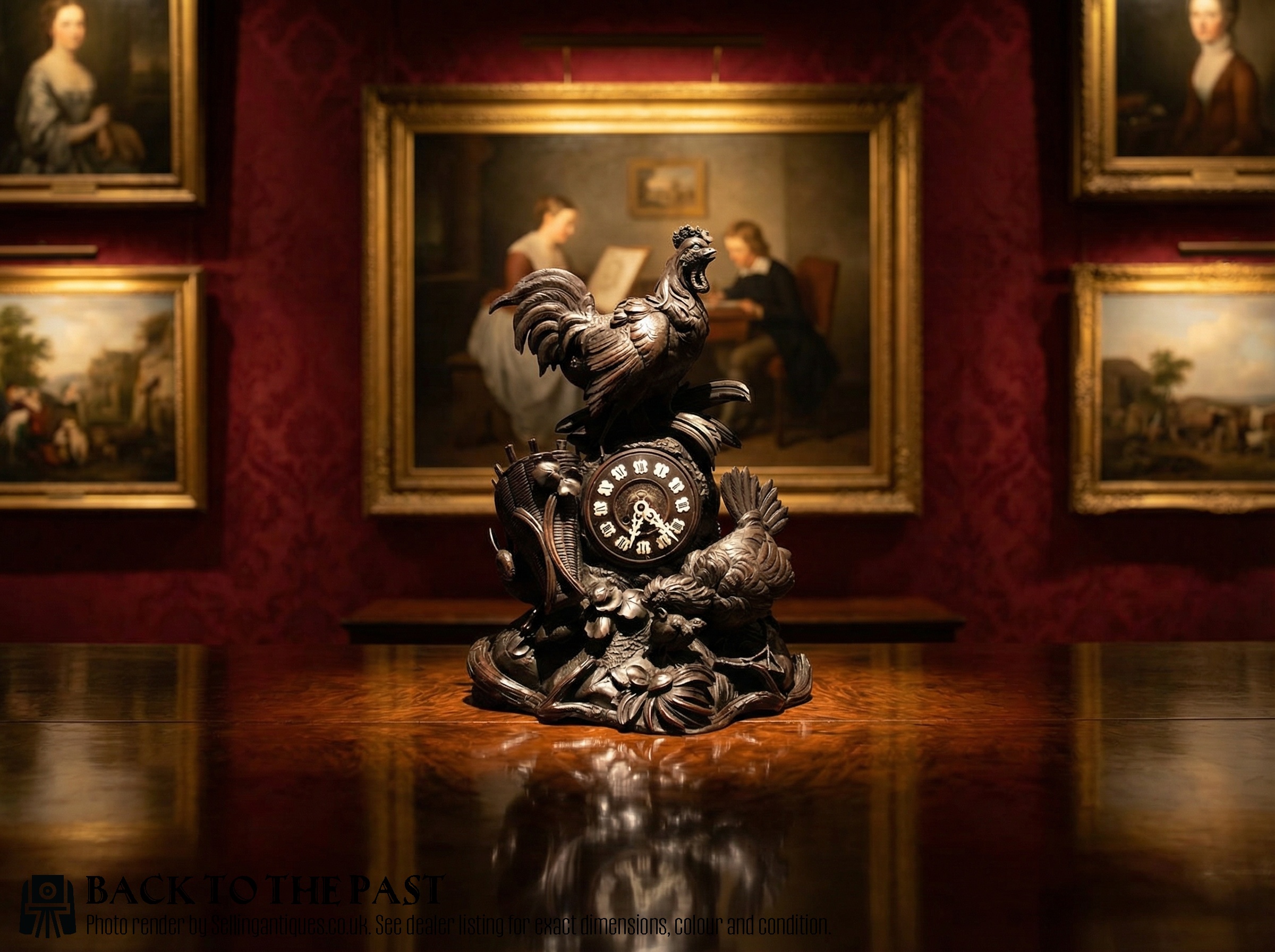
Depth and sharpness of the hand carving distinguish superior examples from standard production pieces. Exceptional specimens display anatomical precision in animal figures and undercut foliage rather than shallow surface scoring.
Complexity of the internal mechanism dictates mechanical worth, separating simple time-only models from advanced three-train musical movements, trumpeter automata and swinging maiden pendulums.
Integrity of the timber case and originality of the dial components preserve historical value. Fine makers integrated brass inlay and substantial architectural massing to elevate utilitarian timekeepers into decorative works of art.
Philipp Haas·Lenzkirch·Junghans·Johann Huggler·Baduf
The Black Forest Clock Glossary
- Cuckoo clock
- A striking clock that uses bellows and whistles to imitate the call of a cuckoo bird on the hour and half-hour. This mechanism is often paired with animated mechanical bird figures.
- Automaton
- A moving mechanical figure integrated into the clock face or case. Examples include swinging maiden pendulums and mechanical figures that animate during musical sequences.
- Bracket clock
- A portable table or mantel clock originally designed to sit upon a wall bracket. They frequently feature architectural wooden cases and carrying handles.
- Three-train movement
- A mechanical system with three separate gear trains for timekeeping, striking the hours and operating musical or chiming automata. This complexity marks advanced horological construction.
- Linden wood
- A pale, fine-grained timber favoured by carvers for its cooperative texture and lack of splintering. It allows for the intricate undercut foliage and animal sculptures seen on regional pieces.
Frequently Asked Questions
How do I wind a mechanical cuckoo clock?
Pull gently on the chains to raise the pine-cone weights back towards the underside of the case. Take care not to pull the chains off their internal sprockets.
Allow the weights to descend fully without obstruction to ensure the movement runs for its intended duration.
Where should I place a heavy carved wall clock?
Mount the clock directly into a solid wall stud or masonry anchor using a sturdy fixing rated for the weight of the timber and mechanism. Avoid placement near exterior doors where constant vibration could disturb the beat of the pendulum.
Ensure the wall is flat so the case hangs plumb, which is essential for the escapement to tick evenly.
How do I tell nineteenth century pieces apart from later ones?
Examine the construction of the movement plates, the type of screws used and the finish on the timber case. Earlier nineteenth-century examples often feature hand-cut brass work and warmer, waxed patination on the linden or walnut.
Later twentieth-century iterations typically show more mechanised production methods and distinct stylistic shifts towards simplified forms or mid-century chalet designs.